
People who weigh out portions for sport
You want to know how much protein and energy your chosen amount of peanuts provides, without confusing the protein content with a ‘high protein’ claim.


According to their published nutritional values, the unsalted peanuts from Duyvis, PLUS, Albert Heijn and Jumbo provide 25–27 g of protein per 100 g, but do not meet the European threshold for a ‘high protein’ claim. So choose peanuts based on the protein and energy values per portion, and a pack size that suits how much you use. If you specifically want a product labelled ‘high protein’, check that at least 20% of its energy comes from protein.
You want to know how much protein and energy your chosen amount of peanuts provides, without confusing the protein content with a ‘high protein’ claim.
You use peanuts often and are looking for a pack size that suits how much you get through. You also want to know how to store an opened bag.
You eat peanuts irregularly and don’t want to open more than you need at once. The best-before date and a well-sealed pack are important here.
First check the nutritional values and portion size. Then decide which pack size suits how much you use, and finally check the ingredients and allergen information.
| What to consider | What should you check? | Who is this important for? |
|---|---|---|
| Protein per portion | Check the protein and energy values per 100 g for the exact variety, then calculate them for the amount you eat. | If I add peanuts to my sports nutrition, I want to know what my own portion contributes. Around 36% of consumers put protein contribution first. |
| Pack size | Compare the net weight with how much and how often you eat peanuts. | If I eat peanuts regularly, I want a supply that suits how much I use, without having to open an unnecessarily large amount at once. This is the biggest consideration for around 29% of consumers. |
| Storage | Check the best-before date and storage instructions, and seal an opened pack securely. | If I use peanuts slowly or irregularly, I want to be able to store them properly. Around 21% of consumers prioritise this kind of practical storage. |
| Ingredients and allergens | Read the ingredients and allergen information on the pack of the variety you choose. | If the ingredients determine my choice, I want to know what ingredients and potential allergens are listed on the pack. Around 14% of consumers pay attention to this first. |
The European claim threshold relates to the proportion of energy that comes from protein, not just the number of grams of protein. According to their published values, the unsalted varieties checked from Duyvis, PLUS, Albert Heijn and Jumbo fall short of the 20% threshold.
Check the protein and energy values for the same variety, and assess the claim separately.
The nutritional value per 100 g is not the same as the amount provided by the portion you actually eat. Duyvis lists 8.1 g of protein and 184 kcal per 30 g portion.
Decide on your portion size and consider its nutritional contribution as part of your overall diet.
A larger pack may mean you have more to store once the bag is open. A size that doesn’t suit how much you use may therefore be less practical.
Choose an amount that suits how often you eat peanuts, and check the storage instructions.
An opened pack needs enough storage space and a bag or storage container that can be sealed securely.
Unsalted varieties may also contain sunflower oil and carry a warning about the possible presence of other nuts.
Read the ingredients and allergen information on the exact pack; don’t rely on the product name alone.
The 235 g unsalted variety comes in a medium-sized pack.
According to Albert Heijn, the 300 g unsalted pack has a serving size of 25 g.
The 350 g Ongezouten Kingsize Pinda’s is a separate product variety.
The unsalted peanuts are available in the checked 250 g and 500 g packs.
The Dutch product page lists Trader Joe’s roasted, unsalted peanuts in a 250 g pack.
The Dutch product page describes unsalted peanuts in a 285 g pack and says they are sold in store.
These product choices suit peanuts as part of sports nutrition, as well as different ways to manage your supplies.
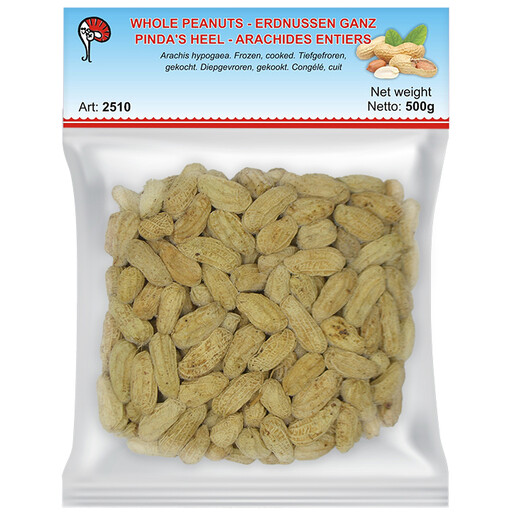 Image unavailable
A good option if you want to store supplies in the freezer; the product information suggests using them as a snack or in dishes.
Pack size: 500 g. Store frozen; once defrosted, keep refrigerated, use within the stated time and do not refreeze.
 Image unavailable
A 250 g pack of unsalted peanuts may suit you if you want to open a smaller amount at a time.
The product information lists 99% peanuts, sunflower oil, 27 g of protein, 2690 kJ and 0.02 g of salt per 100 g. The stated values do not meet the energy threshold for a ‘high protein’ claim. May contain cashew nuts.
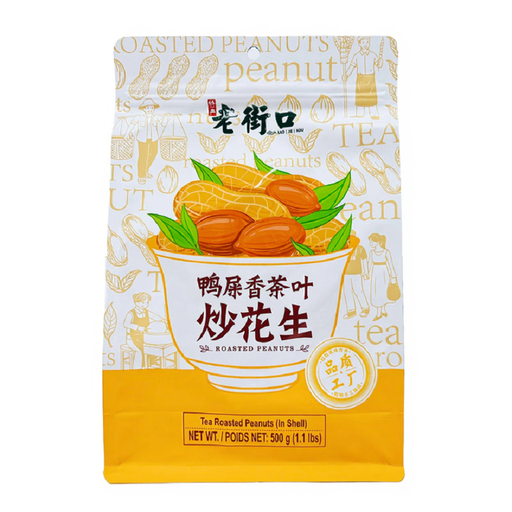 Image unavailable
A roasted snack variety for anyone looking for tea aromas and flavourings in the product description.
The nutritional information lists 25.2 g of protein, 544 kcal and 1.37 g of salt per 100 g. According to the stated values, this variety does not meet the energy threshold for a ‘high protein’ claim.
 Image unavailable
The peanuts are still in their shells; this pack may suit you if that’s the format you’re looking for.
The nutritional information lists 29 g of protein, 11 g of fibre and 2515 kJ per 100 g. The stated values do not meet the energy threshold for a ‘high protein’ claim. The product information mentions possible traces of nuts.
 Image unavailable
A smaller pack of roasted peanuts; the product information says no salt has been added.
The ingredients list 100% peanuts. The nutritional information lists 26 g of protein, 626 kcal and 0.02 g of salt per 100 g. The stated values do not meet the energy threshold for a ‘high protein’ claim.
Under Regulation (EC) No 1924/2006, at least 20% of a product’s energy must come from protein for it to carry the ‘high protein’ nutrition claim. This is not the same as having 20 g of protein per 100 g. Compare the protein and energy values for the same product variety and the same quantity.
Not necessarily. Voedingscentrum says that most people who do sport don’t need special protein shakes or bars if they eat a varied diet. Consider how many peanuts you eat and how they contribute to your overall diet.
Store them in a cool, dark, dry place in a tightly sealed pack. For opened unsalted peanuts, Voedingscentrum recommends six months in a kitchen cupboard, nine months in the fridge and one year in the freezer. This is general storage advice, not a guarantee for every pack. For an unopened pack, follow the label and best-before date.
Check the ingredients and allergen information on the pack of the exact variety. The NVWA states that 14 allergens must be listed in the ingredients; peanuts and nuts are separate allergens. A product containing peanuts is not suitable for anyone with a peanut allergy.
The Albert Heijn warning applies only to AH Pinda’s extra groot gezouten in a tub with a best-before date of 04-11-2026, due to the possible presence of metal fragments. Do not eat this specific batch. The warning does not automatically apply to other AH peanuts or to the 300 g unsalted pack.