If you want demonstrably less fat in the peanut snack itself, check the claim and nutrition table for that exact product. ‘Unsalted’ or ‘oven-baked’ does not, by itself, support a claim such as ‘reduced fat’. The AH Unsalted Peanuts and PLUS Unsalted Peanuts reviewed here contain 51 and 51.3 grams of fat per 100 grams, respectively, according to their labels. For a ‘low fat’ claim on solid food, the European Commission sets a limit of no more than 3 grams of fat per 100 grams. A smaller portion changes how much you eat, not the fat content per 100 grams.
Who is this choice relevant to?
Snackers comparing fat and calories
You want to tell the difference between a snack with a lower fat content and simply eating fewer regular peanuts during a snack night. Compare the nutrition information per 100 grams and your portion, rather than relying on the front of the pack. For a ‘low fat’ claim on solid food, the European Commission sets a limit of no more than 3 grams of fat per 100 grams.
Snackers looking for an unsalted option
You’re looking for peanuts with no added salt, but don’t assume they’ll automatically have less fat. Choosing unsalted is a separate consideration, so check the fat and salt figures individually on the label.
People weighing up pack size and cost for sharing
You’re buying peanuts to share and want a pack size that works for serving and portioning. Deloitte Netherlands identifies price and convenience as factors in general supermarket shopping behaviour; neither tells you anything about the fat content of a specific snack.
What should you look for when buying?
First decide whether you’re mainly comparing the product’s fat content, the energy in your portion, salt and flavour, or the pack size.
| What to consider |
What should you check? |
Who should take this into account? |
| Fat content |
Check the claim on the exact pack and compare fat per 100 grams. ‘Unsalted’ or ‘oven-baked’ does not prove a claim such as ‘reduced fat’. |
If you’re specifically looking for demonstrably less fat in the snack itself, check the claim and nutrition information; around 36% of consumers prioritise reducing fat. |
| Energy and portion size |
Compare energy per 100 grams and decide how many grams you’ll serve. |
If you want to know how much energy is in your bowl, check the nutrition information and weigh your portion; around 29% of consumers base their choice mainly on energy and portion size. |
| Salt and flavour |
Check the salt and ingredients for the option you’ve chosen; compare a seasoned or coated snack with its own label. |
If unsalted snacking or a particular flavour is your priority, consider that separately from fat and energy; around 21% of consumers choose mainly on the basis of salt and flavour. |
| Pack size |
Compare the pack weight with the amount you want to share or portion out. |
If you’re looking for a size that suits the occasion and your budget, consider the pack as well as your portion; around 14% of consumers prioritise pack size and cost. |
Avoiding common buying mistakes
-
Assuming unsalted means lower in fat
You can choose an option with no added salt without it having a lower fat content. According to their labels, the AH and PLUS options reviewed here contain more than 50 grams of fat per 100 grams.
Check salt and fat as separate values, and look at the claim on the exact pack.
-
Treating the whole bag as a single portion
The AH pack reviewed here contains 500 grams and lists 25-gram portions. The figures for one portion are therefore not the same as those for the whole bag.
First decide how much you want to serve, then work out the nutrition values for that weight.
-
Taking a nutrition claim as an assessment of the whole product
A claim about one feature doesn’t automatically tell you about the energy, salt, ingredients or portion size of the rest of the product.
When choosing, check these details separately on the label too.
Brands as a reference point
Duyvis
Duyvis describes various types of snack peanuts, including fried, roasted, marinated and coated options.
- The different product types give you a starting point for comparing preparation and flavour separately.
- The manufacturer’s description is not an independent taste comparison and does not prove a reduced-fat claim for a specific option.
Albert Heijn
AH Unsalted Peanuts 500 g are a practical example for checking label values and portion sizes.
- For this option, Albert Heijn lists a 25-gram portion and 0 grams of salt per 100 grams.
- The label lists 51 grams of fat per 100 grams, so this is not a low-fat option under the European Commission’s limit of no more than 3 grams per 100 grams.
Jumbo
The Jumbo range page distinguishes between products including Duyvis Unsalted Peanuts and Duyvis Oven Baked Original.
- The options mentioned are different product types and come in different pack sizes: 235 and 225 grams.
- Range information does not prove a reduced-fat claim, nor is it a performance claim for a Jumbo own-brand product.
Lidl
The Lidl product description reviewed here is for a 285-gram pack of unsalted peanuts.
- The product description gives the pack weight and confirms that the peanuts are unsalted.
- The product information does not prove a lower fat content; the product was described as available in store only.
ALDI
ALDI describes Trader Joe’s roasted and salted peanuts in a 500-gram pack.
- The preparation, salt level and pack weight are specified for this option.
- This product description does not prove a reduced-fat claim.
PLUS
PLUS Unsalted Peanuts 300 g provide a practical label example for an unsalted option.
- For this option, PLUS lists 0 grams of salt, 51.3 grams of fat and 623 kcal per 100 grams.
- These peanuts are not low in fat under the limit of no more than 3 grams of fat per 100 grams; the values do not automatically apply to other pack sizes.
Peanut snacks on Joybuy
The selection below features seasoned or coated Duyvis peanut snacks, with a label you can check for each option. A flavour or preparation name alone doesn’t prove that a claim such as ‘reduced fat’ meets the requirements.
 No image available
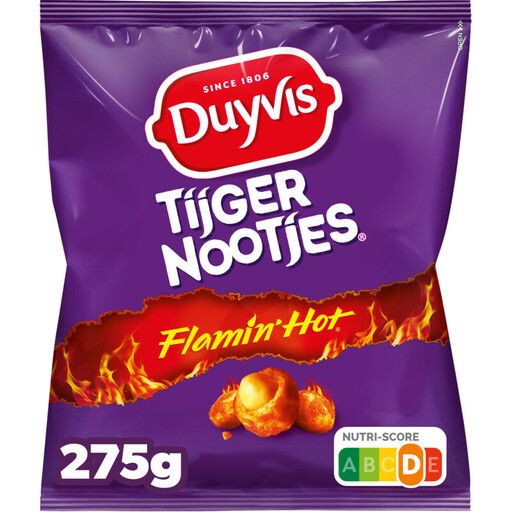
Duyvis Tiger Nuts Flaming Hot - 275 g
A seasoned peanut snack to consider if you’re looking for a crunchy, spicy option.
The description lists 39% peanuts and a double crunchy coating. It gives 33 grams of fat and 533 kcal per 100 grams.
Contains peanuts and wheat; may contain milk, nuts, soya and mustard.
View at Joybuy
 No image available
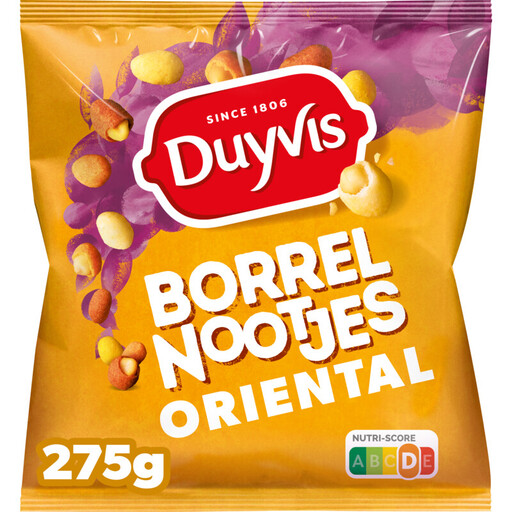
Duyvis Oriental Cocktail Nuts - 275 g
A coated savoury snack to consider if you’re looking for a mild curry flavour.
The description lists 49% peanuts. It gives 34 grams of fat and 539 kcal per 100 grams.
Contains peanuts, wheat, barley and soya; may contain milk, nuts and mustard.
View at Joybuy
 No image available
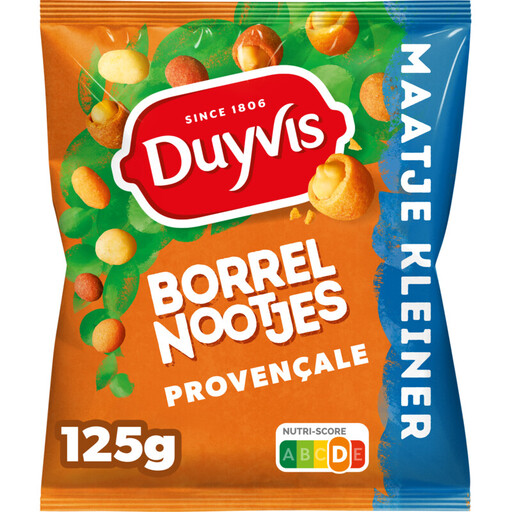
Duyvis Bran Nuts Provencale - 125 g
A coated peanut snack with an onion and garlic flavour, to compare with other flavour options.
The ingredients list states 50% peanuts. It gives 33 grams of fat and 527 kcal per 100 grams; the description lists 30-gram portions and 4–5 portions per pack.
Contains peanuts and wheat; may contain milk, nuts, soya and mustard.
View at Joybuy
 No image available
Duyvis Coated Peanuts Provençal - 275 g
A coated peanut snack with onion and garlic seasoning, to compare with other options.
The ingredients list states 50% peanuts. It gives 35 grams of fat and 542 kcal per 100 grams.
Contains peanuts and wheat; may contain milk, nuts, soya and mustard.
View at Joybuy
 No image available
Duyvis Honey & Lightly Salted Oven-Roasted Peanuts
An oven-roasted option to consider if you like honey and a subtle salty flavour.
The product title describes the peanuts as honey, lightly salted and oven-roasted. It gives 40 grams of fat and 561 kcal per 100 grams; the description lists 5–6 portions.
Contains peanuts, wheat and gluten; may contain other nuts. The product description warns that the product is a choking hazard for young children.
View at Joybuy
Frequently asked questions
Does unsalted mean low in fat?
No. The label for AH Unsalted Peanuts lists 0 grams of salt and 51 grams of fat per 100 grams. For a ‘low fat’ claim on solid food, the European Commission sets a limit of no more than 3 grams of fat per 100 grams.
How do you work out the label values for your own bowl?
Multiply the value per 100 grams by your portion weight, then divide by 100. The label for AH Unsalted Peanuts lists 620 kcal and 51 grams of fat per 100 grams; a 25-gram portion therefore contains 155 kcal and 12.75 grams of fat.
How should you store an opened bag?
For the AH option reviewed here, the storage advice is to keep it in a cool, dark, dry place and close the pack securely after use. For other options, follow the advice on the pack.
What should you know if someone at the table has an allergy?
Peanuts are an allergen that must be declared. According to the Netherlands Food and Consumer Product Safety Authority, allergen information for prepacked food must appear on the label. Also check the packaging of the option you’ve chosen for information about the possible presence of other allergens.
Are whole peanut snacks suitable for young children?
Don’t assume that a regular whole peanut snack is suitable for children. The AH Unsalted Peanuts product page warns that young children can choke on peanuts.


