What should you look for when choosing?
Start with the portion you actually want to eat, then compare protein, energy and salt on the same basis. The percentages show which of these factors may be the main priority for consumers in these snack-night scenarios.
| What to consider |
What should you look for? |
Who is this most important for? |
| Protein and the ‘high in protein’ claim |
Compare protein per portion and the proportion of energy from protein. The verified AH, PLUS and Jumbo labels state 27, 27 and 26.4 g of protein per 100 g respectively; none of the three meets the EU requirement for the claim. The European Commission refers to Regulation (EC) No 1924/2006 for permitted nutrition claims. |
If you mainly want to know what a portion contributes and whether the claim on the packaging is supported, put protein first; around 33% of consumers prioritise this. |
| Portion size and energy |
Compare the same quantity: the labels state around 151–156 kcal per 25 g reference portion. Manufacturer portion sizes vary, so use the same portion size when comparing. |
If you want to keep track of how much you eat during the evening, measuring out a portion helps you monitor the quantity and energy; around 27% of consumers prioritise portion size and energy. |
| Salt |
Check the salt content on the specific pack. The unsalted varieties reviewed show small differences, including 0 g for AH and 0.02 g per 100 g for PLUS. |
If you’re looking for a snack with no added salt, check how the variety is prepared and read its label; around 20% of consumers make salt their main priority when choosing. |
| Flavour and ingredients |
Choose according to how the peanuts are prepared, and check the ingredients and allergen information when sharing. Nutritional values for plain unsalted peanuts don’t automatically apply to salted or marinated varieties. |
If flavour matters most for your snack night, compare the varieties and keep the packaging available for guests; around 20% of consumers prioritise flavour. |
Peanuts at Joybuy
This selection of Joybuy products includes everything from peanuts in their shells to unsalted, roasted and salted varieties.
 No image available
g’woon peanuts in their shells, 500 g
An option for anyone who likes to eat peanuts straight from the shell during a snack night.
The peanuts are in their shells, so you’ll need to shell them as you eat.
View at Joybuy
 No image available
g’woon unsalted peanuts, 250 g
A good fit if you’re looking for an unsalted option for a snack night.
The product information lists peanuts and sunflower oil; the product may contain traces of cashew nuts. Check the label if you’re sharing the peanuts.
View at Joybuy
 No image available
Verse Extra Large roasted peanuts, 210 g
A roasted option if you’re looking for peanuts with no added salt.
The product information states that these are 100% peanuts, with no added salt. Check the packaging for the latest ingredient and allergen information.
View at Joybuy
 No image available
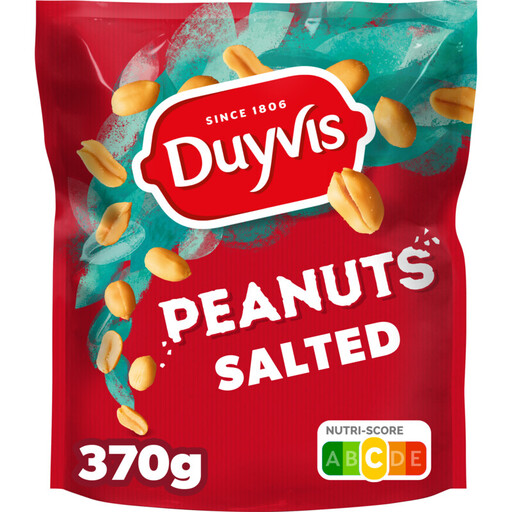
Duyvis salted peanuts, 370 g
A salted option if you prefer a fuller flavour to an unsalted preparation.
The product information states that it contains peanuts, may contain other nuts and isn’t suitable for children under 5 because of the risk of choking. Check the packaging for allergen information.
View at Joybuy
Frequently asked questions
Are these peanuts officially ‘high in protein’?
No. The three verified unsalted products don’t meet the EU requirement for this nutrition claim. Their calculated proportion of energy from protein is between 17.28% and 17.73%; 27 g of protein per 100 g isn’t enough on its own. The European Commission refers to Regulation (EC) No 1924/2006 for permitted nutrition claims.
Do recreational athletes need special protein snacks?
Not according to the Dutch Nutrition Centre. Recreational athletes can get their protein from everyday foods; needs may differ for intensive strength or endurance training. In that case, consider your overall diet rather than just this snack.
How do I compare the protein in each portion?
Convert the label values to the same portion size. For a 25 g reference portion, the verified AH, PLUS and Jumbo peanuts provide around 6.75, 6.75 and 6.6 g of protein respectively. This gives you a basis for comparison, not personalised sports nutrition advice.
Which AH peanuts are covered by the recall?
Albert Heijn’s warning of 20 May 2026 concerns AH Extra Large Salted Peanuts in a tub with a best-before date of 04-11-2026. Don’t eat that specific pack, and follow Albert Heijn’s returns instructions. The warning doesn’t apply to the unsalted variety reviewed.
What should I keep in mind when sharing peanuts with guests?
Peanuts are an allergen, so keep the packaging handy for guests to check the ingredients and warnings. The Netherlands Food and Consumer Product Safety Authority states that allergen information for prepacked products appears on the label; for unpackaged products, the information must be available before purchase.
Are whole peanuts suitable for young children?
Don’t assume whole peanuts are suitable as a snack for young children. The verified AH and PLUS packs warn that small children may choke on them.


