What should you consider when choosing?
First check that peanuts fit your child’s diet and the school’s rules. Then check the specific dietary claim, the form in which they’re eaten and the packaging.
| What to consider |
What should you check? |
Who should pay particular attention? |
| Allergies and school rules |
Which allergen is excluded, what the ingredients and allergen information say, and what arrangements the school has in place? |
If there’s a peanut allergy or the class has rules in place, I want to know first what’s excluded and what the packaging says. Around 36% of consumers prioritise allergens and school rules. |
| Specific dietary claim |
Does the claim meet the specific need, and does it apply to this exact variant? |
If peanuts are suitable, I look for a claim that meets a specific need, such as avoiding gluten or lactose. Around 29% of consumers give a specific free-from requirement top priority. |
| Eating and supervision |
Can your child sit down and chew calmly, and will they be properly supervised while eating? |
If I’m concerned about choking, I first check whether my child can manage this form of food and eat under appropriate supervision. Around 21% of consumers prioritise a safe form of food. |
| Packaging and storage |
Is the pack size practical for how you’ll use it, and can you store the product as directed once opened? |
For regular school days, I want to know whether I can store the pack easily and divide the contents into suitable portions. Around 14% of consumers give everyday convenience and ease of packing top priority. |
Products at Joybuy
These Joybuy products are related to peanuts and similar snack choices. Check the ingredients, dietary claims, warnings and form of food for each exact variant. A product listing doesn’t mean peanuts are suitable for every diet or allowed at every school.
 Image unavailable
g'woon unsalted peanuts 250 g
Only suitable if your child can eat peanuts and they’re allowed at school.
The product information lists 99% peanuts and sunflower oil. The product contains peanuts and may contain cashews.
Store in a cool, dry place and reseal the pack after opening.
View at Joybuy
 Image unavailable
Verse Extra Large roasted unsalted peanuts 210 g
This variant is only suitable if your child can eat peanuts and they’re allowed at school.
The product description says they’re roasted, unsalted peanuts, with 100% peanuts as the ingredient. The product contains peanuts.
Store in a cool, dry place and reseal the pack after opening.
View at Joybuy
 Image unavailable
g'woon peanuts in shells 500 g
The form in which they’re eaten is an important consideration for a child who can eat peanuts.
The product information lists peanuts and possible traces of other nuts. These are whole peanuts in their shells.
The Netherlands Nutrition Centre warns against whole peanuts because of the risk of choking; consider whether this form is suitable for your child and the eating situation.
View at Joybuy
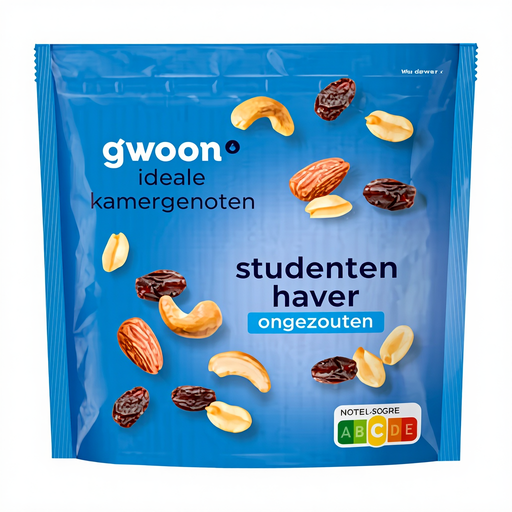 Image unavailable
g'woon unsalted oat and fruit trail mix 250 g
The product name describes an unsalted oat and fruit trail mix, not a pure peanut snack.
Before choosing it for a specific dietary need, check the ingredients and allergen information on the exact pack.
View at Joybuy
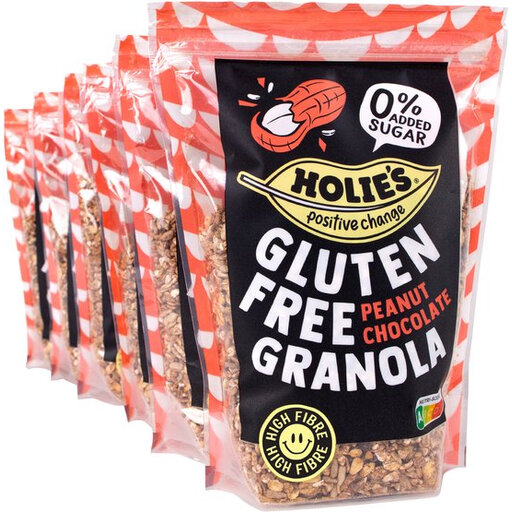 Image unavailable
Holie's gluten-free granola with peanuts and chocolate, 6 x 330 g
This variant may be suitable if your child can eat peanuts and you’re looking for a gluten-free option.
The product information describes granola with peanuts, chocolate and peanut butter, and labels the variant gluten-free. The product contains peanuts and may also contain almonds, cashews, hazelnuts, pecans and soya.
Here, gluten-free doesn’t mean peanut-free or generally allergen-free.
View at Joybuy
Frequently asked questions
Are peanuts nuts, and does nut-free also mean peanut-free?
Botanically, peanuts aren’t nuts, and Dutch allergen information lists peanuts and nuts separately. Check both if your child needs to avoid both.
Can my child eat peanuts if they have a peanut allergy, provided the pack says gluten-free?
No. If your child has a peanut allergy, they must not eat food containing peanuts; a gluten-free claim doesn’t change the presence of the peanut allergen.
Is lactose-free the same as suitable for someone with a cow’s milk allergy?
No. Lactose intolerance relates to milk sugar, while a cow’s milk allergy relates to milk proteins. If your child has a cow’s milk allergy, check the milk information and follow appropriate dietary advice, rather than relying only on a lactose-free claim.
What does ‘may contain’ mean on a pack?
Since 1 January 2026, the Netherlands Food and Consumer Product Safety Authority has overseen the rules for precautionary allergen warnings. Such a warning should be based on an assessment of possible accidental presence; its absence doesn’t mean a product is free from every allergen.
How can I pack whole peanuts without ignoring the choking warning?
First consider whether this form of food is suitable for your child and the school situation. The Netherlands Nutrition Centre warns against whole peanuts and advises children to sit calmly and have someone nearby while they eat. Choose a different school snack if the situation at school isn’t suitable.


