What consumers look for
First compare kcal per 100 g, then convert the figures to the same weighed amount. Check the allergen information and school policies before packing peanuts, too.
| What to consider |
What to look for when buying |
Who should pay particular attention? |
| Calories per lunch portion |
Compare kcal per 100 g and convert the amount you’re packing to the same portion in grams. |
If you’re weighing a snack to compare calories fairly, don’t rely on a different portion size shown on the label. Around 36% of consumers make portion size and calories their top priority. |
| Allergens and school policies |
Read the ingredients and warnings on the exact pack; check whether the school excludes peanuts or other nuts as well. |
If you’re taking a personal allergy or school policy into account, the snack needs to meet those requirements. Around 21% of consumers put allergy and school policies first. |
| Nutritional quality as well as calories |
Consider the peanuts as part of the whole lunch; ‘unsalted’ doesn’t mean low in energy. |
If you’re looking for a break-time snack for a growing teenager, consider the whole lunch rather than focusing only on the lowest calorie option. Around 29% of consumers make a suitable addition to lunch their top priority. |
| Packing and storage |
Check the net weight, storage instructions and whether you’ll want to divide the bag into portions at home. |
If you’re shopping for several school days, consider how much preparation and storage the packaging requires. Around 14% of consumers prioritise convenience when shopping, portioning and storing food. |
Brands to consider
The details below apply to the specific products listed and don’t automatically apply to every product from the same brand. The word ‘unsalted’ doesn’t tell you how many kcal per 100 g a product contains.
Duyvis
The unsalted variety may suit you if you’re looking for peanuts without added salt to add to lunch.
- Jumbo lists 614 kcal per 100 g for the 235 g bag reviewed.
- The unsalted label doesn’t mean these peanuts are low in calories.
Albert Heijn
The 300 g bag of AH Unsalted Peanuts reviewed lists a 25 g portion on the label.
- The product information lists 0 g of salt per 100 g and sunflower oil.
- The packaging warns of the possible presence of various tree nuts; check the information on the product you buy.
Jumbo
The 250 g bag of the own-brand unsalted peanuts reviewed can be compared using the label values.
- Jumbo lists 99.5% peanuts and sunflower oil; the label portion is 30 g.
- The product information lists 602 kcal per 100 g. Don’t compare portion figures without converting them to the same weight.
Lidl
The Lidl product reviewed is a 200 g pack of roasted, unsalted peanuts.
- The product page describes the peanuts as roasted and unsalted.
- ‘Roasted’ doesn’t tell you how much energy the peanuts provide; the retailer’s listing doesn’t confirm stock at a specific branch.
ALDI
The Trader Joe’s product reviewed is a 250 g pack of roasted, unsalted peanuts.
- ALDI gives this specific product a Nutri-Score A.
- Nutri-Score isn’t a low-calorie claim and doesn’t tell you how much energy your weighed portion contains.
PLUS
The 250 g pack of PLUS Unsalted Peanuts reviewed provides label information to help you compare this specific product.
- PLUS lists 99% peanuts and sunflower oil.
- The packaging warns of the possible presence of cashew nuts and lists 625 kcal per 100 g. These details apply to this product.
Joybuy products for school lunches
This selection includes unsalted and salted peanuts for lunch or a break-time snack. Check the portion size, salt information and allergen details for each product.
 No image available
g'woon unsalted peanuts 250 g
An option if you’re looking for unsalted peanuts to add to lunch.
The product description lists 99% peanuts and sunflower oil. Contains peanuts; take personal allergy requirements and school policies into account.
View at Joybuy
 No image available
Verse Extra Large roasted unsalted peanuts 210 g
An option if you’re looking for roasted peanuts with no added salt.
The product description lists peanuts as the only ingredient. Contains peanuts; take personal allergy requirements and school policies into account.
View at Joybuy
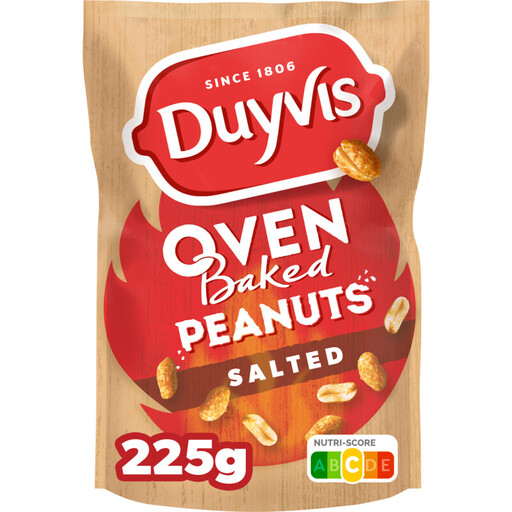 No image available
Duyvis roasted peanuts 225 g
An option if you’re looking for roasted peanuts and don’t need an unsalted variety.
The product description lists salt, so this variety isn’t suitable if you’re looking for unsalted peanuts. Contains peanuts; take personal allergy requirements and school policies into account.
View at Joybuy
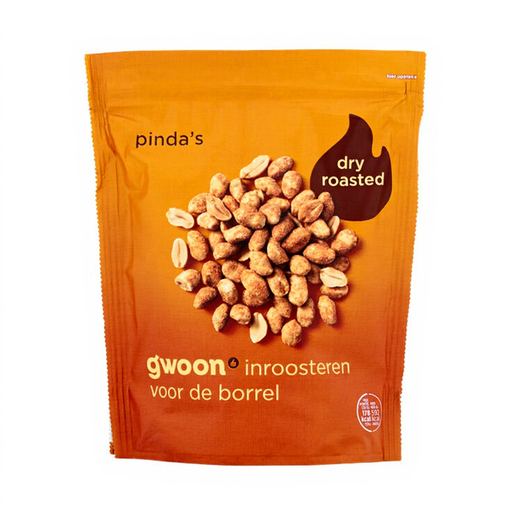 No image available
g'woon dry-roasted peanuts 200 g
An option if you’re looking for a roasted snack in a resealable bag.
The product description lists salt and herbs, so this variety isn’t unsalted. Contains peanuts; take personal allergy requirements and school policies into account.
View at Joybuy
Frequently asked questions
Can regular unsalted peanuts be marketed as low calorie?
Not based on the product values reviewed. For the nutrition claim ‘low calorie’ on solid foods, the European Commission sets a maximum of 40 kcal per 100 g. A smaller portion contains less energy overall, but doesn’t change the value per 100 g.
How much do the peanuts reviewed vary per equal-sized portion?
For the four unsalted varieties reviewed, the calculated difference between the lowest and highest label values is 5.75 kcal per 25 g. This is based on the values of 602 and 625 kcal per 100 g listed by Jumbo and PLUS respectively for their specific products; it’s a calculation based on label values, not a measurement of every portion.
Is 25 g the right amount for every teenager?
No, 25 g is only used here as a comparison amount. The Netherlands Nutrition Centre lists 157 kcal for a general 25 g handful of unsalted peanuts and notes that teenagers’ appetites can be linked to growth and activity. Don’t use this amount as personalised nutrition advice.
Are peanuts the same as tree nuts on a label?
No. The Food Allergy Foundation describes peanuts as legumes, while the NVWA treats peanuts and nuts separately in allergen information. Also check the warning on the exact pack, as a peanut product may list the possible presence of other nuts.
Can my child take peanuts to school?
That depends on the school’s or class’s current policies and any personal allergy requirements. Deventer Hospital discusses an allergen-free classroom as an exceptional medical measure prescribed by a paediatrician. Ask the school what applies to the lunch in question.
How should you store peanuts once the pack has been opened?
Follow the storage instructions on the packaging for your variety. The product information for the Duyvis product reviewed recommends storing it in a light- and airtight container after opening.
Does Albert Heijn’s warning also apply to unsalted AH peanuts?
Albert Heijn’s safety warning of 20 May 2026 concerns AH Extra Large Salted Peanuts in a tub with a best-before date of 04-11-2026, not the unsalted variety reviewed. For the salted pack in question, Albert Heijn advised customers not to eat it and to return it for a full refund.


