What should you look for when choosing?
Start with what the pupil needs to avoid, then check whether the snack is allowed under the school’s rules. Only if both conditions are met should you consider product features such as a specific free-from claim or choosing an unsalted option.
| What to consider |
What should you check? |
Who is this important for? |
| Allergen to avoid |
Check whether the product contains peanuts and read any warnings about the possible presence of other allergens too. |
If peanuts need to be avoided due to an allergy, a peanut product is not suitable. Around 36% of consumers put allergen avoidance first. |
| School rules |
Check whether the rule applies to peanuts, tree nuts, both, or products carrying a precautionary warning too. |
If school rules determine what can go in a lunchbox, check exactly which products they cover. Around 21% of consumers give school approval their highest priority. |
| Specific dietary claim |
Look for the claim on the exact variety and check the full ingredients and allergen information. |
If peanuts are suitable but you need, for example, a gluten-free or lactose-free product, look for that specific claim. Around 29% of consumers prioritise another specific dietary claim. |
| Packing an unsalted option |
Check the nutritional information and serving size, and follow the storage instructions on the packaging. |
If allergens and school rules are not an issue, an unsalted plain option may be a simple addition to lunch. Around 14% of consumers prioritise the convenience of packing an unsalted option. |
Peanuts at Joybuy
These Joybuy product picks are peanuts for people who can eat peanuts. None of these products is a peanut-free option; check the other allergen information and the school’s rules too.
 Image unavailable
g’woon unsalted peanuts 250 g
This variety may be suitable if peanuts are allowed and you’re looking for an unsalted addition to lunch.
The product information lists 99% peanuts and sunflower oil; the product may contain cashew nuts.
Joybuy
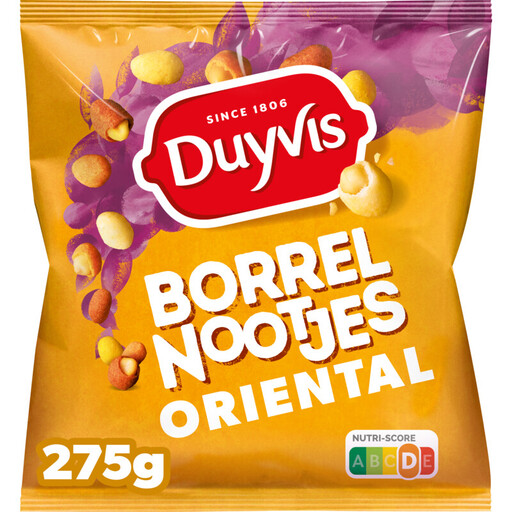 Image unavailable
Duyvis Oriental Coated Peanuts 275 g
This crunchy coated snack may be suitable if peanuts are allowed and the listed ingredients fit your diet.
The product information lists 49% peanuts, gluten from wheat and barley, and soya; it may contain milk, nuts and mustard.
Joybuy
 Image unavailable
g’woon peanuts in the shell 500 g
This variety may be suitable if peanuts are allowed and you’re looking for peanuts in the shell to take with you.
The peanuts are in their shells. The product information lists peanuts and warns that it may contain nuts.
Joybuy
 Image unavailable
Verse Extra Large roasted peanuts 210
This roasted variety may be suitable if peanuts are allowed and you’re looking for a snack that, according to the product information, needs no preparation.
The product information lists peanuts as an ingredient; the product contains peanuts.
Joybuy
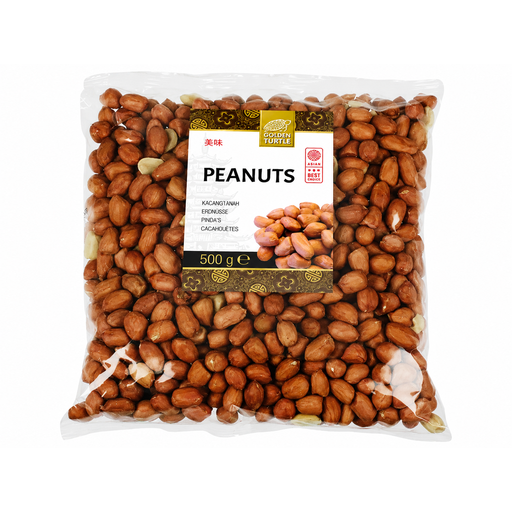 Image unavailable
Golden Turtle Premium Raw Peanuts with Skin 500g
These unroasted peanuts may be suitable if peanuts are allowed and you want to prepare them yourself.
The product information describes peanuts with their skins on and roasting as a way to prepare them as a snack. The product contains peanuts.
Joybuy
Frequently asked questions
Does roasting make peanuts suitable for someone with a peanut allergy?
No. Roasting does not make a peanut product peanut-free. Stichting Voedselallergie states that the peanut allergen remains stable when heated, so don’t rely on roasting as a solution for a peanut allergy.
What allergen information should I check on a pre-packed product?
Check the allergen information on the label and read the ingredients and warnings on the exact pack. The NVWA treats peanuts and nuts as separate allergen categories. The Dutch policy on substantiated precautionary warnings for unintended presence has applied to food businesses since 1 January 2026; this information is not personal dietary advice.
Why might an older pack have different warning wording?
According to the NVWA, the production date matters when the policy is introduced. Subject to certain conditions, pre-packed stock produced earlier may be sold after 1 January 2026, provided the food is safe. So the date alone does not mean that every pack will have the same wording.
How should I store the rest after measuring out peanuts for school?
Store peanuts in a dry, tightly sealed container and follow the instructions on the packaging. The Voedingscentrum recommends storing nuts in a sealed container in a dry place; storage does not remove allergens.
What should I do if the label differs from the online product information?
Use the label on the pack you actually have and ask the retailer or manufacturer for clarification before using the product as part of a specific diet. Ingredients and allergen information can vary between varieties.


