What should you look for when choosing?
First compare the ingredients and declared nutritional values per 100 g. Then decide on your portion and, if children are eating too, check the texture and allergens.
| Consideration |
What should you check? |
Who is this relevant to? |
| Energy per portion |
Compare the kcal per 100 g and calculate the energy for the weight you serve. |
If I want to know how much energy is in my own snack portion, I check both the nutritional values and the weighed amount. Around 39% of consumers say the energy in a portion is their top priority. |
| Unsalted ingredients |
Read the ingredients list and nutrition table for the exact product; unsalted doesn’t automatically mean oil-free or low in calories. |
For regular snacking, I want a simple option with no added salt and to know what else it contains. Around 23% of consumers prioritise the ingredients. |
| Texture and allergens |
Don’t give whole peanuts to children under 4; also check the allergen information on the pack. |
When children are eating too, I want to take their age, ability to chew and any allergies into account. For around 23% of consumers, whether a product is suitable for children is the deciding priority. |
| Portioning and storage |
Compare the net weight, plan your portions and follow the storage advice on the pack. |
If I want to divide the bag across several snack times, the amount needs to suit how I’ll use it, and I need to know how to store the rest. Around 15% of consumers prioritise this practical aspect. |
Peanuts at Joybuy
The selection includes plain unsalted peanuts, peanuts in their shells and seasoned varieties. Compare the nutritional information and ingredients listed for the variety that suits your snack time; if children are eating too, also consider their age and the texture.
 No image available
g’woon unsalted peanuts 250 g
A plain unsalted option if you want to calculate the energy in a weighed portion.
The product information lists 99% peanuts, sunflower oil and 0.02 g salt per 100 g.
The energy is listed as 2690 kJ per 100 g. Don’t give whole peanuts to children under 4.
Joybuy
 No image available
G’woon peanuts in shell 500 g
An option if you’re looking for peanuts in their shells; the nutritional values can help you calculate the energy in a weighed portion.
The product information lists peanuts as the ingredient, 0.12 g salt per 100 g and 2515 kJ per 100 g.
Don’t give whole peanuts to children under 4.
Joybuy
 No image available
Verse Extra Large roasted peanuts 210 g
A roasted, unsalted option if you want to compare the nutritional values per 100 g with other choices.
The product information lists 100% peanuts, 626 kcal, 8.5 g fibre and 26 g protein per 100 g.
Don’t give whole peanuts to children under 4.
Joybuy
 No image available
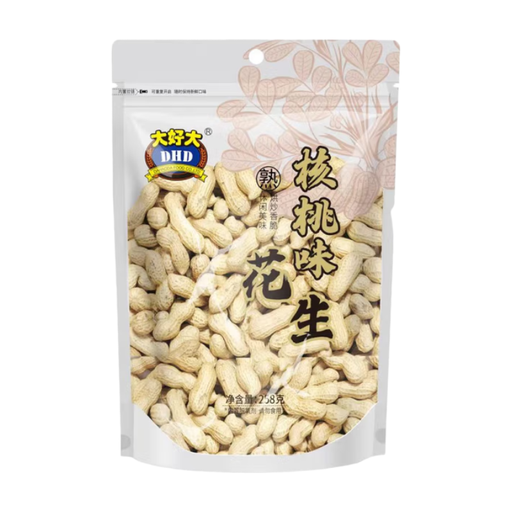
Dahaoda walnut-flavoured peanuts 258 g
A seasoned option if you’re looking for something different from plain unsalted peanuts.
The ingredients information also lists sugar, salt and walnut flavouring; the energy is listed as 2420 kJ per 100 g.
The product information lists peanuts and soya; check the latest allergen information if this is relevant to you.
Joybuy
 No image available
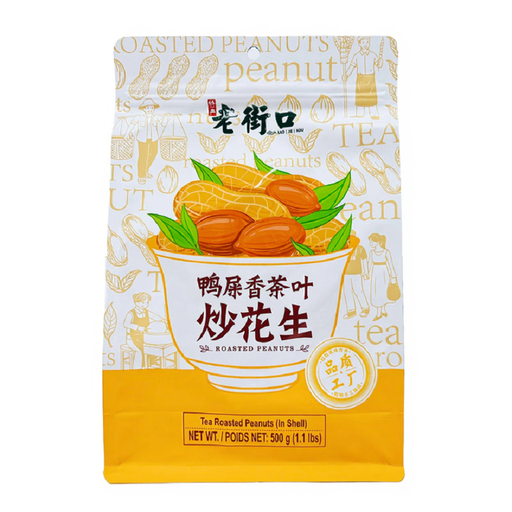
Lao Jie Kou Yashi Xiang roasted tea-flavoured peanuts 500 g
A tea-flavoured option if you’re looking for a seasoned snack instead of plain unsalted peanuts.
The product information lists tea, salt, sweetener and flavour enhancers; the nutrition table lists 544 kcal per 100 g.
Don’t give whole peanuts to children under 4.
Joybuy
Frequently asked questions
Are unsalted peanuts low in calories?
No, the plain unsalted products checked aren’t low in calories. The product pages for Jumbo, Albert Heijn and PLUS list 602 to 625 kcal per 100 g for the varieties reviewed. According to the European Commission, the claim ‘low energy’ may only be used for solid foods containing no more than 40 kcal (170 kJ) per 100 g. A smaller portion doesn’t change the nutritional value per 100 g.
How do I calculate the energy in my portion?
Multiply the kcal per 100 g shown on the pack by the weight of your portion in grams, then divide by 100. Use the value for the exact variety; a portion shown on a product page is an example calculation, not personal advice.
Can children under 4 eat whole peanuts?
No. The Netherlands Nutrition Centre advises against giving whole peanuts or nuts to children under 4. Choose a suitable ground form or nut butter; older children should eat calmly at the table, and you should stay with them when they’re eating whole nuts.
What should I check if I have a peanut allergy?
Check the latest allergen information on every pack. Plain peanuts contain peanuts; the Duyvis Cocktail variety checked also lists milk and wheat, among other allergens. The Netherlands Food and Consumer Product Safety Authority explains that pre-packed products must display allergen information on the label.
What should I do with the recalled AH peanuts?
Do not eat AH Extra Large Salted Peanuts in a tub with a best-before date of 04-11-2026. On 20 May 2026, Albert Heijn announced a recall of this specific batch due to possible metal fragments. The warning doesn’t automatically apply to other AH peanuts or products with different best-before dates.


