What should you look for when choosing?
Larger pack
A good fit if: your household eats peanuts regularly or you prepare portions in advance.
The trade-off: you buy more at once and need to portion it yourself and manage the opened pack.
Smaller pack
A good fit if: you eat peanuts less often and want to match the pack size to how much you’ll use.
The trade-off: a smaller pack isn’t automatically a breakfast portion either, so you may still need to portion it yourself.
Don’t just look at the pack size. Think about how much you’ll use, whether you prepare portions in advance and how you’ll store the rest once opened.
| What to consider |
What to look for |
Who should pay particular attention? |
| How much you use |
Choose a net weight that suits how much your household uses. A larger pack is only practical if you’ll finish it. |
If I mainly want to avoid having lots left over, I look at how much we actually use. Around 31% of consumers put the amount they can use to good effect first. |
| Morning preparation |
Decide whether you’ll prepare portions at home or prefer to open a smaller pack each time. |
If I’m short on time in the morning, I want to be able to get breakfast ready in advance. Around 25% of consumers prioritise doing as little preparation as possible in the morning. |
| Ingredients |
Check the exact product, its ingredients and salt content on the pack. |
If I’m choosing peanuts as part of a carefully planned breakfast, I want to know whether they’re unsalted and what ingredients they contain. Around 25% of consumers prioritise finding a product with suitable ingredients. |
| Storage after opening |
Read the storage advice on the pack and choose a size that suits how often you use peanuts and the storage options available to you. |
If I don’t use peanuts often, I want to know how to store an opened pack and whether I’ll finish it in time. Around 19% of consumers prioritise having a manageable amount in stock. |
Peanuts at Joybuy
These products include smaller packs of peanuts, with both unsalted and seasoned or salted options. Check the product details to find out which ingredients suit your breakfast.
 Image unavailable
g'woon Unsalted Peanuts 250 g
A smaller pack of unsalted peanuts for anyone who wants to match the pack size to how much they use.
Pack size: 250 g. Ingredients: 99% peanuts and sunflower oil. May contain cashew nuts.
View at Joybuy
 Image unavailable
Verse Extra Large Roasted Peanuts 210 g
A smaller pack of roasted, unsalted peanuts for anyone who doesn’t need a large supply.
Pack size: 210 g. The product information lists 100% peanuts as the ingredient.
View at Joybuy
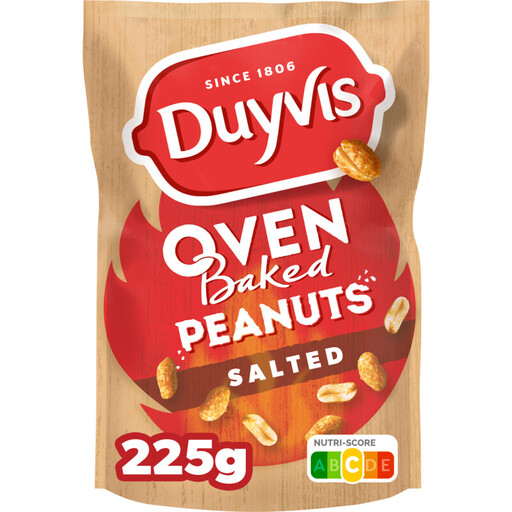 Image unavailable
Duyvis Roasted Peanuts 225 g
A smaller pack of roasted peanuts for anyone looking for a savoury option; these aren’t unsalted.
Pack size: 225 g. Salt: 1.4 g per 100 g.
View at Joybuy
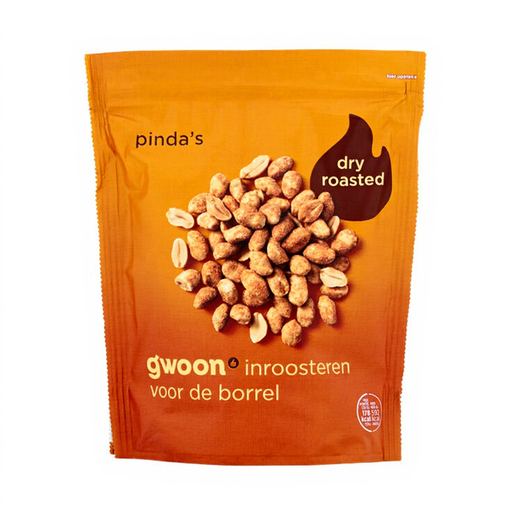 Image unavailable
g'woon Dry Roasted Peanuts 200 g
A smaller, resealable pack for anyone who wants to include seasoned peanuts in a quick breakfast.
Pack size: 200 g. The product information lists spices and 1.5 g of salt per 100 g; these aren’t unsalted.
View at Joybuy
Frequently asked questions
Does a value pack prove that buying in bulk is cheaper?
No, the label alone doesn’t prove that. Think about how much you’ll actually use and compare like-for-like products only. Also make sure the pack size suits your storage options.
How can I make a larger pack practical for a quick breakfast?
Prepare the portions you want to take with you at home in advance. Follow the storage advice on the pack, and keep the ingredients and allergen information if you transfer the contents to another container.
How long can I keep unsalted peanuts after opening?
The Netherlands Nutrition Centre’s general storage guide recommends 6 months in a kitchen cupboard, 9 months in the fridge and 1 year in the freezer. These are general guidelines, not a guarantee for every pack, so follow the product information too.
What allergen information should I check on a Dutch pack?
According to the Netherlands Food and Consumer Product Safety Authority, allergen information must appear on the label of pre-packed foods. Peanuts are one of the 14 allergens that must be listed. Rules on warnings about accidental cross-contamination also apply from 1 January 2026. Check the current pack, especially if you need allergen information.
Are whole peanuts suitable as a breakfast to take with you for young children?
Whole peanuts aren’t automatically a suitable grab-and-go option for young children. The Netherlands Nutrition Centre warns of the risk of choking. Make sure children eat calmly while seated and supervise them.


