
Snackers who want to weigh their portions
You want to enjoy peanuts with a drink and know in advance how much energy is in your bowl. Weighing out a set amount makes it easier to compare labels.


The plain peanuts reviewed contain 602–625 kcal per 100 g, so they do not meet the EU threshold for a ‘low-calorie’ claim. If you’re keeping an eye on calories, weigh your portion and compare products per 100 g. Choose unsalted, salted or a seasoned variety based on taste, salt and ingredients—not just how it’s prepared.
You want to enjoy peanuts with a drink and know in advance how much energy is in your bowl. Weighing out a set amount makes it easier to compare labels.
You’re looking for a simple peanut flavour with no added salt, but don’t want to mistake unsalted for low-calorie. So check the nutritional values per 100 g too.
You’re serving peanuts to several people and want to offer a mix of flavours in measured bowls, with clear allergen information.
First decide what matters most to you: the energy in each portion, no added salt, a particular flavour, or packaging that’s suitable for sharing and storing.
| What to consider | What to look for | Who is this most important to? |
|---|---|---|
| Portion and energy | Compare kcal per 100 g, then calculate the value for the same weighed amount. Labelled portion sizes can vary. | If I want to know how much energy is in my own bowl, I weigh out a set amount. Around 42% of consumers prioritise portion size and calories when buying. |
| No added salt | Check both the ingredients list and the salt per 100 g; a small amount of salt may come from naturally occurring sodium. | If I want to avoid added salt, I check the ingredients rather than relying on the name on the pack. Around 25% of consumers give this the highest priority. |
| Flavour and preparation | Check the full variety name, ingredients, kcal and allergens on the pack you choose. | If a salty, roasted or coated flavour is just right for my get-together, I want to know what else is in it besides peanuts. Around 17% of consumers choose flavour as their main consideration. |
| Packaging and storage | Check the net weight, number of portions and storage instructions after opening. | For a get-together with guests, I want to choose an amount I can share out and store the rest properly. Around 16% of consumers prioritise ease of sharing and storage. |
The four unsalted products compared contain between 602 and 625 kcal per 100 g, according to their labels. A 25 g portion helps you keep track of how much you eat, but it doesn’t change the nutritional value per 100 g. The Voedingscentrum lists 157 kcal for a 25 g handful of unsalted peanuts.
These terms describe the salt content or preparation method; they don’t automatically tell you how much energy a product contains. For solid foods, the European Commission sets a maximum of 40 kcal per 100 g for a ‘low-calorie’ claim.
Check the ingredients, kcal and salt separately. Don’t use the preparation method as a substitute for the nutrition table.
The AH pack checked lists 25 g as a portion; Jumbo lists 30 g. So a difference in kcal per portion could also be down to the amount.
Compare per 100 g first, then calculate the value for the same weighed portion for both products.
The 300 g AH bag lists twelve 25 g portions. So the pack’s full contents aren’t the same as one portion.
Measure out the amount you want into bowls beforehand, then seal and store the rest according to the instructions.
A larger pack needs to be sealed properly after opening, and any leftovers need to be stored carefully.
A coating can add different ingredients and allergens. The honey variety checked, for example, lists wheat and gluten.
Check each variety separately, especially if you’re buying for guests with allergies.
The range includes unsalted, salted and oven-roasted varieties, as well as coated peanuts.
AH Unsalted Peanuts is a roasted own-brand variety with a stated portion size of 25 g.
Jumbo Unsalted Peanuts is a plain variety in a 250 g pack.
The Dutch range information describes roasted unsalted peanuts in a 200 g pack.
The Dutch product information describes 250 g of Trader Joe’s roasted unsalted peanuts as part of the ALDI range.
PLUS Unsalted Peanuts is a roasted own-brand variety for a plain-flavoured snack.
These product picks include unsalted, salted and seasoned peanuts to suit different tastes. Compare the nutritional values and ingredients of the specific variety, and choose a portion that matches how much you want to eat.
 No image available
An option to consider if you’re looking for unsalted peanuts to serve in a measured portion.
The product information lists 99% peanuts and sunflower oil, and 2690 kJ per 100 g.
Contains peanuts and may contain cashew nuts.
 No image available
This variety is a good fit if you’re after a sweet-and-savoury flavour for your get-together.
The product information lists 561 kcal per 100 g.
Contains peanuts, wheat and gluten, and may contain other nuts.
 No image available
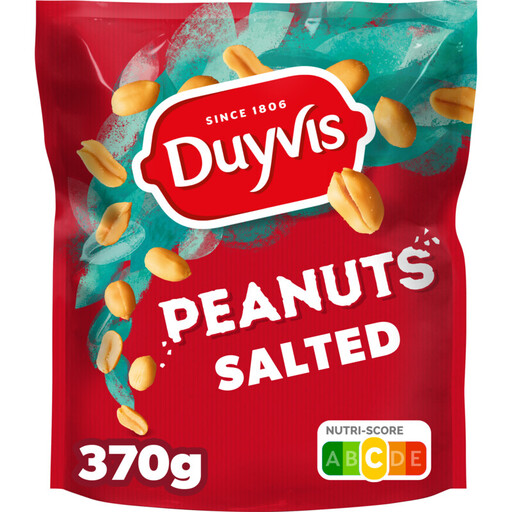
An option to consider if the classic salty snack flavour is what you’re looking for.
The product information lists 613 kcal per 100 g and names peanuts, sunflower oil and salt as ingredients.
May contain other nuts. Not recommended for children under 5 due to the risk of choking.
 No image available
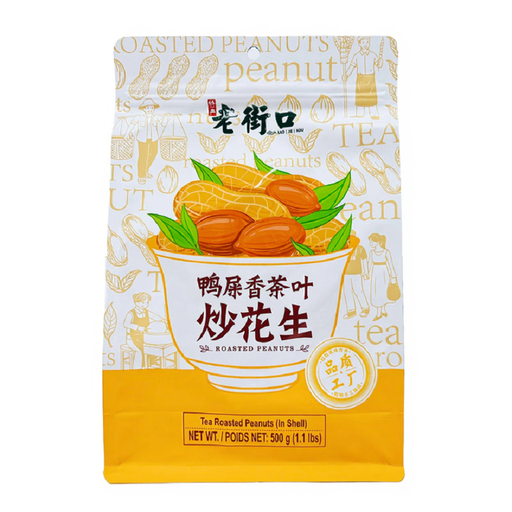
A flavoured option to consider if you’re looking for peanuts to share at a get-together.
The product information lists 544 kcal per 100 g and a net weight of 500 g.
The description lists peanuts as an ingredient and allergen.
 No image available
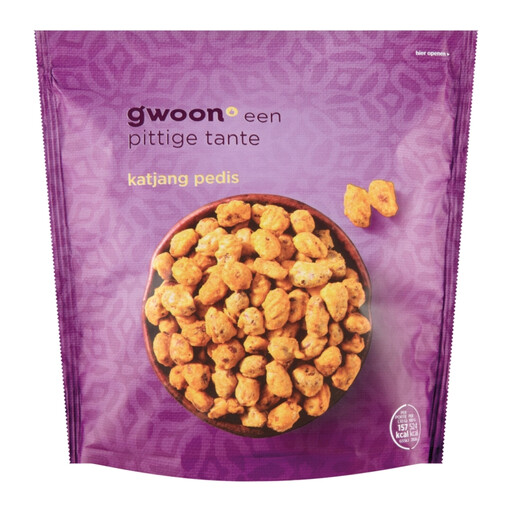
This seasoned variety is worth considering if you’d like a spicier flavour alongside plain peanuts.
The product information lists 524 kcal per 100 g and 62% peanuts.
The ingredients list includes wheat flour, egg and soya; the product information lists nuts as an allergen.
No. According to the European Commission, a nutrition claim for solid foods can only be made if the product contains no more than 40 kcal (170 kJ) per 100 g. A smaller portion reduces how much you eat, but doesn’t change the composition per 100 g. Regulation (EC) No 1924/2006 applies to nutrition and health claims in commercial communications.
Choose one weight in grams and multiply the kcal per 100 g by that amount divided by 100. For example, Jumbo Unsalted lists 602 kcal per 100 g; 25 g works out at 150.5 kcal, even though the product information uses a 30 g portion.
No. ‘Unsalted’ doesn’t in itself mean that a product has fewer calories. Choose this variety if you want to avoid added salt, and compare the nutritional value per 100 g and your weighed portion to keep track of your energy intake.
Peanuts are an allergen; don’t serve them to anyone with a peanut allergy. Check the allergen information for each variety too, for example for wheat, gluten or other nuts, and keep the packaging available. The NVWA explains the mandatory allergen information on labels.
On 20 May 2026, Albert Heijn published a recall for AH Extra Large Salted Peanuts in a tub with a best-before date of 04-11-2026, due to the possible presence of metal fragments. Check whether you have this exact pack and date, and follow Albert Heijn’s instructions. The warning doesn’t automatically apply to other best-before dates or the entire AH range.