
Portion-conscious patio snackers
You want peanuts with your drink, while keeping an eye on the energy in the amount you eat. So compare the same weight in grams rather than relying on serving sizes suggested by manufacturers.


To limit the energy in your snack portion, first compare kcal per 100 g and calculate each option for the same amount. The plain peanuts checked list 602 to 625 kcal per 100 g on the product pages of Jumbo, Albert Heijn and PLUS; none of these figures comes close to the European threshold for a claim such as ‘low energy’. Choose unsalted if added salt matters to you, and check the nutritional information for the exact variety when considering roasted or coated peanuts.
You want peanuts with your drink, while keeping an eye on the energy in the amount you eat. So compare the same weight in grams rather than relying on serving sizes suggested by manufacturers.
You want the flavour of peanuts without added salt, and consider energy content separately. ‘Unsalted’ does not automatically mean ‘low calorie’ or ‘oil-free’.
You’d rather have a roasted flavour or a crunchy coating, and want to keep an eye on salt, ingredients and allergens.
Retailer pages list 602 kcal per 100 g for Jumbo Unsalted Peanuts 250 g, 614 kcal for Duyvis Unsalted 235 g, 620 kcal for AH Unsalted, 623 kcal for Jumbo Kingsize and 625 kcal for PLUS Unsalted. These are the label values for these specific packs, not independent measurements; the figures are listed by Jumbo, Albert Heijn and PLUS.
| What to consider | What to look for | Who is this most relevant to? |
|---|---|---|
| Energy in your portion | Compare kcal per 100 g, then calculate for the same portion weight. A smaller portion does not change the energy per 100 g of the product. | If I want a measured amount with my drink, I’d rather compare equal weights than different manufacturer serving sizes. Around 39% of consumers say the energy in the portion they eat is their main reason for buying. |
| Choosing unsalted | Check the ingredients and salt content on the exact pack; unsalted does not automatically mean all the other nutritional values are low. | If I want to avoid added salt, I also check the nutritional information and ingredients rather than relying on the product name alone. Around 23% of consumers prioritise an unsalted product. |
| Flavour, coating and allergens | For roasted or coated varieties, check the energy and salt content, and read the ingredients and allergen information. | If I’m looking for a spiced flavour or a crunchy coating, I want to know which ingredients and allergens are involved. Around 23% of consumers put flavour and crunch first. |
| A suitable pack | Check the pack size, number of portions and storage instructions after opening; the whole bag is not automatically one snack portion. | If I don’t snack often or I’m sharing a bag, I want an amount that suits how I’ll use it and can be stored properly once opened. Around 15% of consumers say a suitable pack is their main reason for buying. |
For solid foods, the European Commission sets the threshold for a ‘low energy’ claim at no more than 40 kcal (170 kJ) per 100 g. The plain peanuts checked do not meet this threshold at their listed values. Weighing a portion can help you decide how much to eat, but it does not make the product itself low in energy.
‘Unsalted’ describes the salt content, not the energy content. ‘No added oil’ is not proof that a product is low in calories either.
Check kcal, salt and ingredients as separate criteria. If you want to get less energy from your snack, choose a smaller amount without describing the peanuts themselves as low in energy.
A 25 g serving on one label is not directly comparable with a 30 g serving on another. This means serving-size values can give a different impression from a comparison based on equal amounts.
Choose one weight in grams and calculate each option on that same basis.
A pack may contain several portions. The amount you actually eat determines how much energy you get from the peanuts.
Measure out a portion into a bowl and follow the storage instructions on the pack for the rest.
A coating can add other ingredients and allergens. Duyvis lists ingredients including wheat-containing starch and milk-derived lactose in its Borrelnootjes Cocktail.
Check the full allergen information for the exact flavour. If you need allergen information at a pub or restaurant, ask for it before ordering.
The product ranges mentioned include everything from unsalted peanuts to Oven Baked Original and coated Borrelnootjes Cocktail.
AH Unsalted Peanuts 300 g is an own-brand option for anyone looking for plain peanuts.
The unsalted varieties mentioned differ in pack size and nutritional values.
The Dutch product information lists 200 g packs of roasted unsalted peanuts; the Alesto range also includes coated peanuts.
The Dutch product page lists Trader Joe’s unsalted peanuts in a 250 g pack.
PLUS Unsalted Peanuts 250 g is an own-brand option with listed ingredients and nutritional information.
These Joybuy peanut options come in a range of flavours and preparations, including tea-flavoured varieties and peanuts in their shells. Compare the product-page information with the amount and flavour you’re looking for.
 No image available
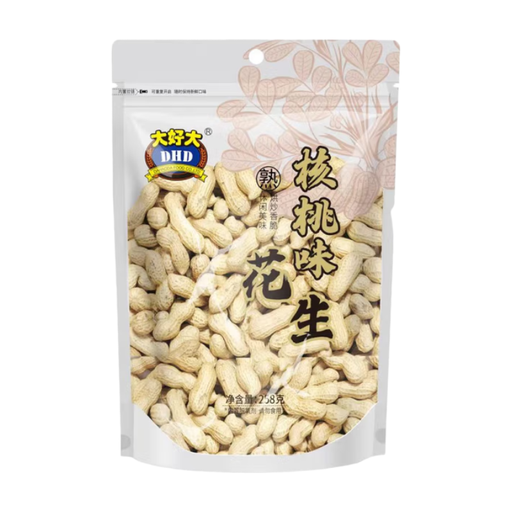
This flavoured variety could suit you if you’re looking for walnut-flavoured peanuts to enjoy with your drink.
The product information lists 2,420 kJ per 100 g. The ingredients include peanuts, sugar, salt and soya lecithin.
 No image available
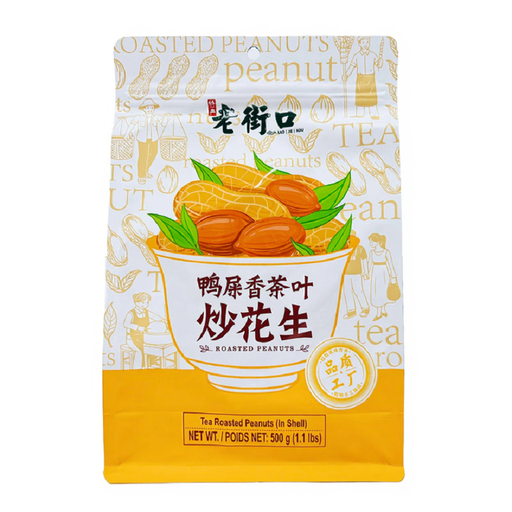
This flavoured variety could suit you if you’re looking for roasted peanuts with a tea aroma.
The product information lists 544 kcal and 1.37 g of salt per 100 g. The peanuts are in their shells.
 No image available
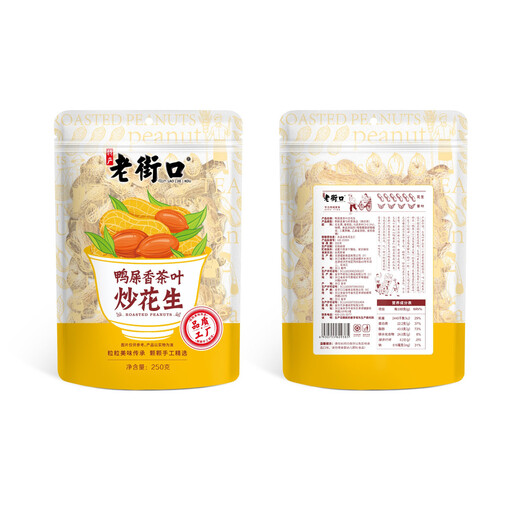
This variety could suit you if you’re looking for tea-flavoured peanuts made in a different way.
The product information lists 584 kcal and 1.5 g of salt per 100 g, and mentions sweeteners.
 No image available
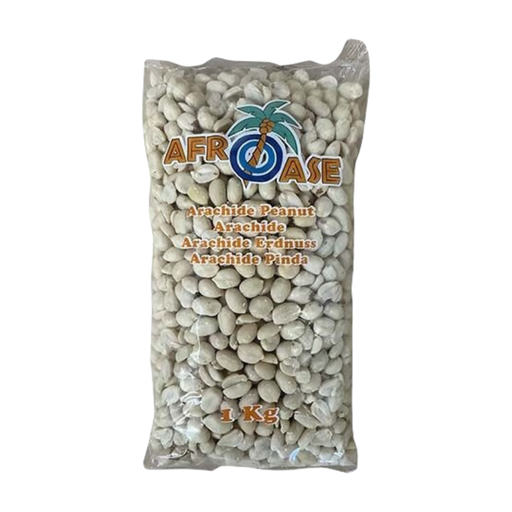
The product name indicates peanuts and states that the pack contains 1 kg.
 No image available
This variety could suit you if you like shelling peanuts while enjoying a drink.
The product information lists 2,515 kJ per 100 g. The peanuts are in their shells.
Multiply the kcal per 100 g by the weight of your portion in grams, then divide by 100. The product page for Jumbo Unsalted Peanuts 250 g lists 602 kcal per 100 g; mathematically, 15 g works out at 90.3 kcal and 25 g at 150.5 kcal. These are examples of calculations, not recommended portion sizes.
No. According to the European Commission, a ‘low energy’ claim can only be used for solid foods containing no more than 40 kcal (170 kJ) per 100 g. A smaller portion does not change the energy per 100 g; the listed values for the plain peanuts checked are above this threshold.
The coating can add other ingredients and allergens. Duyvis lists ingredients including wheat-containing starch and milk-derived lactose in its Borrelnootjes Cocktail, alongside peanuts, so check the information for the exact variety. The Netherlands Food and Consumer Product Safety Authority says that sellers must make allergen information for non-prepacked foods available before purchase.
Albert Heijn’s warning of 20 May 2026 applies only to AH Extra Large Salted Peanuts in a tub with a best-before date of 04-11-2026. Do not eat this pack: it may contain metal particles. Albert Heijn says you can return the product for a refund; the warning does not automatically apply to unsalted peanuts or products with different best-before dates.
Store peanuts in a tightly sealed container in a cool, dry place, and follow the instructions on the pack. For an opened bag of unsalted peanuts, Duyvis recommends a light-proof, airtight container.