What should you look for when choosing?
First decide what you mean by a lighter snack: less fat, less energy per portion eaten, less salt, or a suitable choice for your guests.
The percentages below show which purchasing needs take priority for consumers choosing peanuts for a birthday get-together.
| What to consider |
What should you check? |
Who is this important to? |
| Fat and claims |
Compare fat per 100 g and, for a comparative claim, check the exact variant and the reference product named. The Netherlands Nutrition Centre states that the ‘low fat’ claim means no more than 3 g of fat per 100 g for solid foods. |
If I want the peanuts themselves to contain less fat, I check both the nutrition table and the precise claim. Around 31% of consumers prioritise reducing fat. |
| Energy and portion size |
Compare energy per 100 g, then consider how much you actually want to serve. Jumbo also lists values per 25 g portion for its Dry Roasted variant. |
If I mainly want to manage how much I eat during the get-together, I look at the portion as well as the value per 100 g. Around 25% of consumers prioritise energy and portion size. |
| Salt |
Compare salt per 100 g and check whether salt or seasoning has been added. PLUS lists 0.02 g of salt per 100 g; Albert Heijn lists 1.7 g and Jumbo 1.80 g for the variants mentioned. |
If I’d rather serve less salt, that matters more to me than a lower fat content in a seasoned variant. Around 19% of consumers choose salt as their main consideration. |
| Allergens and guests |
Read the ingredients and allergen information on the exact packaging, and discuss any relevant allergies with your guests. Also check warnings about young children. |
If I have guests with allergies or young children, I want to know in advance what’s in the snack and which warnings apply. Around 13% of consumers prioritise guest safety. |
| Quantity and storage |
Check the pack size, best-before date and storage instructions; consider how much you want to put out and how you’ll store an opened pack. |
If I want to choose the right amount for the get-together and store any leftovers easily, I check the pack size and the instructions on the packaging. Around 12% of consumers prioritise this kind of planning. |
The label values given are specific to each product: Jumbo Pinda’s Dry Roasted lists 43.1 g of fat and 564 kcal per 100 g, AH Dry Roast Salted Peanuts 47 g and 593 kcal, and PLUS Unsalted Peanuts 50 g and 625 kcal. The Netherlands Nutrition Centre gives 25 g as a handful of unsalted peanuts; this is not a personally prescribed portion for a get-together.
Peanuts and party snacks at Joybuy
These Joybuy products are suited to a get-together and make it easy to compare snack peanuts. The selection also includes seasoned coated peanuts, so compare the product type and nutritional values for the exact variant.
 No image available
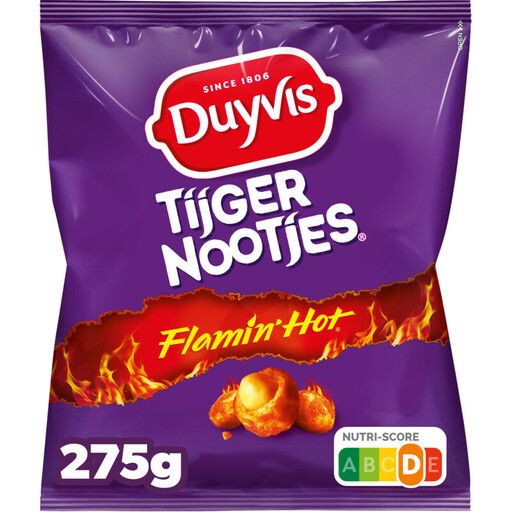
Duyvis Tiger Nuts Flaming Hot - 275 g
A seasoned party snack to compare if you’re looking for a spicy option.
The product information lists peanuts, wheat (gluten) and soya. Check the exact packaging for nutritional values and pack size.
View at Joybuy
 No image available
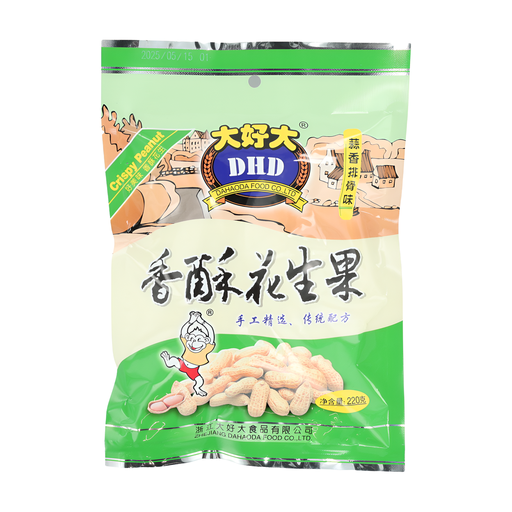
Dahaoda Crispy Peanuts Garlic Spareribs 220 g
A seasoned peanut snack to serve alongside other party options when you want to compare nutritional values.
The product information lists 30.0 g of fat, 550 kcal and 1.25 g of salt per 100 g. Contains peanuts and wheat.
View at Joybuy
 No image available
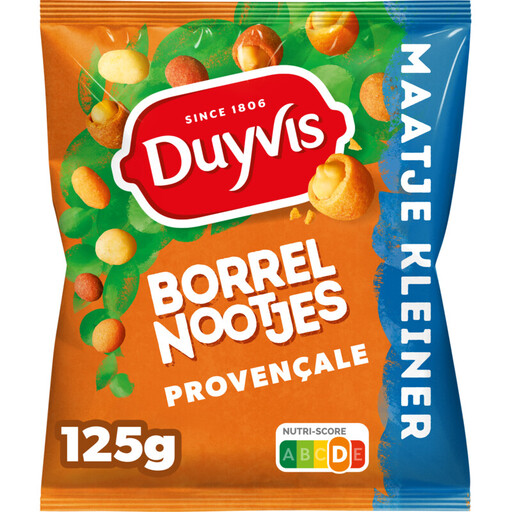
Duyvis Bran Nuts Provencale - 125 g
The smaller pack size listed may suit you if you want to serve a limited amount at your get-together.
The product information lists 33 g of fat, 527 kcal and 1.2 g of salt per 100 g. Contains peanuts and wheat; may contain traces of milk, nuts, soya and mustard.
View at Joybuy
 No image available
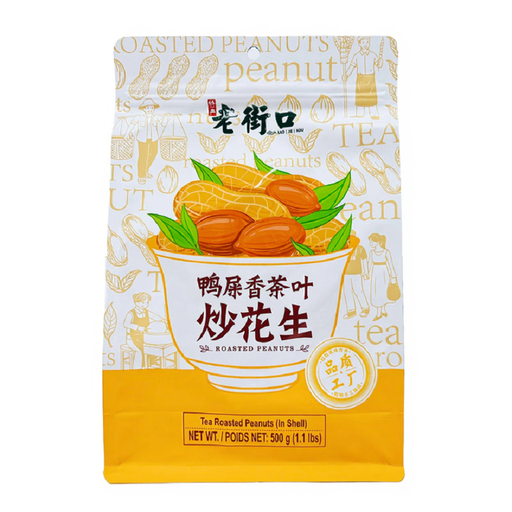
Lao Jie Kou Yashi Xiang Tea-Infused Roasted Peanuts 500 g
The listed 500 g pack size may be useful if you’re looking for a larger pack for several guests.
The peanuts are in their shells. The product information lists 35.6 g of fat, 544 kcal and 1.37 g of salt per 100 g. Contains peanuts.
View at Joybuy
 No image available
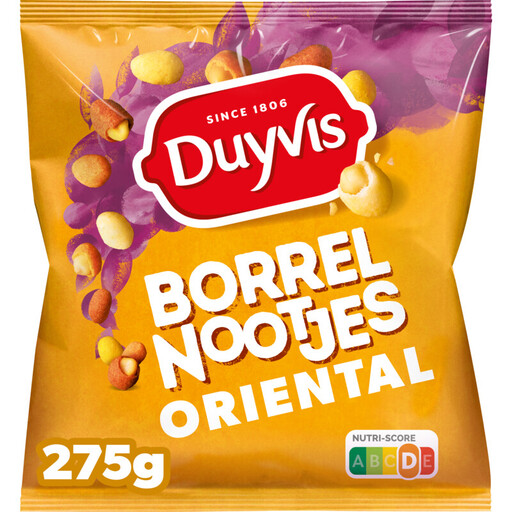
Duyvis Oriental Coated Peanuts - 275 g
These are coated peanuts; don’t compare them directly with plain peanuts when looking at product types or nutritional values.
The product information lists 34 g of fat, 539 kcal and 1.4 g of salt per 100 g. Contains peanuts and gluten (wheat and barley); may contain milk, nuts, mustard and soya.
View at Joybuy
Frequently asked questions
Do ‘reduced fat’ and ‘low fat’ mean the same thing?
No, don’t treat the terms as interchangeable. The Netherlands Nutrition Centre states that ‘low fat’ means no more than 3 g of fat per 100 g for solid foods. A comparative claim requires you to check the exact variant and the reference product named; the applicable requirements should determine whether the claim is valid.
How do I check allergens in seasoned peanuts?
Read the ingredients list and allergen information on the exact packaging, and discuss any relevant allergies with your guests. According to the Netherlands Food and Consumer Product Safety Authority, allergens in the ingredients list must be clearly distinguishable from the other ingredients; for example, the Jumbo Dry Roasted variant also lists wheat (gluten).
Are peanuts suitable for young children?
The product information for the Jumbo and PLUS variants checked warns that young children may choke on peanuts. A label such as ‘unsalted’ or a particular roasting method tells you nothing about this warning, so follow the guidance for the guests concerned.
How should I store an opened pack after the get-together?
Follow the instructions on the packaging. The Jumbo and PLUS product information checked recommends storing the peanuts in a cool, dry and dark place; the Duyvis listing on Joybuy recommends sealing an opened pack securely. Use the packaging for the specific storage period.
Which AH peanuts are covered by the recall warning?
On 20 May 2026, Albert Heijn issued a warning about AH Extra Large Salted Peanuts in a tub with a best-before date of 04-11-2026, due to the possible presence of metal fragments. Check that the product name, packaging and date match; do not eat a pack covered by the warning.


