Only choose a small, measured portion of unsalted peanuts if the children are old enough, peanuts are suitable for the recipients and the school allows them. The unsalted packs reviewed list 602–620 kcal per 100 g: they are not low in calories, and a smaller portion does not change that figure per 100 g (Jumbo and Albert Heijn; the European Commission sets the threshold for a ‘low energy’ claim at no more than 40 kcal per 100 g for solid foods). Whole peanuts are not suitable as a treat for children under 4; you should also take allergies and school policy into account (Voedingscentrum and Amsterdam UMC).
Who is this relevant to?
Class party planners
You want to know whether peanuts are suitable for the children’s ages, any allergies and the school’s policy on treats. Voedingscentrum warns against whole peanuts because of the risk of choking; for children under 4, Amsterdam UMC recommends nut butter instead of whole nuts.
Parents looking for small portions
You’re looking for a modest treat, not a weight-loss product for children. Compare the energy per 100 g and weigh out the amount for each bag: the unsalted peanuts reviewed are not low in calories, even if you choose a small portion.
People making their own treat bags
You’re dividing a larger pack between several bags and want to make sure they all contain the same amount. Check the ingredients, allergen information and storage instructions on the pack you actually buy.
What should you look out for?
First check that peanuts are suitable for the recipients and allowed under the school’s policy. Then compare the nutritional information and decide how much to put in each bag.
| What to consider |
What should you check? |
Who is this important for? |
| Age, allergens and school policy |
Check the school’s policy and find out about any allergies. Do not give whole peanuts to children under 4 (Voedingscentrum; Amsterdam UMC). |
When I’m arranging a treat for a class, I want to know first whether peanuts are allowed given the children’s ages, allergies and school rules. Around 36% of consumers prioritise safe, permitted sharing. |
| Energy per portion |
Compare per 100 g: Jumbo lists 602 kcal, Duyvis 614 kcal and Albert Heijn 620 kcal for the unsalted packs reviewed. Then weigh out the amount for each bag. |
I want to weigh out a modest amount for each bag without calling the product low in calories. Around 29% of consumers mainly want to keep the energy content of each portion low. |
| Ingredients and salt |
Read the ingredients and allergen information. Duyvis describes Oriental as peanuts with a crunchy coating; the manufacturer lists it as containing 49% peanuts. |
When I’m looking for a simple product, I want to know whether it contains a coating or other ingredients. Around 21% of consumers prioritise ingredients and salt content. |
| Portioning and storage |
The packs reviewed contain 235 g of Duyvis, 250 g of Jumbo or 300 g of Albert Heijn. Also follow the storage instructions on the pack you choose. |
I want to know in advance how many equal-sized bags I can make from the pack and how to store any leftovers. Around 14% of consumers place greater importance on practical portioning and storage. |
Common mistakes
-
Assuming a small bag is a suitable treat for every child
A small portion does not remove peanut allergens or automatically prevent choking. Age, allergies and school rules matter more than portion size.
Check the treat is suitable in advance. Do not give whole peanuts to children under 4, and choose a different treat if peanuts are unsuitable for a recipient or not allowed at school.
-
Assuming unsalted or Nutri-Score A means low in calories
Unsalted describes the salt content, not the energy content. The unsalted packs reviewed list 602–620 kcal per 100 g; the European Commission sets the threshold for a ‘low energy’ claim at no more than 40 kcal per 100 g for solid foods.
Compare the kcal per 100 g and weigh out the amount for each bag. Describe a smaller portion as portion control, not as a low-calorie peanut product.
-
Comparing different portion sizes directly
Nutritional values per portion may be based on different weights. For the pack reviewed, Albert Heijn lists a different portion size from the 30 g portions listed by Jumbo and Duyvis.
Compare per 100 g first, then work out the figures for each option using the same weight of your choice. This helps you avoid mistaking a different portion size for a difference between products.
A larger portion than planned could mean you get fewer party bags from the pack.
-
Focusing only on the peanuts in coated products
A coating can add ingredients and allergens. Duyvis says Oriental contains ingredients including wheat, barley and soya; the manufacturer also warns that other allergens may be present.
Read the full ingredients and allergen information for the variety you choose. Don’t assume that a simple unsalted variety is suitable just because a flavoured one is.
Brands to compare
Duyvis
A brand offering both unsalted peanuts and coated varieties.
- For Duyvis Unsalted 235 g, Jumbo lists 614 kcal per 100 g. The manufacturer describes Oriental as peanuts with a crunchy curry coating.
- The Oriental variety has a different ingredients and allergen list. A product claim from the manufacturer is not proof that peanuts are low in calories or suitable for every children’s treat.
Albert Heijn
A 300 g own-brand pack of unsalted peanuts, which you can divide into portions of your choice.
- For the pack reviewed, Albert Heijn lists 620 kcal per 100 g, 96% peanuts and 0 g salt per 100 g.
- These values apply to this pack. The product is not low in calories; the product information notes that various nuts may be present and warns of a choking risk for young children.
Jumbo
A 250 g own-brand pack of unsalted peanuts, with nutritional information per 100 g and per stated portion.
- For the pack reviewed, Jumbo lists 602 kcal per 100 g, 99.5% peanuts and 0.01 g salt per 100 g.
- The stated 30 g portion is not age-specific advice for a treat. Also bear in mind peanut allergies and the risk of choking.
Lidl
An own-range listing for unsalted peanuts in a 285 g pack.
- Lidl’s product listing confirms the type of product and pack size.
- This information does not provide a basis for comparing the energy content or calorie benefits with the other packs.
ALDI
An own-range listing for 250 g of roasted, unsalted peanuts.
- The official product listing describes the preparation method and pack size.
- The product listing does not provide comparable energy information to establish a calorie benefit.
PLUS
An own-brand option for unsalted peanuts in a 250 g pack.
- The product information lists 99% peanuts and sunflower oil, and notes that cashew nuts may be present.
- The product page warns of a choking risk for young children. This information does not provide a basis for making a general claim about calorie benefits.
Peanuts at Joybuy
Below you’ll find Joybuy peanuts in a range of pack sizes and flavours. Compare the product information and ingredients with the recipients’ needs, and weigh out the amount for each bag yourself.
 No image available
g’woon unsalted peanuts, 250 g
Ideal if you want to weigh out a simple, unsalted peanut option yourself; the product name lists a 250 g pack.
Contains peanuts. Make sure the treat is suitable given any allergies and the school’s policy. Do not give whole peanuts to children under 4 because of the risk of choking.
View at Joybuy
 No image available
g’woon peanuts in shells, 500 g
The 500 g pack is for anyone who wants to portion out peanuts in their shells; allow extra time to prepare them for party bags.
Make sure the treat is suitable given any allergies and the school’s policy. Do not give whole peanuts to children under 4 because of the risk of choking.
View at Joybuy
 No image available
Verse Extra Large roasted peanuts, 210 g
You can weigh out and divide the 210 g pack yourself. Check the product information to see whether this variety suits your preference for unsalted peanuts.
Contains peanuts. Make sure the treat is suitable given any allergies and the school’s policy. Do not give whole peanuts to children under 4 because of the risk of choking.
View at Joybuy
 No image available
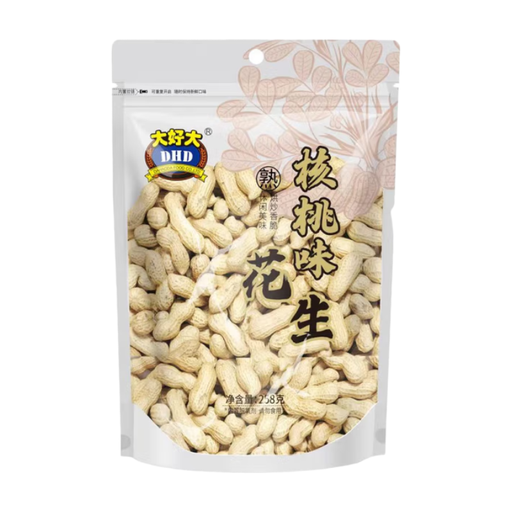
Dahaoda walnut-flavoured peanuts, 258 g
A flavoured option for anyone looking for peanuts with a walnut flavour; compare the ingredients with a simple unsalted variety before choosing this for a group.
The product information lists peanuts and soya, as well as sugar, salt and walnut flavouring. Make sure the treat is suitable given any allergies and the school’s policy. Do not give whole peanuts to children under 4.
View at Joybuy
 No image available
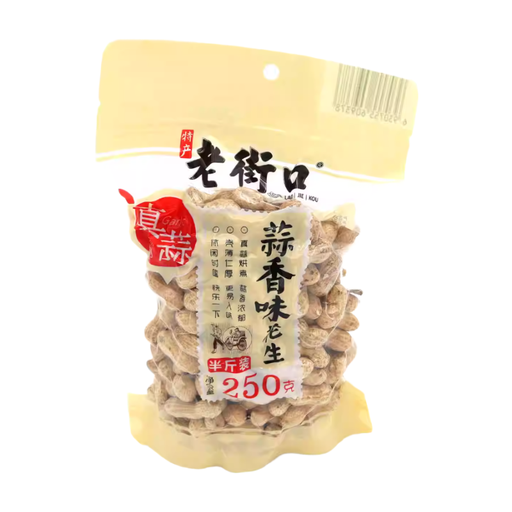
Lao Jie Kou garlic-flavoured peanuts, 250 g
You can portion out the 250 g pack yourself. This flavoured variety is different from a simple unsalted peanut treat.
The product information lists salt, garlic and flavourings, and 2.55 g of salt per 100 g. Make sure the treat is suitable given any allergies and the school’s policy. Do not give whole peanuts to children under 4 because of the risk of choking.
View at Joybuy
Frequently asked questions
Are unsalted peanuts low in calories?
No. The unsalted packs reviewed list 602–620 kcal per 100 g; for solid foods, the European Commission sets the threshold for a ‘low energy’ claim at no more than 40 kcal per 100 g. Unsalted and low in calories describe different qualities.
How do I decide how much to put in each party bag?
Weigh the amount you want to put in each bag instead of automatically using a supplier’s suggested portion. Compare products by kcal per 100 g first; there is no universal weight of peanuts per child that suits every treat.
Can I give whole peanuts to children under 4?
No. Voedingscentrum warns of a choking risk from whole peanuts, and Amsterdam UMC recommends nut butter instead of whole nuts for children under 4. This safety advice is not a legal age limit for sales.
Can my child take peanuts to school as a treat?
Check the policy at the school in question and find out about any allergies among the recipients. Voedingscentrum explains that schools can set rules about what may and may not be brought in as a treat; this does not establish a nationwide permission or ban on peanut treats.
What should I look for in allergen information?
Read the current ingredients list and warnings on the pack. NVWA explains that commercial labels must list the relevant allergens in the ingredients list; warnings about possible cross-contamination are also important. An unsalted variety is not suitable for someone with a peanut allergy.


