
Households that plan snacks ahead
If you regularly prepare portions, a 500 g pack could be a practical amount. Choose a size that suits how much your household uses, rather than focusing on the pack size alone.


A 500 g bag could work if you regularly prepare portions and will use the whole pack; a smaller size may suit you better if you snack less often or like to switch things up. Consider the amount in each portion you choose and compare like-for-like types of peanuts. Unsalted peanuts may be a relevant choice if you follow the Netherlands Nutrition Centre’s guidance; always check the label and allergen information for the exact pack, too.
If you regularly prepare portions, a 500 g pack could be a practical amount. Choose a size that suits how much your household uses, rather than focusing on the pack size alone.
If you want to plan an unsalted snack, you can weigh out your own portion in advance. The Netherlands Nutrition Centre uses 25 g as an example of a handful of unsalted peanuts on its nutrition page.
If you eat peanuts less often or like to switch between snacks, 235 g or 250 g packs may be closer to the amount you want to buy. Think about how much you use when choosing.
| What to consider | What should you look for? | Who is this most relevant to? |
|---|---|---|
| Portions and quantity | Choose a net weight that suits the number of snack occasions you have planned and the portions you want to prepare. | If my main aim is to buy enough for the portions I’ll actually use, this is the top priority for around 31% of consumers. |
| Ingredients and portion size | Check whether the variety is unsalted and read the ingredients list. | If I want unsalted peanuts and to decide my portion size in advance, this is the top purchasing priority for around 25% of consumers. |
| A supply that suits how much you use | Compare smaller and larger packs with how often you eat peanuts, and follow the storage instructions on the label. | If I don’t eat many peanuts or often switch between snacks, I want to avoid buying more than I’ll use. This is the top priority for around 19% of consumers. |
| Preparing and taking snacks with you | Consider whether you want to weigh out portions in advance, and check the pack type and how it seals. | If I want to prepare a snack in advance and take it with me, convenience is the top priority for around 13% of consumers. |
| Allergens and labelling | Read the ingredients and allergen information for the exact pack, and check whether any warning applies to its product name and best-before date. | If I need to check allergens and precise product information for my household first, this is the top purchasing priority for around 12% of consumers. |
The weight tells you how much you’re buying, not whether the pack suits the portions you actually plan to use.
Divide the net weight by your chosen portion size and think about how many snack occasions you’re planning for.
A larger supply means portioning and storing the peanuts yourself.
Duyvis says its unsalted variety contains peanuts and sunflower oil, and the pack may contain traces of various types of nuts.
Check the ingredients and allergen information on the pack you’re buying, even if it says ‘unsalted’.
Albert Heijn’s warning applies to AH Extra Large Salted Peanuts in a tub with a best-before date of 04-11-2026. The warning does not automatically apply to all AH peanuts.
Check the exact product name and best-before date. Do not eat the product specified in the warning.
Duyvis offers a 235 g unsalted variety, a smaller amount for people who plan their snacks.
AH has a product page for unsalted peanuts.
Jumbo lists a 500 g value pack of unsalted peanuts.
Lidl has a product page for unsalted peanuts.
ALDI lists 250 g packs of TRADER JOE’S roasted unsalted peanuts and 500 g packs of roasted salted peanuts.
PLUS lists a 500 g bag of unsalted peanuts and a 275 g tub of extra-large unsalted peanuts.
These options range from smaller packs to larger quantities. Also consider the difference between salted, unsalted and in-shell peanuts.
 No image available
A smaller pack if you’re looking for an unsalted variety in a measured quantity.
Unsalted peanuts, 250 g.
 No image available
A larger quantity if you want to prepare in-shell peanuts; remove the shells before portioning.
Peanuts in shell, 500 g.
 No image available
A smaller quantity if you want to include roasted peanuts in your snack plans.
Roasted peanuts, 210 g.
 No image available
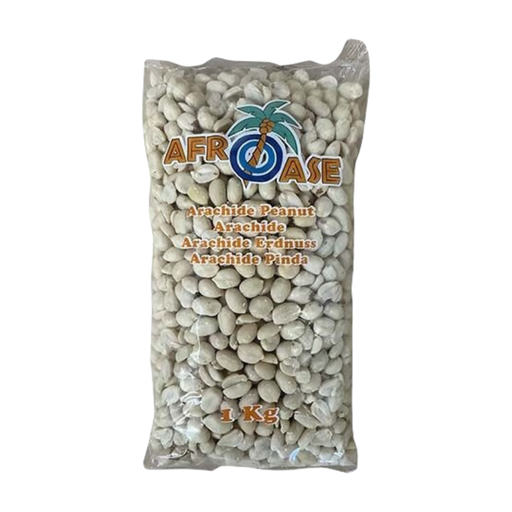
A larger quantity if you want to include peanuts in your snack plans.
Peanuts, 1 kg.
 No image available
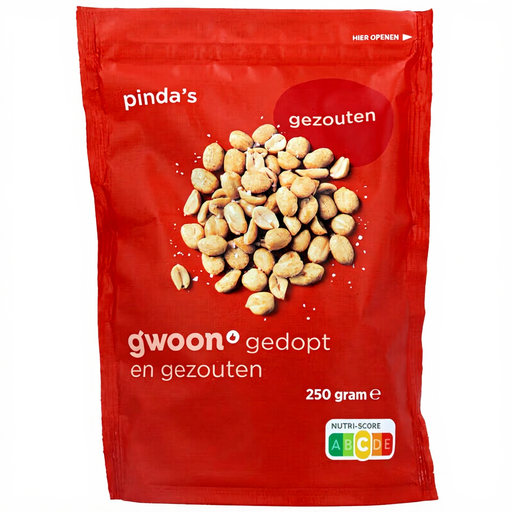
A smaller quantity if you’ve specifically chosen a salted variety.
Salted peanuts, 250 g.
If you use a 25 g portion as a guide, 500 g gives you twenty portions. The Netherlands Nutrition Centre uses 25 g as an example of a handful on its nutrition page; this is an example for planning your supply, not personal dietary advice.
Work out how many portions you’ll get from the net weight and compare this with the snack occasions you have planned. Compare the same type of peanuts and check the exact product information; pack size alone won’t tell you how much you’ll use.
Start by following the instructions on your product’s label. The Netherlands Nutrition Centre’s general storage guide recommends keeping opened unsalted peanuts in a kitchen cupboard for six months, in the fridge for nine months and in the freezer for one year. This doesn’t guarantee that every pack will retain the same quality for that long.
Do not eat AH Extra Large Salted Peanuts in a tub with a best-before date of 04-11-2026. Albert Heijn recalled this specific pack because it may contain metal fragments. Check the product name and date; the warning does not automatically apply to all AH peanuts.
Read the ingredients and allergen information on the exact pack. The Netherlands Food and Consumer Product Safety Authority (NVWA) says that retailers must inform consumers about allergens present; warnings about possible traces may also be relevant. Duyvis says its unsalted variety may contain traces of various types of nuts.