If you have a peanut allergy, don't choose peanuts: the Dutch Food Allergy Foundation identifies peanut proteins as the relevant allergen. If you need to avoid another ingredient, first establish what it is, then check the ingredients, allergen warnings and any relevant free-from claim on the exact pack; the NVWA stresses the importance of allergen information on labels. Only then compare salt, flavour and packaging. Unsalted or plain does not mean a product is allergen-free.
Who are these options for?
Travellers who need to avoid an allergen
If you have a food allergy, check whether your allergen is listed as an ingredient or mentioned in a warning on the pack. If you have a peanut allergy, peanuts themselves are off the menu, as the Dutch Food Allergy Foundation explains.
Travellers following a specific free-from diet
If you're looking for gluten-free options, for example, check the specific product information rather than relying on words such as ‘unsalted’. The Dutch Coeliac Society advises looking for the Crossed Grain trademark or a gluten-free statement.
Travellers looking for unsalted peanuts
If you can eat peanuts and want an unsalted option, compare the variety and pack. Examples include PLUS peanuts in a 300 g pack, Lidl peanuts in a 285 g pack and ALDI Trader Joe’s peanuts in a 250 g pack; these pack weights are not serving recommendations. Product information from PLUS, Lidl Netherlands and ALDI Netherlands describes these varieties.
What should you look for when choosing?
First, identify what you need to avoid. Then check the exact pack. Only once it suits your diet should you compare flavour, salt and how easy it is to take with you.
| What to consider |
What should you check? |
Who is this important for? |
| Avoiding the right allergen |
Check the allergens present and any warnings on the exact pack. If you have a peanut allergy, don't choose peanuts. |
If I have a food allergy, I want to check first whether my allergen is present or mentioned in a warning. Around 39% of consumers give avoiding an allergen their top priority. |
| Checking a specific free-from claim |
Identify the ingredient you need to avoid and look for the corresponding statement; the ingredients in a flavoured variety may differ from those in plain peanuts. |
If, for example, I want to avoid gluten, I look for clear information that meets that dietary requirement. Around 31% of consumers prioritise a specific dietary suitability claim. |
| Choosing unsalted |
Check the label and nutrition information for the variety in question; don't assume they apply to another pack. |
If I can eat peanuts and want to avoid added salt, I want to be able to check the salt information for that exact variety. Around 15% of consumers give choosing unsalted their top priority. |
| Quantity and packaging |
Check the net weight and packaging. Don't assume that a ‘stand-up pouch’ is resealable. |
For a train journey, I want to decide in advance how much to take and how to carry an opened pack. Around 15% of consumers give quantity and ease of carrying their top priority. |
Common mistakes
-
Taking ‘free from’ to mean ‘free from all allergens’
Peanuts are an allergen in their own right. A general free-from statement doesn't automatically tell you which ingredient is being avoided, and it doesn't make peanuts suitable for someone with a peanut allergy.
First, identify the ingredient you need to avoid. If you have a peanut allergy, don't choose a product from the peanut category.
-
Confusing unsalted with gluten-free or nut-free
Unsalted describes the salt content, not allergens or suitability for a specific diet. For its 300 g pack of unsalted peanuts, PLUS lists peanuts as an allergen present and various nuts under ‘may contain’.
Read the ingredients and warnings alongside the salt information. If you need a gluten-free option, look for specific product information that confirms this.
-
Assuming the ingredients in plain peanuts also apply to a flavoured variety
Duyvis offers a range that includes marinated peanuts and coated peanuts, as well as its salted plain variety. So the ingredients in one variety don't automatically apply to another.
Check the ingredients and warnings for the exact flavour you want to buy.
-
Ignoring a recall warning or applying it to the whole brand
Albert Heijn's warning identifies AH Pinda’s extra groot gezouten in a tub with a best-before date of 04-11-2026, due to possible metal fragments. The warning concerns that specific product and date.
Compare the product name, packaging and best-before date with the warning. Do not eat the affected pack named in the warning.
Brands to compare
Duyvis
Duyvis offers several peanut varieties, including unsalted, salted, marinated and coated products.
- The manufacturer distinguishes between its product ranges and lists peanuts, sunflower oil and salt for its salted plain variety.
- Those ingredients don't automatically apply to marinated or coated varieties. The range names are not a general allergen-free claim.
Albert Heijn
Albert Heijn offers an unsalted own-brand variety, among other products, and publishes product information and warnings for specific products.
- For AH Ongezouten pinda’s, the product information advises checking the pack, as dietary and allergy information can change.
- The warning for AH Pinda’s extra groot gezouten concerns a tub with a best-before date of 04-11-2026; don't apply it to all AH peanuts.
Jumbo
Jumbo lists Ongezouten Kingsize Pinda’s in a 350 g pack.
- The product page confirms the variety and pack weight.
- ‘Kingsize’ and ‘unsalted’ are not free-from certifications and, by themselves, say nothing about suitability for a specific diet.
Lidl
Lidl lists 285 g of unsalted peanuts, product number 154219.
- The product information identifies the unsalted variety and net weight.
- The product page says ‘In store only’. Check with your local shop to see if the product is available; unsalted does not mean allergen-free.
ALDI
ALDI sells Trader Joe’s roasted, unsalted peanuts in a 250 g pack.
- The product information specifies how the peanuts are prepared, the variety and the pack size.
- These details do not prove that the product is gluten-free, dairy-free or generally free from allergens.
PLUS
PLUS lists 300 g of unsalted peanuts in a stand-up pouch.
- PLUS declares 0 g of salt per 100 g and provides allergen information for this variety.
- The product information lists peanuts as an allergen present and various nuts under ‘may contain’. A stand-up pouch is not automatically resealable.
Peanut products at Joybuy
This selection includes unsalted peanuts, a peanut and cashew mix, peanuts in their shells and raw peanuts to prepare yourself. Check the ingredients and warnings for each product individually; a peanut product is not automatically suitable if you have an allergy or follow a specific diet.
 No image available
g'woon unsalted peanuts, 250 g
Only consider these if you can eat peanuts and are looking for an unsalted variety.
The product description lists 99% peanuts and sunflower oil, and warns that the product may contain cashews.
View product
 No image available
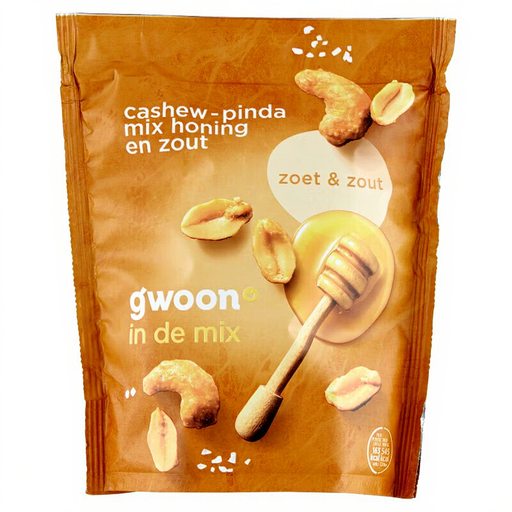
g'woon cashew, peanut and honey mix, 200 g
Only consider this if you can eat peanuts and cashews and are looking for a mix to take with you.
The product information lists cashews, peanuts, honey and salt. The product may contain traces of other nuts and soya.
View product
 No image available
G'woon peanuts in shells, 500 g
An option if you can eat peanuts and want to take peanuts in their shells with you.
The product name specifies a 500 g pack. The product description warns that it may contain traces of nuts.
View product
 No image available
Verse Extra Large roasted peanuts, 210 g
Only consider these if you can eat peanuts and are looking for roasted, unsalted peanuts.
The product description lists 100% peanuts and a 210 g pack. The product contains peanuts and is not suitable if you have a peanut allergy.
View product
 No image available
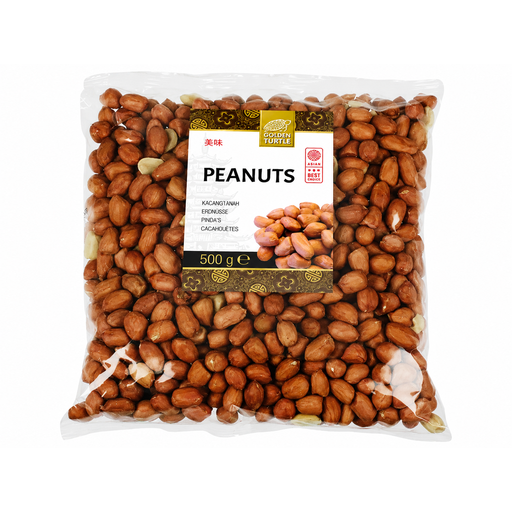
Golden Turtle Premium raw peanuts with skins, 500 g
This variety is only suitable if you want to prepare raw peanuts yourself; the product description recommends roasting them to enjoy as a snack.
The product name specifies peanuts with skins and a 500 g pack.
View product
Frequently asked questions
Are unsalted peanuts suitable if you have a peanut allergy?
No. A peanut allergy is caused by proteins in peanuts, as the Dutch Food Allergy Foundation explains; removing the salt doesn't change that. If you have a peanut allergy, don't choose peanuts.
What should you look for when choosing gluten-free peanuts?
Look for specific information stating that the product is gluten-free; the Dutch Coeliac Society advises checking for the Crossed Grain trademark or a gluten-free statement. Also check the exact variety and pack: ‘unsalted’ does not mean ‘gluten-free’.
What does a warning such as ‘may contain’ mean?
This type of warning indicates that the named allergen may be present unintentionally. The NVWA describes phrases such as ‘May contain X’ and ‘Not suitable for people with an X allergy’; check whether X is the allergen you need to avoid.
Which AH peanuts are named in the specific warning?
Albert Heijn's warning identifies AH Pinda’s extra groot gezouten in a tub with a best-before date of 04-11-2026, due to possible metal fragments. The warning applies to the product and date specified, not automatically to all AH peanuts.
Is a stand-up pouch automatically resealable?
No. Don't assume a pack is resealable just because it's described as a ‘stand-up pouch’. PLUS describes its 300 g unsalted peanuts as being in a stand-up pouch; check the closure and any storage instructions on the pack you buy.


