What should you look for when buying?
When choosing peanuts for mindful snacking in a household with a new parent, the main considerations are portion size, ingredients, family use and storage.
| What to consider |
What to look for |
Who is this important for? |
| Energy per portion |
Check the kcal per 100 g and weigh your own portion; compare products using the same weight. |
If I want to limit my snack, I want to know the energy content of my own weighed portion. Around 39% of consumers prioritise the energy content of a snack portion. |
| No added salt |
Check the ingredients for added salt and look at the salt content per 100 g. |
I’m looking for peanuts with no added salt, so I check the ingredients list. Around 23% of consumers prioritise an unsalted product. |
| Adult snack and baby food |
Check the texture, allergen information and relevant introduction advice. |
When I shop for my family, I want to distinguish an adult snack from a suitable form for introducing peanuts to a baby. Around 23% of consumers prioritise safe family use. |
| Pack size and storage |
Compare pack sizes and unit prices; follow the storage instructions on the packaging. |
When I shop, I look for a pack that suits my routine and is easy to store properly. Around 15% of consumers prioritise practical shopping and storage. |
Peanuts for adult snacking
These product choices are intended for adult snacking and include unsalted, roasted and flavoured peanuts. They are not products for introducing peanuts to a baby.
 No image available
g'woon unsalted peanuts 250 g
Suitable if you’re looking for an unsalted option for adult snacking.
The product description lists 2.690 kJ and 0,02 g salt.
The description warns that cashews may be present.
View at Joybuy
 No image available
g'woon peanuts in shells 500 g
The product description mentions snacking and using them in dishes.
The ingredients list names peanuts; the product description lists 2.515 kJ and 0,12 g salt.
View at Joybuy
 No image available
Verse Extra Large roasted peanuts 210 g
The product description says these are roasted peanuts with no added salt.
The ingredients description lists 100% peanuts; the nutritional information states 626 kcal per 100 g.
View at Joybuy
 No image available
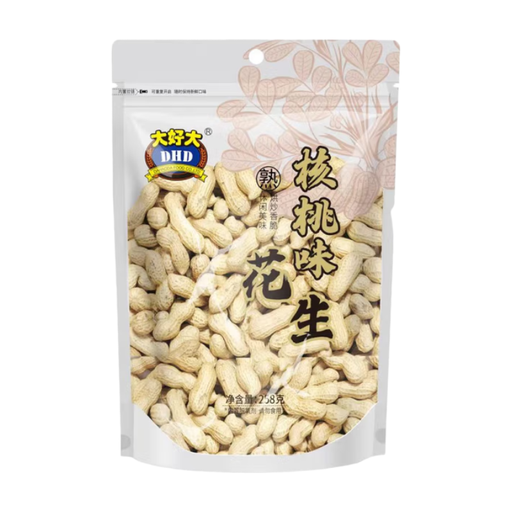
Dahaoda walnut-flavoured peanuts 258 g
A flavoured option if you’re looking for snacking peanuts with a walnut flavour.
The nutritional information lists 2.420 kJ per 100 g. The ingredients list includes sugar and salt.
View at Joybuy
 No image available
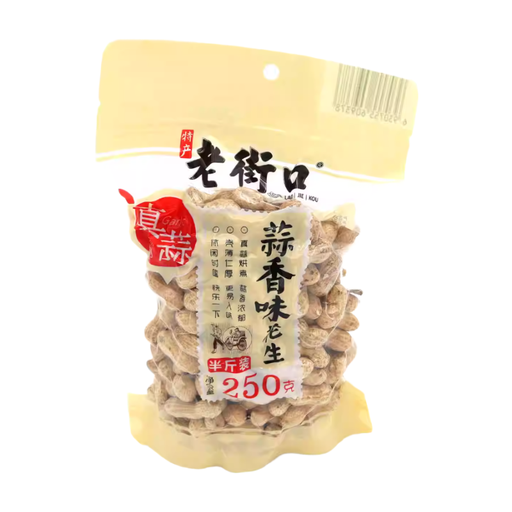
Lao Jie Kou garlic-flavoured peanuts 250 g
A ready-to-eat snack option if you’re looking for garlic-flavoured peanuts.
The nutritional information lists 540,2 kcal per 100 g; the ingredients list states 2,50% salt.
View at Joybuy
Frequently asked questions
Can a small portion of peanuts be described as low in calories?
No, not just because the portion is small. According to the European Commission, the claim ‘low in calories’ for solid foods requires a maximum of 40 kcal (170 kJ) per 100 g. For ordinary peanuts, it’s better to state the energy content of a clearly weighed portion.
How do I calculate the energy content of my own portion?
Multiply the kcal per 100 g by the weight of your portion in grams, then divide by 100. For Jumbo Unsalted Peanuts, which contain 602 kcal per 100 g, 25 g works out to 150,5 kcal. This is a calculation based on the label, not a recommended daily amount.
Does roasting peanuts without added oil make them low in calories?
No, the preparation method alone doesn’t tell you how much energy the finished product contains. Duyvis describes Oven Baked Original as roasted without added oil or fat; also check the nutrition table and ingredients for the specific pack.
Does breastfeeding automatically mean you should restrict calories further?
No. According to the Netherlands Nutrition Centre, your body needs more energy and nutrients than usual to produce breast milk. So don’t automatically let your choice of snack turn into a calorie-restricted diet.
Can I give my baby ordinary snacking peanuts?
Use a suitable form to introduce peanuts: the Netherlands Nutrition Centre recommends smooth peanut butter stirred into a weaning food. The general advice is to introduce peanuts before the age of 8 months. If your baby has eczema or a predisposition to allergies before 6 months, the Netherlands Nutrition Centre advises speaking to a doctor or dietitian about how to proceed.


