
Sportspeople keeping track of their protein intake
You want to know how much a typical snack portion contributes to your diet around intense training, without mistaking sporty product wording for proven recovery benefits.


For a regular morning break, unsalted peanuts are a practical choice if you also keep an eye on portion size: the Netherlands Nutrition Centre gives 25 grams as an example portion, providing 6.3 grams of protein and 157 kcal. If you’re eating after an intense training session, consider how much protein your portion contributes to your overall diet; a handful of peanuts isn’t automatically enough to support recovery. Compare the nutrition table for the exact variety: there’s no sound basis for naming any of the six providers as the high-protein winner.
You want to know how much a typical snack portion contributes to your diet around intense training, without mistaking sporty product wording for proven recovery benefits.
You’re looking for something between breakfast and lunch and want to weigh up protein, energy and salt together.
You want to be able to weigh out and take several portions from one pack; the pack size and storage instructions are also worth considering.
First, compare the nutrition information for the exact variety using the same portion size. Then check whether the flavour, packaging and storage instructions suit your morning routine.
| What to consider | What should you look for? | Who is this important for? |
|---|---|---|
| Protein per snack portion | Compare the protein content of the same weighed amount. The Netherlands Nutrition Centre uses 25 grams as an example portion. | If I want to know what my portion really contributes, I look at how much I eat, not just the value per 100 grams. Around 33% of consumers put protein content first. |
| Portion and energy | Weigh your portion and compare protein and energy on the same basis; 25 grams is an example, not a fixed limit. | If I want to keep my snack between breakfast and lunch small, portion size matters as well as protein. Around 27% of consumers prioritise managing their portion size and energy intake. |
| Salt and ingredients | Read the ingredients and salt content for the exact variety; if you have an allergy, also check the allergen information on the packaging. | If I’m looking for unsalted peanuts, I want to know what else is in the variety besides peanuts. Around 20% of consumers put ingredients and salt at the top of their list when choosing. |
| Portioning and storage | Compare the net weight and follow the storage instructions on the packaging, especially if you’re splitting the bag across several occasions. | If I want to take peanuts with me more often, a pack is practical when it’s easy to weigh out and store portions. Around 20% of consumers prioritise everyday use and portioning. |
A 235 to 285 gram bag is quite different from the 25 gram example portion used by the Netherlands Nutrition Centre. So the nutrition information for a whole bag doesn’t tell you directly how much you’ll eat in one snack break.
Weigh out your portion and compare the nutrition information for that exact amount.
Nutrition information describes a product’s composition; on its own, it doesn’t prove that the snack offers extra recovery benefits or meets all your needs after intense exercise.
Check the nutrition information per portion and count it as part of your overall diet, rather than relying on sporty wording alone.
The values for Duyvis Unsalted 235 g and PLUS Extra Large Salted Peanuts 275 g relate to different products. They don’t automatically apply to another flavour or pack size from the same brand.
Check the product name, variety, net weight and nutrition table together. For its salted extra-large variety, PLUS lists 24.7 grams of protein and 0.78 grams of salt per 100 grams; don’t apply these values to the unsalted bag.
Duyvis offers unsalted, salted and otherwise prepared peanuts, among other varieties.
Albert Heijn sells an unsalted peanut variety under its own name.
Jumbo lists unsalted peanuts in a 250-gram pack.
Lidl’s product listing gives the unsalted variety as 285 grams, product number 154219.
ALDI lists the peanuts reviewed under the product name Trader Joe’s.
PLUS lists unsalted peanuts in a 250-gram bag, as well as a separate salted extra-large variety.
These Joybuy products are for a peanut snack during your morning break, with varieties you can portion out yourself.
 No image available
The unsalted variety is an option if you want to weigh out your own morning portion.
The product description lists 27 g of protein per 100 g and ingredients comprising 99% peanuts and sunflower oil. May contain cashew nuts; contains peanuts.
 No image available
The roasted, unsalted variety suits anyone looking for this preparation method who wants to portion it out themselves.
The product description lists 26 g of protein and 0.02 g of salt per 100 g. Net weight: 210 g. Contains peanuts.
 No image available
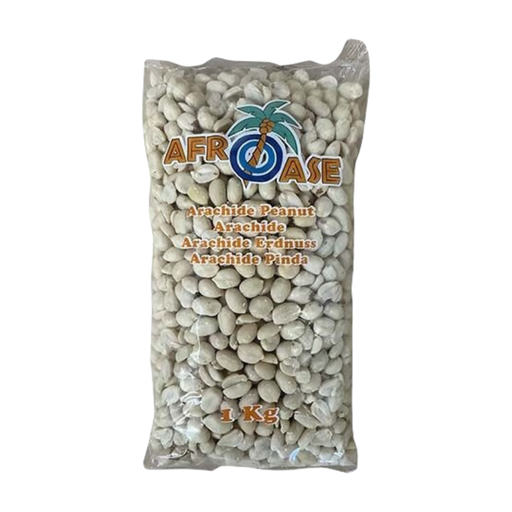
The 1 kg pack is an option if you want to weigh out several portions yourself.
The product name gives a net weight of 1 kg. Contains peanuts.
 No image available
This variety may suit you if you’re looking for peanuts in their shells and want shelling to be part of the snack.
The product description lists 29 g of protein per 100 g and a pack size of 500 g. The peanuts need to be shelled first; contains peanuts.
 No image available
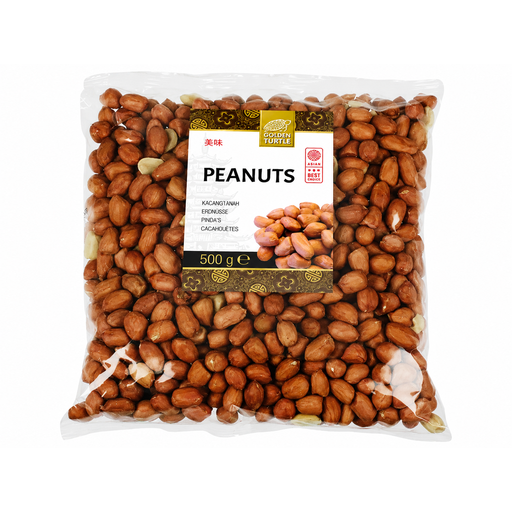
The unroasted variety is an option if you want to prepare the peanuts yourself for a snack.
The product description lists 26 g of protein per 100 g and suggests roasting them as a way to prepare them for a snack. Net weight: 500 g. Contains peanuts.
Don’t treat these claims as interchangeable: under the European Commission’s rules, nutrition claims must meet their own official definitions and conditions of use. Check the claim for the exact product variety and the current conditions that apply.
You can’t tell from the product name alone. The Netherlands Nutrition Centre gives 6.3 grams of protein for 25 grams of unsalted peanuts; consider that contribution as part of your overall diet after intense exercise, without assuming the snack has a specific recovery effect.
Peanuts aren’t a suitable snack if you have a peanut allergy. The Food Allergy Foundation warns that even a tiny amount can cause serious reactions in some people. The NVWA lists peanuts as an allergen; check the allergen information on the packaging.
Follow the storage instructions on the packaging and seal the peanuts tightly. If it says ‘Store in a cool place’, the Netherlands Nutrition Centre recommends somewhere cool, dark and dry; this doesn’t automatically mean the fridge. This general storage tip doesn’t determine the shelf life of every variety.
Albert Heijn recalled AH Extra Large Salted Peanuts in a tub with a best-before date of 4 November 2026 due to possible metal fragments and asked customers not to consume the product. This warning applies to that specific variety and batch, not automatically to all AH peanuts.