What should you look for when buying?
Start by deciding how much you want to eat at each snack break. Then compare the ingredients, how the peanuts are prepared and whether they’re suitable for everyone sharing them.
| What to consider |
What should you check? |
Who is this important for? |
| Energy per portion |
Compare kcal per 100 g and weigh out the same amount for each variety. According to its stated nutritional information, a 25 g portion of AH Unsalted Peanuts contains 155 kcal. |
If you want to limit the energy you get from a snack at home or on an outing, the amount you eat is what matters. Around 42% of consumers put calories per portion top of their list. |
| Salt and ingredients |
Read the ingredients and salt content alongside the energy value; don’t assume anything about calories from the word ‘unsalted’. |
If you’re mainly looking to avoid added salt, you’ll also want to know what else is in the variety. Around 25% of consumers prioritise ingredients and salt. |
| Sharing a snack safely |
Check the allergens on the current packaging. Don’t give whole peanuts to children under 4; Amsterdam UMC advises nut butter instead of whole nuts. |
If children or people with allergies will be sharing the snack, suitability comes before choosing a flavour. Around 17% of consumers say safe sharing is their top consideration. |
| Packaging and storage |
Compare the net weight and follow the storage instructions on the packaging. For example, the 300 g AH variety contains a different amount from the 250 g packs checked from Jumbo and PLUS. |
If you want to split a bag across several snack breaks, the quantity and how to store it after opening are practical considerations. Around 16% of consumers put these first. |
Brands to compare
These brand references relate to specific product varieties and are intended as points of comparison, not as an overall assessment of a brand.
Duyvis
Duyvis describes unsalted, fried, roasted, marinated and coated peanuts; the unsalted pack is listed as 235 g.
- The range of product types lets you take preparation method and flavour preference into account when choosing.
- The brand’s ‘responsible snack’ claim does not prove that the peanuts are low in calories.
Albert Heijn
AH Unsalted Peanuts is a 300 g variety with a stated portion size of 25 g.
- Albert Heijn lists 620 kcal per 100 g and 12 portions per pack for this variety.
- The nutritional information and portion size apply to this specific pack; unsalted is not a low-calorie claim.
Jumbo
Jumbo Unsalted Peanuts is a 250 g own-brand variety with nutritional information per 100 g and per 30 g portion.
- Jumbo lists 602 kcal and 0.01 g of salt per 100 g, and states that the salt comes from naturally occurring sodium.
- Don’t compare the stated 30 g portion directly with a 25 g portion of another variety.
PLUS
PLUS Unsalted Peanuts is a 250 g own-brand variety with stated ingredients and nutritional information.
- The product page lists 99% peanuts and 625 kcal per 100 g for this variety.
- Take note of the warning about young children and the risk of choking.
Lidl
Lidl lists unsalted peanuts in a 285 g pack and says this variety is available in store only.
- The product type and pack weight are listed for this variety.
- Unsalted alone tells you nothing about the calorie content; check the nutritional information on the packaging.
ALDI
ALDI lists Trader Joe’s roasted and unsalted peanuts in a 250 g pack.
- The product listing describes both the preparation method and the packaging.
- The stated Nutri-Score A does not prove that this variety is low in calories or that it has received an independent taste assessment.
Peanuts at Joybuy
This selection of Joybuy products includes unsalted peanuts, peanuts in their shells, and roasted or seasoned varieties. Check the ingredients, nutritional information and allergens for each product; product titles alone don’t give the energy value for every variety.
 No image available
g’woon unsalted peanuts 250 g
The title describes unsalted peanuts; the 250 g pack can be split across several snack breaks.
The product description lists 99% peanuts and sunflower oil. Contains peanuts and may contain cashew nuts.
View at Joybuy
 No image available
G’woon peanuts in their shells 500 g
The 500 g pack can be split across several snack breaks; you’ll need to weigh out a smaller portion yourself.
These are whole peanuts in their shells. Because of the risk of choking, whole peanuts are not suitable for children under 4; Amsterdam UMC advises giving them nut butter instead of whole nuts.
View at Joybuy
 No image available
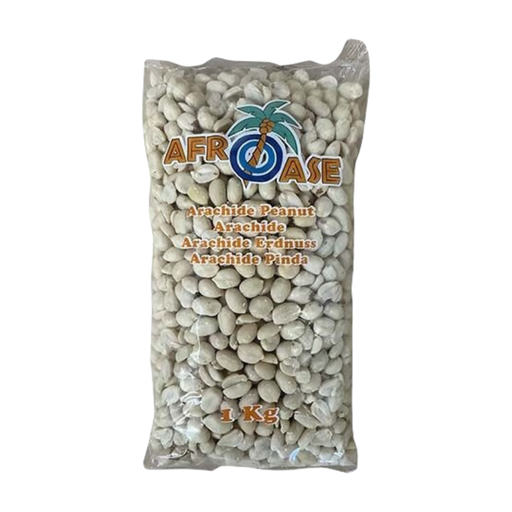
White peanuts 1 kg
With a 1 kg pack, you’ll need to portion the peanuts yourself if you want smaller snacks.
Contains peanuts and is not suitable for anyone with a peanut allergy.
View at Joybuy
 No image available
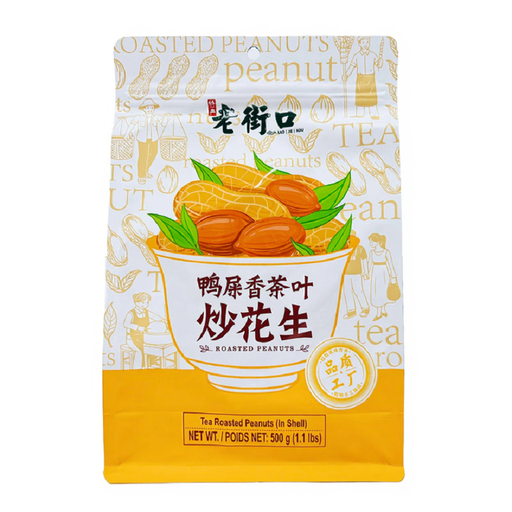
Lao Jie Kou Yashi Xiang roasted peanuts with tea flavour 500 g
The title and product description say these are roasted peanuts with an oolong tea flavour. Choose this variety if the flavour and preparation method suit your preferences.
The description lists salt, sweetener and flavour enhancers. Contains peanuts and is not suitable for anyone with a peanut allergy.
View at Joybuy
 No image available
Verse Extra Large roasted peanuts 210 g
The description says these are roasted peanuts with no added salt in a 210 g pack.
The stated energy value is 626 kcal per 100 g; the available product information does not support a claim that this variety is low in calories. Contains peanuts and is not suitable for anyone with a peanut allergy.
View at Joybuy
Frequently asked questions
Are peanuts low in calories if I only eat a small portion?
No. A small portion doesn’t make the product itself low in calories. For solid foods, the ‘low energy’ claim applies to products with no more than 40 kcal per 100 g. At 602–625 kcal per 100 g, the three unsalted varieties checked are above that limit, according to their stated nutritional information and the European Commission’s threshold. Weighing out a smaller portion does, however, limit how much you eat at that snack break.
Does a lower energy value per 100 g mean a product is ‘energy-reduced’?
Not automatically. For an energy-reduced claim, the European Commission specifies a reduction of at least 30%, with details of the features that cause the reduction. A small difference between two labels is not, on its own, proof of that claim.
Can children under 4 eat whole peanuts?
Amsterdam UMC advises giving children under 4 nut butter instead of whole nuts because of the risk of choking. This is safety advice, not a legal age restriction on sales.
Where can I check for peanut allergens?
Check the allergen information on the packaging of the specific variety. The NVWA states that pre-packed products must show allergen information on the label and that peanuts are one of the listed allergens. If you think you may have a peanut allergy, the Netherlands Nutrition Centre advises contacting your GP.
How should I store an opened bag of peanuts?
Follow the instructions on the packaging for your variety. For the AH Unsalted Peanuts checked, Albert Heijn says to store the bag in a cool, dark, dry place and seal it properly after use. This advice does not automatically apply to every brand.


