What should you look for when choosing?
Start with when you’ll eat them and what matters most to you; then compare the nutritional values for the same portion size.
| What to consider |
What should you check? |
Who is this important for? |
| Protein and nutrition claim |
Compare protein per 100 g and calculate the amount in your portion; check the exact wording of the claim. |
I want to know what my portion provides and whether the claim fits what I’m looking for. Around 31% of consumers prioritise protein content. |
| When to eat and fuel |
Decide whether you plan to eat the peanuts before, during or after your run; check the carbohydrate and fat content too. |
If I’m looking for something to eat around a long run, I don’t want to confuse it with recovery food. Around 31% of consumers prioritise when they’ll eat it. |
| Portion size and energy |
Calculate the protein, fat, carbohydrates and energy for the same amount of product. |
I want to measure out my snack and include it in my overall diet. Around 19% of consumers prioritise portion control. |
| Packaging and storage |
Choose packaging you can store suitably, and follow the storage instructions after opening. |
For my regular shopping, manageable packaging and practical storage matter. Around 13% of consumers prioritise convenience and packaging. |
| Allergens and warnings |
Read the ingredients and allergen information for the exact variety; if there’s a warning, check the packaging and best-before date too. |
I need to take a relevant allergen or a specific product warning into account. Around 6% of consumers prioritise this. |
As a worked example, Flink lists Duyvis Unsalted Peanuts 235 g as containing 27 g protein, 11 g carbohydrates, 52 g fat and 614 kcal per 100 g. On that basis, a 30 g portion works out to 8.1 g protein, 3.3 g carbohydrates, 15.6 g fat and 184.2 kcal. This is an example for that specific variety, not a personal portion recommendation.
Peanuts at Joybuy
This selection includes unsalted peanuts as an addition to a snack or meal, alongside roasted and flavoured varieties and peanuts in their shells. Compare the nutritional information per 100 g and calculate the amount for your own portion; the product specifications alone do not prove that a product is suitable as fuel while running or meets the ‘high-protein’ claim.
 No image available
g'woon unsalted peanuts 250 g
An unsalted variety to consider as a snack or alongside a meal.
The product information lists 27 g protein, 13.5 g carbohydrates and 50 g fat per 100 g.
Contains peanuts and may contain cashew nuts; check this if you have a relevant allergy.
View at Joybuy
 No image available
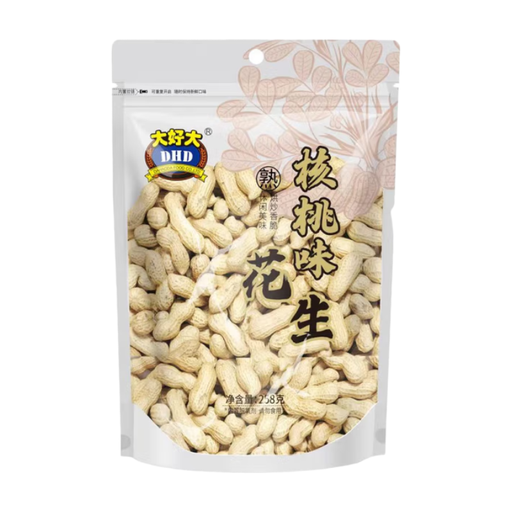
Dahaoda walnut-flavoured peanuts 258 g
A flavoured variety for anyone specifically looking for walnut-flavoured peanuts.
The product information lists 24.8 g protein, 46.2 g fat and 20.5 g carbohydrates per 100 g; sugar and salt are also listed in the ingredients information.
Contains peanuts and soya; check the allergen information if this is relevant to you.
View at Joybuy
 No image available
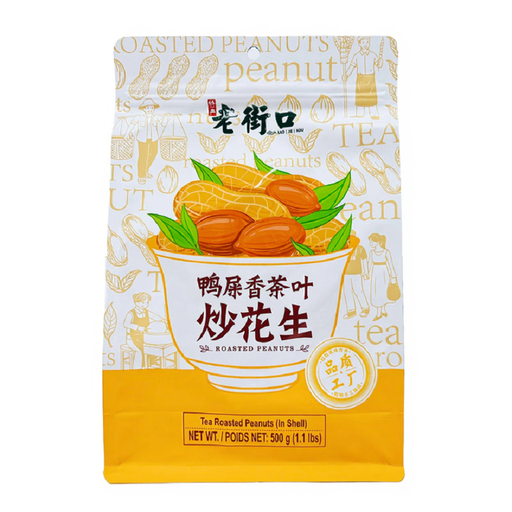
Lao Jie Kou Yashi Xiang roasted peanuts with oolong tea flavour 500 g
A roasted variety with oolong tea flavour, for anyone specifically looking for that taste.
The nutritional information lists 25.2 g protein, 28.3 g carbohydrates, 35.6 g fat and 1.37 g salt per 100 g.
Contains peanuts; check the allergen information if you have a relevant allergy.
View at Joybuy
 No image available
g'woon peanuts in their shells 500 g
A variety in the shell for anyone looking for peanuts in this format.
The product information lists 29 g protein, 7.1 g carbohydrates and 49 g fat per 100 g.
The peanuts are sold in their shells, so bear this format in mind when choosing.
View at Joybuy
 No image available
Verse Extra Large roasted peanuts 210 g
A roasted variety to enjoy as a snack or use in dishes.
The product information lists 26 g protein, 15 g carbohydrates and 50 g fat per 100 g.
Contains peanuts; check the allergen information if you have a relevant allergy.
View at Joybuy
Frequently asked questions
Can a small portion of peanuts replace all my recovery food?
Not necessarily. A 30 g portion of Duyvis Unsalted Peanuts 235 g works out to 8.1 g protein and 3.3 g carbohydrates, according to Flink’s product figures. For rapid recovery after intense or prolonged exercise, the Association of Sports Nutrition Experts in the Netherlands discusses 0.2–0.4 g protein per kg of body weight in the first two hours, when you’ll be exercising again the same day or the next day. So assess your whole recovery meal.
Do I need to eat peanuts straight after every training session?
No. The recovery guidance cited does not say that you need to eat peanuts straight after every training session. How soon you need to refuel depends, among other things, on the exercise and how long it is until your next training session.
How should I store an opened bag of peanuts?
For Duyvis Unsalted Peanuts 235 g, Flink recommends storing them in a light-proof, airtight container after opening. Joybuy’s product information says to store them in a cool, dry place and seal the packaging tightly. Follow the instructions on your pack too.
What should I look for if I have a peanut or nut allergy?
Check the allergen information for the exact variety. The Netherlands Food and Consumer Product Safety Authority treats peanuts and nuts as separate allergens; the Duyvis variety mentioned contains peanuts and may contain nuts. If you have a relevant allergy, avoiding the allergen in question takes priority over comparing protein content.
What should I do with AH Extra Large Salted Peanuts with a best-before date of 04-11-2026?
Do not consume the tub in question. Albert Heijn recalled this specific variety and best-before date because of possible metal particles. The warning does not automatically apply to other AH peanut products or other varieties.


