
People working from home who also exercise
You want to know what peanuts add to your lunch and assess sports nutrition in the context of your everyday diet.


Assess peanuts by the amount of protein and energy in the serving you actually eat, not just by searching for ‘high protein’. According to the Netherlands Nutrition Centre, an average 25-gram handful of unsalted peanuts provides 6.3 grams of protein and 157 kcal. On training days, consider your overall diet too, and don’t rely on unproven claims about recovery.
You want to know what peanuts add to your lunch and assess sports nutrition in the context of your everyday diet.
You’re looking for an easy-to-measure addition and want to factor energy and salt into the portion you eat.
You eat peanuts on several working-from-home lunch days and want a pack that’s easy to portion and store.
| What to consider | What to check when buying | Who this matters to |
|---|---|---|
| Protein content | Check the nutritional information per 100 grams and work out how much is in your own portion. | On training days, you may want to know what a weighed portion adds to your lunch and how it fits into your overall diet. Around 31% of consumers prioritise protein content. |
| Portion, energy and salt | Compare energy and salt on the same basis, and choose a portion that suits what you want to eat. | If you want to manage how much you eat, bear in mind that a larger portion also adds more energy. Around 25% of consumers prioritise portion size, energy or salt. |
| Packaging and storage | Check the net weight and storage instructions; seal the pack properly once opened. | If you’re buying peanuts for several work-from-home lunches, choose a pack you can divide into portions and store carefully. Around 19% of consumers make convenient storage their top priority. |
| Flavour and ingredients | Read the ingredients list and check whether these are plain peanuts or a seasoned variety. | If flavour and ingredients are what matter most to you, check what else has been added besides peanuts. Around 13% of consumers put this at the top of their list. |
| Allergens | Read the latest allergen information and any cross-contamination warnings on the packaging. | If someone in your household has a peanut allergy, checking allergen information takes priority over flavour or nutritional values. Around 12% of consumers make allergen safety their main consideration. |
Seeing the term in a search doesn’t confirm that a particular pack meets the requirements for a nutrition claim. The NVWA and the European Commission point out that nutrition claims are subject to European rules.
Compare the nutrition table for the exact variety and work out the value for your own portion from the amount per 100 grams. Don’t draw conclusions about recovery or sports performance based on the packaging alone.
The Albert Heijn warning concerns AH Extra Large Salted Peanuts in a tub with a best-before date of 04-11-2026; it does not automatically apply to other AH peanuts.
Check the product variety and best-before date together. If you have the affected pack, follow Albert Heijn’s recall instructions.
The Netherlands Nutrition Centre recommends storing nuts in a well-sealed container in a cool, dry place. A pack that’s difficult to reseal or use in time needs extra care.
Choose a pack size that suits how much you use, and reseal it after portioning.
Duyvis describes its unsalted peanut range as suitable for snacking and cooking.
Albert Heijn lists AH Extra Large Unsalted Peanuts as a product variety.
Jumbo lists unsalted peanuts in packs including 250- and 500-gram sizes.
Lidl Netherlands describes a 285-gram pack of unsalted peanuts as a shop product.
ALDI Netherlands lists Trader Joe’s roasted, unsalted peanuts in a 250-gram pack.
PLUS product pages provide nutritional values for specific salted and unsalted peanuts in 275-gram tubs.
These products offer different options for adding peanuts to lunch, including unsalted, flavoured and in-shell varieties. Compare the nutritional values and ingredients of the exact variety with your portion and preferences.
 No image available
An unsalted option that you can portion yourself to add to your work-from-home lunch.
The product description lists 27 g of protein and 0,02 g of salt per 100 g. The ingredients are 99% peanuts and sunflower oil. Contains peanuts and may contain traces of cashew nuts.
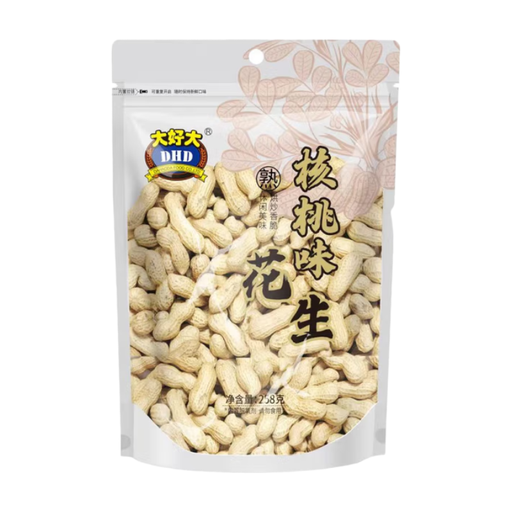 No image available
A flavoured option if you’d like to compare the taste and ingredients with those of plain peanuts.
The nutrition table lists 24,8 g of protein per 100 g. The ingredients list includes sugar, salt and soya lecithin. Contains peanuts and soya.
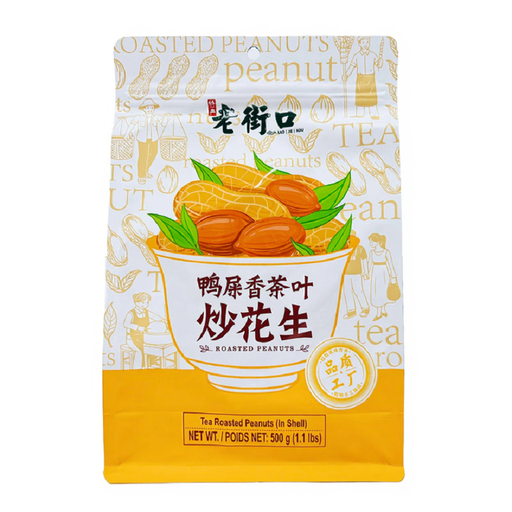 No image available
The larger pack may suit you if you eat peanuts on several occasions and are happy to remove the shells before eating.
The nutrition table lists 25,2 g of protein and 544 kcal per 100 g. The product description says these are roasted in-shell peanuts with a tea flavour; salt and flavourings are listed among the ingredients. Contains peanuts.
 No image available
A larger pack of in-shell peanuts to divide between several occasions; shell them before eating.
The nutrition table lists 29 g of protein and 0,12 g of salt per 100 g. Contains peanuts and may contain traces of other nuts.
 No image available
A roasted variety with no added salt, for anyone who wants to consider the ingredients and salt content.
The product description states that it contains 100% peanuts. Per 100 g, the nutrition table lists 26,0 g of protein, 626 kcal and 0,02 g of salt. Contains peanuts.
Consider your whole lunch and daily diet, not just one ingredient. According to the Netherlands Nutrition Centre, strength or endurance training can increase your protein needs. The protein in peanuts alone doesn’t tell you whether your whole lunch meets your needs.
Convert the values per 100 grams to the same portion weight: multiply the value by your portion in grams and divide by 100. Based on the PLUS product page, 25 grams of the unsalted variety, which contains 24,945 grams of protein per 100 grams, provides around 6,24 grams of protein. This is a calculation based on the stated nutritional value, not a laboratory measurement.
Store peanuts in a well-sealed container in a cool, dry place. The Netherlands Nutrition Centre recommends this storage method for nuts; also follow the instructions on the packaging.
Check the packaging for allergen information and any cross-contamination warnings. According to the NVWA, allergen information must appear on the label of prepacked products. From 1 January 2026, the NVWA is also checking that cross-contamination warnings are used correctly on labels.
Follow Albert Heijn’s recall instructions for AH Extra Large Salted Peanuts in a tub with a best-before date of 04-11-2026. The warning concerns this specific variety and date, not all AH peanuts.