
Calorie-conscious lunchtime snackers
You want to enjoy peanuts alongside your sandwich and estimate the energy your portion provides. Compare equal quantities and weigh out your portion in advance.


Weigh out your peanuts in advance and compare the nutritional values per 100 g to see what a chosen portion adds to your lunch. Choose unsalted if keeping salt low is your priority; a lower energy value for the same weight can come with more salt. A small portion doesn’t automatically make a product low in calories.
You want to enjoy peanuts alongside your sandwich and estimate the energy your portion provides. Compare equal quantities and weigh out your portion in advance.
You’re mainly keeping an eye on the salt content and ingredients. A variety with less energy per gram isn’t automatically the one with the least salt.
You’re looking for peanuts you can take with you and portion out at home. Check the pack weight and how to store the product once opened.
First compare the energy per 100 g, then decide on your portion; check the salt and ingredients for the exact variety.
| What to consider | What to look for | Who might find this more important? |
|---|---|---|
| Energy in your portion | Compare kcal per 100 g and weigh the amount you’ll eat alongside your sandwich. | If I have peanuts with a shop-bought sandwich, I want to know how much energy my weighed portion adds. Around 42% of consumers prioritise calories per lunch portion. |
| Salt content | Check the salt per 100 g and read the ingredients for the exact variety. | I’d rather choose a low-salt variety, even if it doesn’t have the lowest energy value. Around 33% of consumers make low salt their top priority. |
| Taking them with you and portioning them out | Check the pack weight and follow the storage instructions once opened. | When I’m out and about, I want to be able to divide the contents into lunch portions at home and reseal the pack securely. Around 25% of consumers prioritise convenience when taking and portioning snacks. |
The AH product page lists AH Unsalted Peanuts as containing 620 kcal and 0 g salt per 100 g. Salt content and energy are different product characteristics.
Check both the energy value and salt content, and compare the same quantity.
The pack of AH Unsalted Peanuts is 300 g; the product page lists portions of 25 g. So the pack weight isn’t the same as the amount you eat alongside your sandwich.
Weigh out your portion in advance, then reseal the pack securely.
According to Jumbo, Jumbo Dry Roasted Peanuts contain salt, wheat and gluten. The preparation name alone doesn’t tell you what else is in the variety.
Check the ingredients, allergens and salt content on the information for the exact variety.
Duyvis describes Oven Baked Peanuts Original as roasted without added oil or fat. That doesn’t mean the product contains no fat.
Use the pack’s nutrition table to check energy and fat; don’t infer these values from the preparation method.
The varieties reviewed include unsalted peanuts and Oven Baked Peanuts Original.
AH Unsalted Peanuts are a variety you can weigh out into lunch portions yourself.
The varieties reviewed are unsalted and Dry Roasted; compare them separately.
Lidl Netherlands lists roasted unsalted peanuts in a 200 g pack.
ALDI’s Dutch product information lists Trader Joe's roasted unsalted peanuts in a 250 g pack.
The PLUS varieties reviewed include unsalted and Dry roasted peanuts.
These products offer different peanut options to assess by portion size, preparation method and the nutritional information on the exact pack.
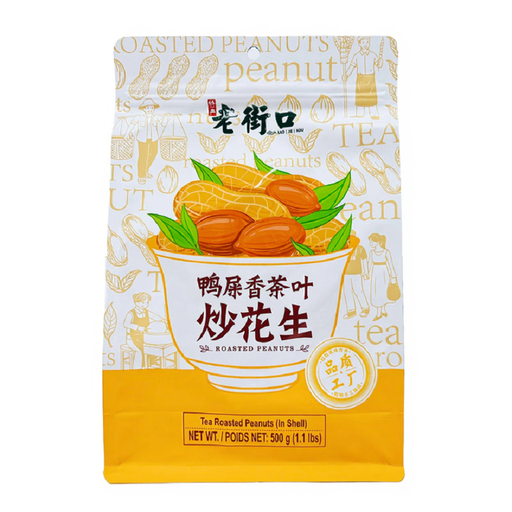 No image available
An option if you want to compare nutritional values per 100 g; the product information lists 544 kcal and 1.37 g salt per 100 g.
The product name describes roasted peanuts with tea in a 500 g pack.
 No image available
An option if you want to weigh out a lunch portion yourself and don’t mind shelling the peanuts.
The peanuts are in their shells, so you’ll need to shell them before eating. The product name lists a 500 g pack.
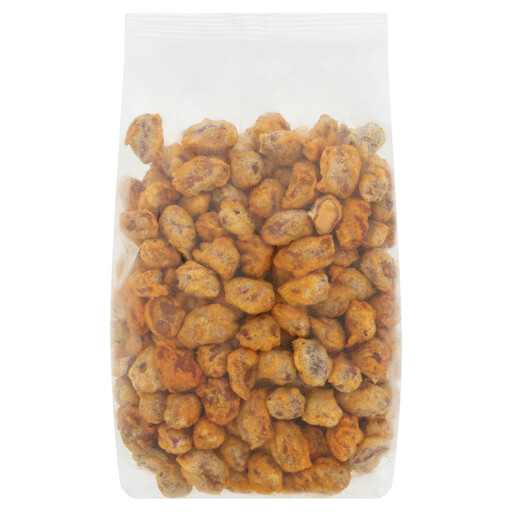 No image available
A seasoned option if you want to compare energy and salt with other varieties in equal quantities.
The product information lists 573 kcal and 1.6 g salt per 100 g.
 No image available
An option if you’re looking for an unsalted variety and want to weigh out your lunch portion yourself.
The product name describes roasted unsalted peanuts in a 210 g pack. Check the nutrition table on the exact pack for the energy per 100 g.
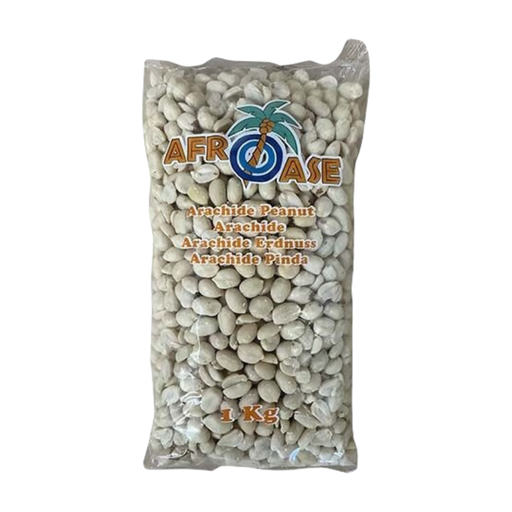 No image available
A larger pack if you want to weigh out portions for several lunches yourself.
The product name lists 1 kg. Use the nutritional information on the pack to calculate the energy in your chosen portion.
Multiply the kcal per 100 g by the number of grams you’ve weighed out, then divide by 100. For example, according to Albert Heijn, AH Unsalted Peanuts contain 620 kcal per 100 g, so a 20 g portion contains 124 kcal. Count that snack alongside your sandwich and the rest of your lunch.
Not simply because the portion is small. According to the European Commission, the claim ‘low energy’ for solid foods is limited to a maximum of 40 kcal (170 kJ) per 100 g. The claim ‘reduced energy’ requires an energy reduction of at least 30%, and the reason for the reduction must be stated. These are EU conditions for nutrition claims, not personal calorie advice.
Avoid peanuts if you need to avoid them, and check the ingredients and allergen information on the exact pack. The NVWA states that peanuts are an allergen that must be declared. According to Jumbo, Jumbo Dry Roasted Peanuts contain wheat and gluten; check the label on the variety you buy.
Follow the storage instructions on the pack. For AH Unsalted Peanuts, Albert Heijn advises storing them in a cool, dark and dry place and resealing the pack securely after use. For the Duyvis Oven roasted Original pack reviewed, PLUS recommends storing it in a light- and airtight container once opened.
Albert Heijn’s warning concerns AH Extra Large Salted Peanuts in a tub with a best-before date of 04-11-2026, due to possible metal fragments. Don’t eat that specific pack. The warning doesn’t apply to the AH Unsalted Peanuts 300 g reviewed here.