
Portion-conscious remote workers
You want to have peanuts with lunch without losing track of how much you eat. Energy per weighed portion and a clearly defined serving size can help you make your choice.


Plain peanuts are not a low-calorie food choice: under European Commission rules, solid foods must contain no more than 40 kcal per 100 grams to qualify for the ‘low energy’ claim. If you choose peanuts for lunch, compare the nutritional values per 100 grams and convert them to the same weighed portion; unsalted peanuts or a smaller pack do not automatically mean fewer calories.
You want to have peanuts with lunch without losing track of how much you eat. Energy per weighed portion and a clearly defined serving size can help you make your choice.
You’re looking for an unsalted addition and check the ingredients, protein and fibre, without assuming that unsalted or nutritious means low in calories. The Netherlands Nutrition Centre includes unsalted nuts in its Wheel of Five healthy eating guidelines.
You want to add peanuts to your regular shop and choose a pack that suits how much you eat and how you’ll store it after opening.
Published values for Jumbo Unsalted Peanuts, Duyvis Unsalted Peanuts, AH Unsalted Peanuts and PLUS Unsalted Peanuts range from 602 to 625 kcal per 100 grams; the product information comes from Jumbo, Jumbo, Albert Heijn and PLUS respectively.
| What to consider | What should you look for? | Who is this important for? |
|---|---|---|
| Energy per portion | Compare kcal per 100 grams and convert each variety to the same weighed amount. | If I want to keep an eye on my energy intake at lunch, I look at the portion I actually weigh out. Around 42% of consumers put managing calories at the top of their shopping priorities. |
| Unsalted ingredients | Check the ingredients list and salt content; unsalted does not automatically mean the product contains only peanuts. | If I’m mainly looking for an unsalted product and paying attention to nutritional values, I check the label for the exact variety. Around 25% of consumers prioritise this type of nutritional choice. |
| Portioning and storage | Check the net weight and follow the storage instructions after opening; the contents of the bag are not the same as a lunch portion. | If I’m buying peanuts to last for several working days, I consider the pack size and how I can store the pack. Around 17% of consumers prioritise practical everyday use. |
| Packaging and cost | When you buy, compare the unit price of the same type of product and choose a pack weight that suits how much you use. | If I mainly want to compare the cost of a similar quantity, I look at the unit price and weight. Around 16% of consumers put cost at the top of their shopping priorities. |
Unsalted refers to the salt content, not the energy content. There is a separate threshold for the ‘low energy’ claim: the European Commission sets it at no more than 40 kcal (170 kJ) per 100 grams for solid foods.
Consider salt and energy as separate properties. If your aim is to keep track of how much you eat, describe your choice as portion-conscious rather than low-calorie.
Product pages may show nutritional values for different portion sizes. A value for 25 grams cannot be compared directly with one for 30 grams.
Start with kcal per 100 grams and convert each option to the same weighed amount.
The bags we looked at vary in weight. So the full contents of a larger pack won’t necessarily be the amount you eat with one lunch.
Choose a pack that suits how much you use and your storage options, then weigh out your lunch portion separately.
Unsalted and salted varieties are available; the 235-gram pack of unsalted peanuts is an option if you want to weigh out your own portions.
The AH Unsalted Peanuts we looked at are available in a 300-gram pack; the product page lists a 25-gram portion.
Jumbo Unsalted Peanuts 250 g are an unsalted option for anyone who wants to weigh out their own lunch portion.
The Dutch product listing includes unsalted peanuts; the Alesto range also includes peanuts in a spiced batter coating.
The Dutch listing we looked at for Trader Joe’s is for roasted, unsalted peanuts in a 250-gram pack.
PLUS Unsalted Peanuts, 250 grams, are a pack for anyone who wants to weigh out their own lunch portions.
This selection includes unsalted peanuts to portion yourself, peanuts in their shells and flavoured varieties.
 No image available
Suitable if you want to stock up on unsalted peanuts and weigh out your own lunch portions.
The product information lists 99% peanuts and sunflower oil. May contain cashew nuts.
 No image available
Suitable if you’re looking for a larger supply of peanuts and don’t mind shelling them as you eat.
The pack contains 500 g. The peanuts need to be shelled before eating. May contain traces of other nuts.
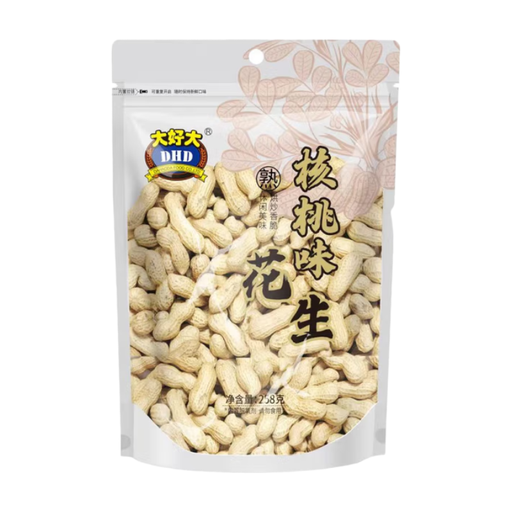 No image available
Suitable if you’re looking for a flavoured peanut snack in individually wrapped portions.
The ingredients list includes added salt, sugar, walnut flavouring and soya lecithin; soya is listed as an allergen.
 No image available
Suitable if you want unsalted peanuts and would like to calculate the nutritional value for a portion you weigh out yourself.
The product information lists 100% peanuts and 626 kcal per 100 grams. Contains peanuts.
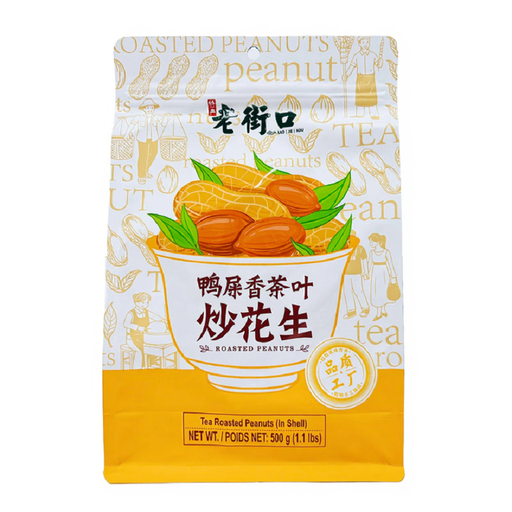 No image available
Suitable if you’re looking for a flavoured peanut snack and don’t specifically need unsalted peanuts.
The product information lists 544 kcal per 100 grams. The ingredients list includes salt, tea, flavouring, sweetener and flavour enhancers. Contains peanuts.
Only if they meet the threshold for that nutrition claim. According to the European Commission, the ‘low energy’ claim may only be used for solid foods containing no more than 40 kcal (170 kJ) per 100 grams; the four brand varieties we looked at with published values are above this level. A smaller portion does not change the threshold for the product claim.
Multiply the kcal per 100 grams by the number of grams you weigh out, then divide by 100. For Jumbo Unsalted Peanuts 250 g, the calculation based on the Jumbo product page is 602 × 25 ÷ 100 = 150,5 kcal. Here, 25 grams is an amount for comparison, not personalised dietary advice.
Check the ingredients list and any allergen warnings for the exact variety. According to the Netherlands Food and Consumer Product Safety Authority, allergens must be clearly listed on the label; Business.gov.nl states that label information must also be available online. Peanuts are an allergen in their own right, and warnings about other nuts may vary by product.
Follow the storage advice for the pack in question. Albert Heijn advises storing the AH Unsalted Peanuts we looked at in a cool, dark and dry place, and closing the pack securely after use. For Duyvis Unsalted Peanuts, Jumbo says an opened bag is best stored in a light- and airtight container.
Albert Heijn’s warning of 20 May 2026 specifically concerns AH Extra Large Salted Peanuts in a tub with a best-before date of 04-11-2026, due to the possible presence of metal fragments. Do not eat the product. Follow Albert Heijn’s instructions to return it for a full refund. The warning does not automatically apply to other AH peanut products.