What should you look for when choosing?
Start by deciding how much you want to take with you. Then choose between unsalted and other flavours, and check the label on that exact pack.
| What to consider |
What should you check? |
Who is this most relevant to? |
| Protein in your lunch portion |
Compare the protein and energy per 100 grams, then calculate both for the same weighed portion. |
I want to know what my portion adds to a lunch around exercise, without losing sight of its energy content. Around 36% of consumers prioritise the protein in their lunch portion. |
| Eating unsalted |
Check the variety name and salt content per 100 grams on the pack you’ve chosen. |
If I take peanuts with me regularly, I want an unsalted variety and a portion I’ve chosen mindfully. Around 29% of consumers prioritise eating unsalted foods for everyday use. |
| Portioning and taking them with you |
Check the net contents, packaging type and whether the pack can be resealed. |
I want to portion out my lunch in advance without assuming that one retail pack is a single portion. Around 21% of consumers prioritise portioning and portability. |
| Flavour and coating |
Check the preparation method, coating, ingredients and allergens for the exact variety. |
If I’m looking for a particular flavour or coating, I want to be able to assess the nutritional information for that specific variety. This is the top priority for around 14% of consumers. |
Peanuts at Joybuy
This selection includes unsalted, roasted, salted and coated peanuts. Compare the portion and nutritional information for each specific variety.
 Image unavailable
g'woon unsalted peanuts, 250 g
An unsalted option when you want to weigh out your own lunch portion.
Pack: 250 g. Protein: 27 g per 100 g. Salt: 0.02 g per 100 g.
View at Joybuy
 Image unavailable
Verse Extra Large roasted peanuts, 210 g
A roasted variety to assess using the nutritional information on the pack you’ve chosen.
Pack: 210 g. Protein: 26 g per 100 g. Energy: 626 kcal per 100 g. Salt: 0.02 g per 100 g.
View at Joybuy
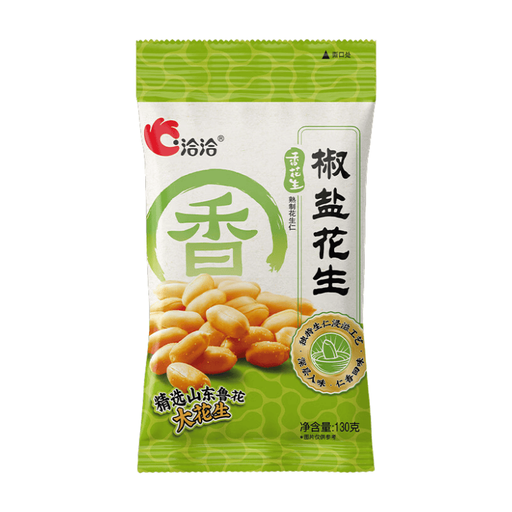 Image unavailable
ChaCha salted peanuts, 130 g
The description mentions individually packed portions for on the go; check the salt content if you choose a salted variety.
Pack: 130 g. Protein: 23.5 g per 100 g. Salt: 1.5 g per 100 g. Do not eat the desiccant in the pack.
View at Joybuy
 Image unavailable
Duyvis Provençal coated peanuts, 275 g
A coated variety for anyone looking for a distinctive flavour; assess it separately from plain peanuts.
Pack: 275 g. Protein: 15 g per 100 g. Salt: 1.3 g per 100 g. Contains wheat (gluten).
View at Joybuy
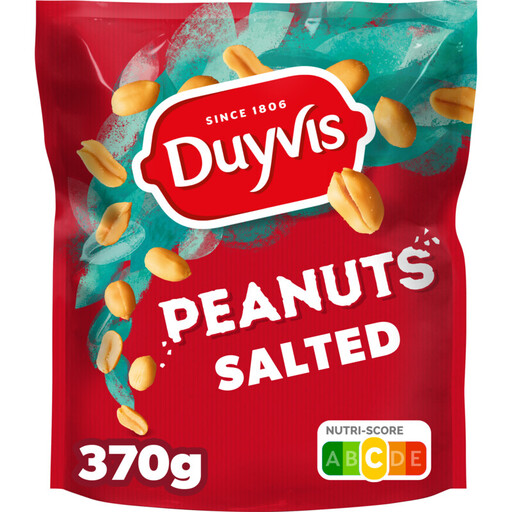 Image unavailable
Duyvis salted peanuts, 370 g
A salted variety; weigh your portion and include the salt content in your comparison.
Pack: 370 g. Protein: 26 g per 100 g. Salt: 0.73 g per 100 g. Not recommended for children under 5 due to the risk of choking.
View at Joybuy
Frequently asked questions
How do you calculate the nutritional values for your lunch portion?
Multiply the value per 100 grams by your portion weight divided by 100. For a 25-gram portion of Duyvis unsalted peanuts from a 235-gram pack, the figures listed by Flink work out at 6.75 grams of protein and 153.5 kcal. These are calculated values, not a measurement of your portion.
Do you automatically need a special protein snack if you exercise?
No, not automatically. The Netherlands Nutrition Centre says that protein requirements may be higher for strength or endurance training, but most people who exercise don’t need special protein shakes or bars if they eat a varied diet.
Where can you check for allergens in peanuts?
Check the information on the pack for the exact variety. The NVWA explains that allergens must be clearly listed on the label; ingredients and the risk of cross-contamination can vary from product to product.
Which AH peanuts are included in the recall?
The recall concerns AH Extra Large salted peanuts in a tub with a best-before date of 04-11-2026. Albert Heijn has warned that they may contain metal fragments and asks customers not to eat this specific batch.
Does a protein figure prove that peanuts can be labelled ‘high in protein’?
No. A figure per 100 grams on its own doesn’t determine whether a nutrition claim can be made. European rules set conditions for nutrition claims, and the NVWA checks that claims are adequately substantiated. So assess the exact claim and product information without trying to infer a legal threshold yourself.


