If you want to manage your energy intake at lunch on the go, compare equal quantities and weigh your portion rather than choosing peanuts because they are ‘low calorie’. The checked unsalted varieties provide around 154–156 kcal per 25 g. According to the European Commission, a solid food may only be described as ‘low calorie’ if it contains no more than 40 kcal per 100 g. You should also consider salt, sugar, ingredients and the flavour you want.
Who is this comparison for?
Lunch planners keeping an eye on portions
You want to add peanuts to a packed lunch and, above all, keep track of how much energy you’re getting. Weighing your portion and comparing equal quantities can help. The Netherlands Nutrition Centre gives 157 kcal as the category value for a 25 g handful of unsalted peanuts.
Shoppers looking for unsalted snacks
You’re looking for an unsalted addition to your lunch or a snack for the journey, and want to check the ingredients and salt content. Unsalted doesn’t automatically mean low calorie, so compare the nutritional information on the exact pack too.
Shoppers who portion their own snacks
You buy a pack for several lunches and divide it into an airtight container at home. The pack size, storage advice and where you buy it all affect how practical this option is for you.
What should you look for when buying?
First, compare the nutritional information on the same basis. Then decide which portion, ingredients and pack are right for your lunch.
| What to consider |
What to look for |
Who is this most important for? |
| Energy per portion |
Compare kcal per 100 g and weigh the amount you’ll take with you. |
If I want to weigh my lunch portion, I need to know how much energy my chosen amount provides. Around 39% of consumers put calorie control first. |
| Salt and ingredients |
Check the salt, sugars, ingredients and allergens on the exact pack. |
If you’re mainly looking for a suitable combination of ingredients, compare the ingredients list with the nutritional information. Around 23% of consumers prioritise salt and ingredients. |
| Convenience on the go |
Check the net weight, portion information, storage advice and where it’s sold. |
If I want to keep lunch preparation to a minimum, I look for a convenient quantity and consider how to store the rest. Around 23% of consumers prioritise convenience on the go. |
| Cost per portion |
Compare the current price for equal quantities and factor in portioning it yourself. |
If you’re planning several lunches, compare the cost per portion you’ll use rather than looking only at the pack size. Around 15% of consumers put the cost per lunch portion first. |
The percentages shown indicate different purchasing priorities; they are not survey results or market shares.
Common mistakes
-
Confusing a small portion with a low-calorie product
A weighed, smaller amount contains less energy than a larger portion, but that doesn’t change the energy value per 100 g. The peanuts checked are above the threshold for a ‘low calorie’ claim.
Compare kcal per 100 g, then calculate the energy in the amount you’ll actually take with you.
-
Assuming unsalted or oven-roasted means lower in calories
These terms describe the salt content or how the peanuts are prepared; by themselves, they don’t mean a variety contains less energy. Differences in ingredients can also mean different levels of salt and sugar.
Check the nutritional information and ingredients on the exact pack. Don’t base your comparison on the product name alone.
-
Treating a whole bag as one lunch portion
The 300 g pack of AH unsalted peanuts lists twelve 25 g portions. The whole bag is therefore not the same as one comparison portion.
Weigh the amount you want to take with you at home, then store the rest in a tightly sealed, dry place, as recommended by the Netherlands Nutrition Centre.
-
Not checking the exact pack and best-before date
A product warning may apply to just one variety and a specific best-before date. Albert Heijn has warned of possible metal fragments in AH Extra Large Salted Peanuts in a tub with a best-before date of 04-11-2026.
Do not eat the product with that specific best-before date, and don’t assume the warning applies to other AH peanuts.
Brands to help you choose
Duyvis
The range includes unsalted, salted and oven-roasted peanuts.
- For its 235 g pack of unsalted peanuts, the manufacturer lists peanuts and sunflower oil.
- Descriptions of the flavour or crunch of oven-roasted varieties come from the manufacturer and are not the results of an independent test.
Albert Heijn
The checked AH pack of unsalted peanuts contains 300 g.
- The product page lists nutritional information and twelve 25 g portions.
- These details apply to this pack and not necessarily to all AH peanuts.
Jumbo
The checked unsalted Kingsize variety comes in a 350 g pack.
- The product page lists nutritional information per 100 g and per 25 g, and fourteen portions.
- Kingsize is the product variety; the name alone doesn’t indicate a nutritional benefit.
Lidl
Lidl Netherlands lists a 200 g roasted, unsalted variety.
- The product description confirms that the peanuts are roasted and unsalted.
- The product page says it’s available in store; this doesn’t guarantee that a particular branch has it in stock.
ALDI
The Dutch product page lists Trader Joe’s 250 g roasted, unsalted peanuts.
- The product page gives this variety a Nutri-Score A.
- Nutri-Score A is not a low-calorie claim and doesn’t, by itself, tell you how much energy a weighed portion provides.
PLUS
The checked unsalted pack contains 250 g.
- The product page lists 99% peanuts, sunflower oil and nutritional information.
- The page mentions possible traces of cashew nuts; check the pack for allergen information. These details don’t necessarily apply to other PLUS packs.
Peanuts at Joybuy
These Joybuy products are peanuts for lunch on the go, including salted, roasted and honey and salt varieties. Compare the nutritional information and portion size on the exact pack; the products below are not low calorie under the European threshold of 40 kcal per 100 g.
 No image available
Duyvis Salted Peanuts, 235 g
An option if you want to take salted peanuts with you and weigh out your own portion.
The product description lists 613 kcal and 0.73 g salt per 100 g, and 7–8 portions per pack. Contains peanuts; the description mentions possible traces of other nuts.
Joybuy
 No image available
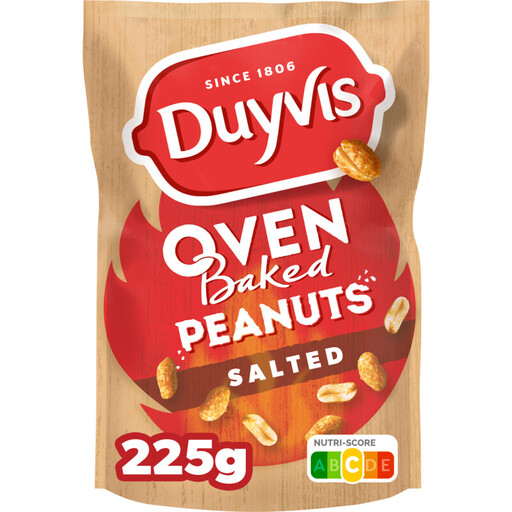
Duyvis Roasted Peanuts, 225 g
This roasted variety is a good fit if you’re looking for a savoury peanut snack to take with you.
The product description lists 606 kcal and 1.4 g salt per 100 g, and 7–8 portions. Salt is included in the ingredients; the description mentions possible traces of other nuts.
Joybuy
 No image available
Duyvis Honey & Lightly Salted Oven-Roasted Peanuts
An option to consider if you’re after a combination of honey and salt.
The product description lists 561 kcal, 25 g sugars and 1.4 g salt per 100 g, plus 5–6 portions. Contains peanuts and wheat; check the allergen information on the pack.
Joybuy
 No image available
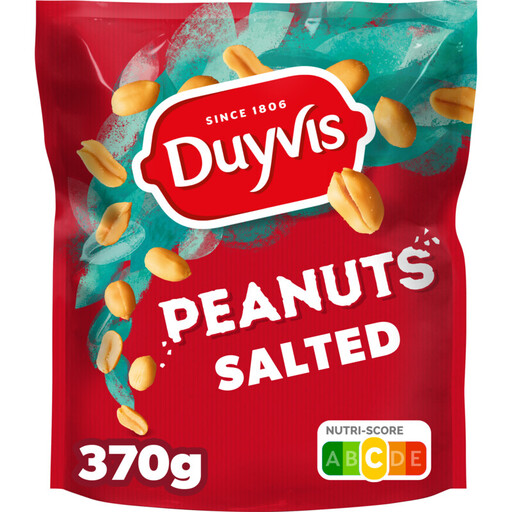
Duyvis Salted Peanuts, 370 g
The larger pack may suit you if you want to weigh out portions for several lunches.
The product description lists 613 kcal and 0.73 g salt per 100 g, and 7–8 portions. Contains peanuts and salt; the description mentions possible traces of other nuts.
Joybuy
 No image available
Verse Extra Large Roasted Peanuts, 210 g
A roasted variety to compare if you’re looking for peanuts with no added salt.
The product description lists 100% peanuts as the ingredient, 626 kcal and 0.02 g salt per 100 g.
Joybuy
Frequently asked questions
Can a small bag of peanuts be called ‘low calorie’?
No, not simply because the portion is small. According to the European Commission, solid foods must contain no more than 40 kcal per 100 g to make a ‘low calorie’ claim or a claim with the same meaning. The peanuts checked are above this threshold.
How do I calculate the energy in my own portion?
Multiply the kcal per 100 g shown on your pack by the number of grams you’re taking with you, then divide the result by 100. AH Unsalted Peanuts list 620 kcal per 100 g, which works out at 155 kcal for 25 g. Use the label value for the specific variety you choose.
What should I check if I have a peanut, nut or wheat allergy?
Peanuts aren’t suitable if you have a peanut allergy. For other relevant allergies, check the ingredients and warnings on the exact pack. The Netherlands Food and Consumer Product Safety Authority says that allergens present must be clearly identifiable in the ingredients list; AH lists wheat in its Honey Salt variety.
Are whole peanuts suitable for young children?
The AH and PLUS product pages warn that young children can choke on peanuts. Make an age-appropriate safety decision; this article doesn’t provide individual advice on feeding children.
What should I do with the recalled AH tub?
Do not eat AH Extra Large Salted Peanuts in a tub with a best-before date of 04-11-2026. Albert Heijn warns of possible metal fragments in this specific variety with this date; the warning doesn’t necessarily apply to other AH peanuts.


