What to look for when buying
First compare the nutritional information for the exact product, then think about how much you eat in one sitting. Next, check that the pack size and storage instructions suit how quickly you’ll use it.
| What to consider |
What to check |
Who it matters most to |
| Fat per snack |
Compare fat and energy per 100 g, then choose your portion size accordingly. For solid foods to be labelled ‘low fat’, the European Commission sets a maximum of 3 g of fat per 100 g. |
If you want less fat per snack, compare the nutritional information and keep an eye on your portion size. Around 36% of consumers in this buying context give reducing fat their highest priority. |
| Storing your supply |
Check the pack size, best-before date and storage instructions. Also consider how you’ll reseal the pack once it’s open. |
If you don’t eat peanuts every day, you’ll want to choose a supply you can store carefully. Around 29% of consumers prioritise shelf life and choosing an amount that suits how quickly they’ll use it. |
| How much you’ll get through |
Compare the pack size with how much you use, and check whether you can reseal the pack properly after opening. |
When you’re topping up your supply, you’ll want to choose an amount you’ll actually use. Around 21% of consumers give a practical pack size their highest priority. |
| Salt and ingredients |
Read the salt content and ingredients list. If you have an allergy, check the allergen information on the exact pack. |
If you’re also considering salt or the ingredients in seasonings and coatings, check these as well as the fat content. Around 14% of consumers give these product features their highest priority. |
Peanuts at Joybuy
These Joybuy products are snack peanuts to compare by fat per 100 g, flavour, ingredients and pack size. A lower listed fat content is not, on its own, an explicit reduced-fat claim.
 No image available
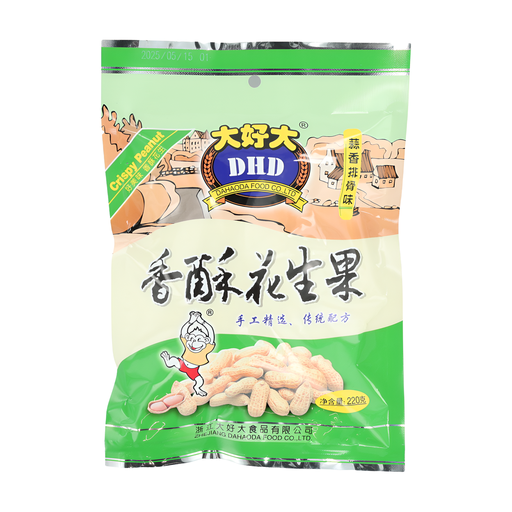
Dahaoda Crispy Peanuts Garlic Spareribs 220 g
If you want to compare fat content per 100 g, Joybuy’s product information lists 30.0 g; this is not an explicit reduced-fat claim.
The pack contains 220 g. The product information lists peanuts and wheat as allergens, and advises storing the product in a cool, dry place and keeping the pack closed after opening.
View at Joybuy
 No image available
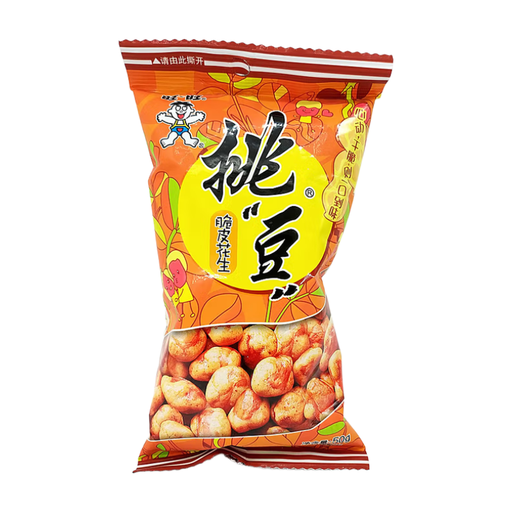
WANT WANT Tiaodou Crispy Peanuts 50 g
This single-portion pack could suit you if you want a small, ready-to-eat amount to take with you; the product information lists 50 g.
Joybuy lists 38.3 g of fat per 100 g. The description lists peanuts, wheat and soya beans as allergens, and advises storing the product away from direct sunlight.
View at Joybuy
 No image available
Duyvis Honey & Lightly Salted Oven-Roasted Peanuts
If you’re looking for oven-roasted peanuts with honey and salt, Joybuy’s product information lists 40 g of fat per 100 g; the preparation method is not proof of a reduced-fat claim.
The pack contains 175 g. The description lists peanuts and wheat, gluten and possibly other nuts; reseal the pack after opening or store the contents in an airtight container.
View at Joybuy
 No image available
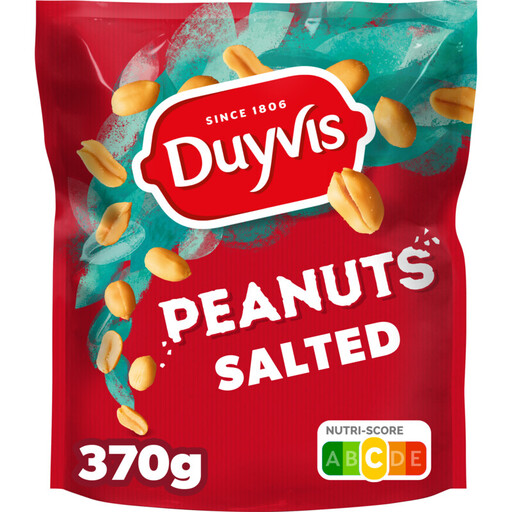
Duyvis Salted Peanuts 370 g
These salted peanuts are an option to compare if you’re looking for a larger pack; the product information lists 370 g.
Joybuy lists 52 g of fat per 100 g, with peanuts, sunflower oil and salt as ingredients. The description states that the product may contain other nuts and warns of a choking hazard for children under 5.
View at Joybuy
 No image available
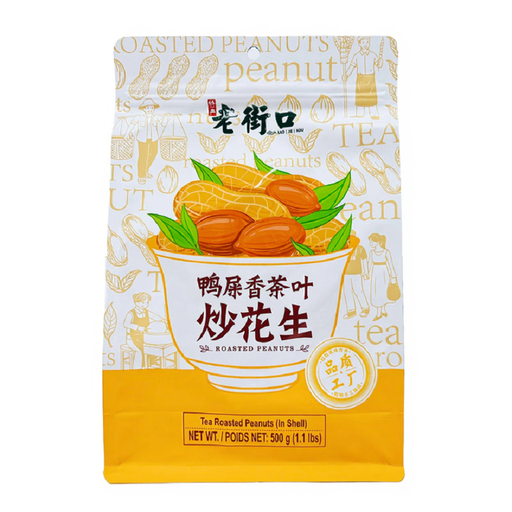
Lao Jie Kou Yashi Xiang Tea-Infused Roasted Peanuts 500 g
If you’re looking for a larger pack with a tea flavour, the product information lists 500 g and advises storing it in a cool, dry place.
Joybuy lists 35.6 g of fat per 100 g. Compare this label figure with the nutritional information for the exact alternatives you’re considering.
View at Joybuy
Frequently asked questions
Does roasting without added oil mean peanuts are low in fat?
No. Duyvis describes Oven Baked Original as roasted without added oil or fat, while Jumbo lists 50 g of fat per 100 g for the pack examined. For solid foods to be labelled ‘low fat’, the European Commission sets a maximum of 3 g of fat per 100 g.
What does the Duyvis claim of 30% less fat compare with?
Albert Heijn’s product description compares this Herbs&Onion variety with regular peanuts in a crunchy coating. Keep that comparison category in mind when assessing the claim; Albert Heijn listed the product as discontinued on the page consulted.
How should you store opened peanuts for your supply?
Store peanuts in a cool, dark, dry place in an airtight container, and follow the instructions on the pack. As general advice for opened unsalted peanuts, the Netherlands Nutrition Centre recommends 6 months in a kitchen cupboard and 1 year in the freezer. Peanuts that are rancid, stale or mouldy are signs of spoilage.
Are seasoned peanuts always just peanuts with salt?
No. According to Jumbo, Jumbo Dry Roasted contains wheat, among other ingredients, and lists peanuts, wheat and gluten as allergens. Check the exact pack; the Netherlands Food and Consumer Product Safety Authority states that allergen information for pre-packed products must appear on the label.
Which recall warning applies to AH Pinda’s extra groot gezouten?
On 20 May 2026, Albert Heijn issued a warning about AH Pinda’s extra groot gezouten in a tub with a best-before date of 04-11-2026 because it may contain metal fragments. Do not eat the contents of that specific pack. Return it to an AH shop for a full refund. According to Albert Heijn, the warning does not apply to packs of this product with a different best-before date.


