What should you look for when choosing?
First compare the fat content of the exact variety, then decide how much to serve, and finally choose based on preparation and flavour.
| What to consider |
What should you look for? |
Who is this important for? |
| Verifiably lower fat |
Compare the nutritional information per 100 grams for the exact variety, and assess any nutrition claim separately. |
If you want to eat less fat, compare product values on the same basis. Around 36% of consumers make fat content their top purchasing priority. |
| Portion size |
Decide how much you’ll serve, and keep the pack weight separate from the amount per guest. |
As a host, you’ll want to plan how much each guest gets, or how much to serve in each round. Around 29% of consumers prioritise portion control. |
| Preparation and flavour |
Check the full product name and ingredients, and compare nutritional values separately from the preparation description. |
If you’re looking for a familiar or specific type of peanut for drinks and nibbles, the product type and flavour matter. Around 21% of consumers make these their top priority. |
| Allergen information |
Read the label on each specific pack and make sure the information relates to the right product. |
If you’re sharing snacks with guests who have allergen restrictions, you’ll want to check the information on each pack. Around 14% of consumers prioritise safe sharing. |
Peanuts at Joybuy
This selection includes unsalted, salted and roasted peanuts, with nutritional values per 100 grams where these are provided in the product information. These values describe the products listed and do not, in themselves, constitute a formal claim of reduced fat.
 No image available
g’woon unsalted peanuts 250 g
An unsalted variety to compare if you’re looking for peanuts without added salt for a garden party.
The product information lists 50 g of fat per 100 g.
Contains peanuts; the product information also lists nuts and possible traces of nuts.
Joybuy
 No image available
Duyvis salted peanuts 235 g
A salted variety for anyone who wants to plan portions for a snack to share.
The product information lists 52 g of fat per 100 g and an average portion of 30 g; the pack is described as containing 7–8 portions.
Contains peanuts and may contain traces of other nuts. The product information advises supervising young children when they eat whole nuts.
Joybuy
 No image available
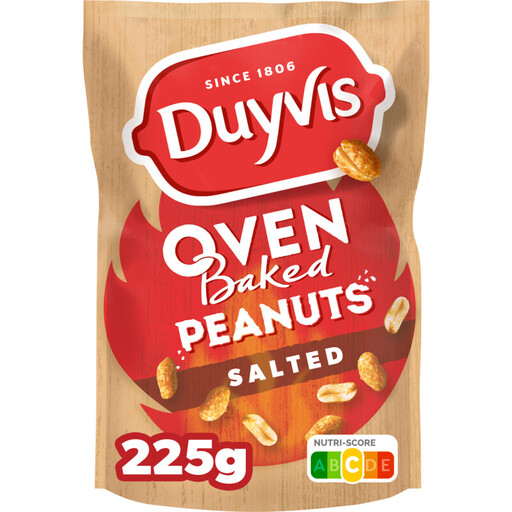
Duyvis roasted peanuts 225 g
A roasted peanut snack for anyone looking for this particular product type; the preparation method alone does not prove a reduction in fat.
The product information lists 50 g of fat per 100 g.
Contains peanuts and may contain traces of other nuts.
Joybuy
 No image available
Duyvis honey and lightly salted oven-roasted peanuts
An oven-roasted variety with honey and a light sprinkling of salt, for anyone looking for a sweet-and-savoury flavour; this is not proof of a formal reduced-fat claim.
The product information lists 40 g of fat per 100 g and 5–6 portions.
Contains peanuts and wheat; the product information also lists cereals containing gluten and possible traces of nuts.
Joybuy
 No image available
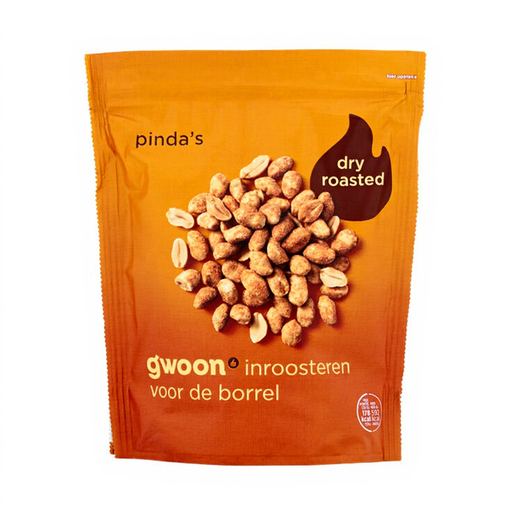
g’woon Dry Roasted peanuts 200 g
A seasoned dry-roasted variety for anyone looking for this type of product; the preparation description alone says nothing about fat reduction.
The product information lists 49 g of fat per 100 g and describes the pack as resealable.
Contains peanuts and may contain traces of nuts.
Joybuy
Frequently asked questions
Does ‘unsalted’ prove that peanuts contain less fat?
No. The Netherlands Nutrition Centre lists 12.9 grams of fat per 25-gram handful of unsalted peanuts. To choose a brand, compare the nutrition tables for the exact products.
Can a retailer label a product ‘reduced fat’ or ‘light’?
Nutrition claims must comply with European rules. The European Commission states that only claims listed in the annex to Regulation (EC) No 1924/2006 are permitted; a preparation description such as ‘oven-roasted’ is not, in itself, proof of such a claim.
Must peanuts be listed as an allergen on the label?
Yes. The NVWA states that peanuts are a regulated allergen and that allergen information for pre-packed products must appear on the label. This food information requirement is not a general labelling obligation for someone hosting a private party.
Are the Dutch rules on cross-contamination warnings already in force?
Since 1 January 2026, the NVWA has checked during inspections that pre-packed products carry correct warnings about allergen cross-contamination. So check the information on the pack of the exact variety.
How should you store Jumbo Dry Roasted Peanuts?
Jumbo’s product page advises storing them in a cool, dark place. This is storage advice for that product, not a guarantee of how long snacks left outside during a party will keep.


