Who is this choice relevant to?

Less fat at each snack break

You want to keep eating peanuts, but you’re mindful of the fat and energy in the amount you actually have. So compare the nutritional values and your portion; the ‘oven-roasted’ label alone doesn’t tell you how much fat the product contains. The Netherlands Nutrition Centre provides general values for unsalted peanuts; the labels on specific varieties may differ.

Unsalted snacks for the campsite

Your main preference is no added salt. Also check the ingredients and total fat content: AH, Jumbo and PLUS list sunflower oil in the unsalted varieties reviewed. So unsalted doesn’t mean low-fat.

Supplies for several days at the campsite

You plan how much to take and store opened peanuts in a sealed container in a suitable place. The Netherlands Nutrition Centre explains what ‘store in a cool place’ means; also check the storage instructions on the packaging. Peanuts are an allergen: the NVWA advises checking the allergen information on the label of pre-packed products, especially if you’re sharing.

What should you look for when choosing?

A demonstrably lower fat content

Choose this option if: less fat in the same quantity is your main priority; compare the exact claim and nutritional values on the packaging.

Trade-off: a smaller portion reduces the amount you eat, but doesn’t change the fat content per 100 g.

Oven-roasted without added fat

Choose this option if: you’re mainly concerned about added oil or fat during preparation; Duyvis describes Oven Baked Peanuts Original as made without any added oil or fat.

Trade-off: the preparation method doesn’t mean the natural fat in peanuts has been removed; the Dutch product page for Duyvis Oven roasted original lists 50 g of fat per 100 g (Albert Heijn).

Regular unsalted peanuts

Choose this option if: avoiding added salt is your priority; check the ingredients of the specific variety.

Trade-off: unsalted varieties may contain oil and aren’t automatically low-fat.

Portion regular peanuts in advance

Choose this option if: you want to limit how much you have at each snack break and take regular peanuts with you.

Trade-off: portioning doesn’t change the nutritional composition; the Netherlands Nutrition Centre gives 12.9 g of fat and 157 kcal for 25 g of unsalted peanuts.

What to consider What to look for Who is this most important for?
Fat in the same quantity Compare total fat per 100 g and check what any claim refers to. For ‘low fat’, the European Commission sets a maximum of 3 g of fat per 100 g of solid food. If I want less fat in the same quantity, I check the nutrition table rather than just the preparation method. Around 36% of consumers prioritise fat content.
Portion and energy First compare per 100 g, then work out the figures for the same portion. The Netherlands Nutrition Centre gives 12.9 g of fat and 157 kcal for 25 g of unsalted peanuts. When I have several snack breaks, I want to be able to measure out my own portions, even if I choose regular peanuts. Around 29% of consumers prioritise a portion they can manage.
Storage and sharing Follow the storage instructions on the packaging, seal opened bags securely and read the allergen information before sharing. The Netherlands Nutrition Centre explains ‘store in a cool place’ as 15–20 °C. For supplies that will last several days at the campsite, I want to know where I can store the bag and which allergens are listed. Around 21% of consumers prioritise storage and safe sharing.
A suitable quantity Choose a pack size that suits the number of snack breaks you have planned and the storage space available. I’d rather take an amount that suits my plans than be left with unnecessary leftovers. Around 14% of consumers focus mainly on choosing a suitable quantity.

Common mistakes

  • Assuming oven-roasted means low-fat

    A different preparation method doesn’t guarantee a lower total fat content. The Dutch product page for Duyvis Oven roasted original lists 50 g of fat per 100 g (Albert Heijn).

    Keep ‘without added cooking fat’ separate from ‘less total fat’, and check the nutritional values for the exact variety.

  • Confusing unsalted with oil-free

    The unsalted varieties reviewed from AH, Jumbo and PLUS list sunflower oil. So the ‘unsalted’ label doesn’t automatically tell you about all the ingredients or the fat content.

    Check the salt, ingredients and total fat separately on the packaging.

  • Comparing different portion sizes directly

    The AH variety reviewed uses a 25 g portion; Duyvis Oven roasted original lists a 30 g portion. So a per-portion comparison may differ because of both the quantity and the product values.

    First compare the nutritional values per 100 g, then work them out for the same portion.

  • Assuming ‘store in a cool place’ means anywhere outside the fridge

    The Netherlands Nutrition Centre defines ‘store in a cool place’ as somewhere at 15–20 °C. A warm tent won’t necessarily meet that requirement.

    Follow the packaging instructions and plan a suitable, dry and dark place to store your peanuts; seal opened bags securely.

Brands and own-label options compared

Duyvis

The Oven Baked Peanuts Original range is worth considering if you’re looking for peanuts roasted without added oil or fat.

  • Duyvis describes this preparation method as using no added oil or fat.
  • The Dutch product page for Oven roasted original lists 50 g of fat and 1.4 g of salt per 100 g (Albert Heijn); the preparation method alone doesn’t support choosing it as a low-fat option.

Albert Heijn

AH Unsalted Peanuts are a specific own-label example if you want to avoid added salt.

  • The product information lists 0 g of added salt, a 25 g portion and 12 portions per pack.
  • This variety contains sunflower oil and lists 51 g of fat per 100 g; here, unsalted doesn’t mean low-fat.

Jumbo

Jumbo Unsalted Peanuts are an own-label variety you can compare for ingredients and nutritional values.

  • Jumbo lists 99.5% peanuts and sunflower oil in the ingredients.
  • This variety contains 48 g of fat per 100 g; according to Jumbo, its low salt content comes from naturally occurring sodium and doesn’t indicate reduced fat.

Lidl

Lidl is an option for buying unsalted peanuts, rather than a confirmed product brand.

  • The Dutch store page lists a 285 g unsalted variety.
  • Being unsalted says nothing by itself about the total fat content; check the nutritional values on the pack you buy.

ALDI

ALDI is an option for buying Trader Joe’s roasted, unsalted peanuts.

  • The product page identifies this as a roasted, unsalted variety in a 250 g pack.
  • Roasted and unsalted doesn’t prove that the fat content is reduced; compare the nutritional values on the specific pack.

PLUS

PLUS Unsalted Peanuts are an own-label variety you can compare for ingredients, packaging and nutritional values.

  • The variety reviewed lists 99% peanuts in the ingredients.
  • The ingredients list sunflower oil, and the nutrition information gives 50 g of fat per 100 g. The product information also mentions possible traces of cashews; check this before sharing.

Peanuts at Joybuy

This selection includes snack peanuts with different preparation methods and pack sizes. Compare the fat per 100 g: a roasted or unsalted label doesn’t prove that the fat content is reduced.
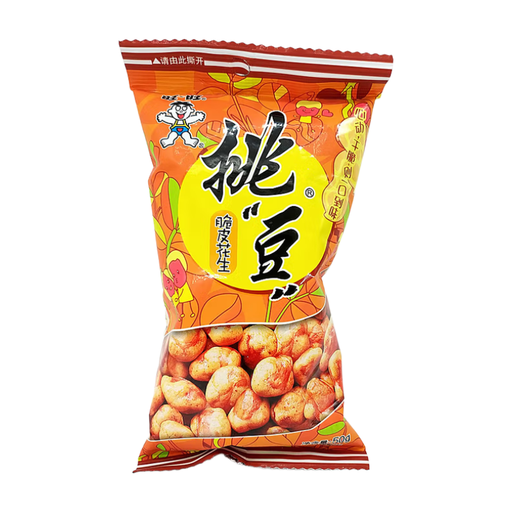
WANT WANT Tiaodou Crispy Peanuts, 50 g

WANT WANT Tiaodou Crispy Peanuts, 50 g

The 50 g pack may suit you if you want to take a set amount with you; that doesn’t automatically make the product low-fat.

The product description lists 70% peanuts and 38.3 g of fat per 100 g.

Contains peanuts, wheat and soya.

View at Joybuy
Duyvis Honey & Lightly Salted Oven-Roasted Peanuts, 175 g

Duyvis Honey & Lightly Salted Oven-Roasted Peanuts, 175 g

This oven-roasted variety may suit you if you’re looking for this particular flavour and preparation method; the method doesn’t prove that the fat content is reduced.

The product description lists 69% peanuts, 40 g of fat per 100 g and a pack size of 175 g.

Contains peanuts and wheat; may contain other nuts.

View at Joybuy
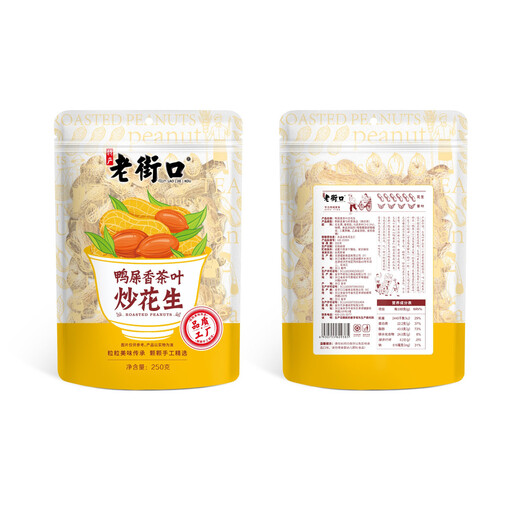
Lao Jie Kou Ya Shi Xiang Tea-Fried Peanut, 250 g

Lao Jie Kou Ya Shi Xiang Tea-Fried Peanut, 250 g

The 250 g pack may suit you if you want to take peanuts for several snack breaks; choose an amount that fits your storage options.

The product description lists 96.5% peanuts and 43.5 g of fat per 100 g.

The pack contains a non-edible desiccant. The description recommends storing in a cool, dry place and consuming immediately after opening.

View at Joybuy

g’woon Unsalted Peanuts, 250 g

g’woon Unsalted Peanuts, 250 g

This unsalted variety may suit you if you want to avoid added salt; the label doesn’t mean the product is low-fat.

The product description lists 99% peanuts, sunflower oil, 0.02 g of salt and 50 g of fat per 100 g.

Contains peanuts and may contain cashews. The description recommends storing in a cool, dry place and sealing the pack securely after opening.

View at Joybuy
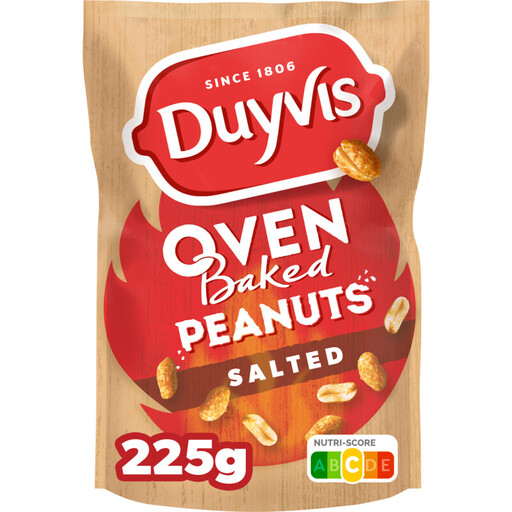
Duyvis Roasted Peanuts, 225 g

Duyvis Roasted Peanuts, 225 g

The 225 g pack may suit you if you want to take roasted peanuts and measure out your own portions.

The product description lists 50 g of fat per 100 g.

Contains peanuts and may contain other nuts. The description recommends storing in a cool, dry place and sealing the pack securely after opening.

View at Joybuy

Frequently asked questions

Are oven-roasted peanuts low-fat?

Not automatically. For solid foods, the European Commission sets a maximum of 3 g of fat per 100 g for a ‘low fat’ claim. Duyvis Oven roasted original lists 50 g of fat per 100 g on Albert Heijn’s Dutch product page, so oven-roasting doesn’t make this variety low-fat.

Do my peanuts need to be kept in the fridge at the campsite?

Follow the storage instructions on your pack. The Netherlands Nutrition Centre explains ‘store in a cool place’ as usually meaning 15–20 °C, somewhere cool, dark and dry; it doesn’t automatically mean you need a fridge. A warm tent won’t necessarily be suitable for storage.

Does choosing less fat mean I can worry less about allergens?

No. Peanuts remain an allergen, whatever their fat content. Check the allergen information and any warnings about other allergens on the specific pack before sharing the peanuts.

Which peanut recall warning is relevant?

On 20 May 2026, Albert Heijn issued a warning about AH Extra Large Salted Peanuts in a tub with a best-before date of 04-11-2026, due to possible metal particles. Don’t eat this product with this date and follow Albert Heijn’s instructions; the store offered a full refund for the affected product.
