What should you look for when choosing?
First decide whether you’re mainly looking for less total fat, a smaller portion or a different nutritional profile; these are not the same thing.
| What to consider |
What should you check? |
Who might this matter more to? |
| Less total fat |
Compare fat per 100 g and check the exact variety and the stated reference product. |
If less total fat is my main selection criterion, I want to know what a claim is being compared with; around 36% of consumers say this is their priority. |
| Portion size |
Weigh your own portion and convert the values per 100 g to that amount. |
If I mainly want to decide how much to eat during my coffee break, I look at the portion I actually have; around 29% of consumers prioritise energy and portion size. |
| Other nutritional values |
Read the ingredients and compare sugar, salt and other relevant values on the same basis. |
If I’m also keeping an eye on sugar, salt or ingredients, I want to look at the whole nutritional profile; around 21% of consumers say this is their main consideration. |
| Buying and storing |
Check the exact variety, pack size, retailer and storage instructions. |
If I’m buying snacks for regular coffee breaks, I want to know where to find the right variety and how to store it after opening; around 14% of consumers give buying and storage practicalities top priority. |
Peanuts and peanut snacks at Joybuy
This selection of Joybuy products includes coated peanut snacks and unsalted peanuts. It is not a confirmed list of products carrying a ‘less fat’ claim; check the pack for the nutritional values of the exact variety.
 No image available
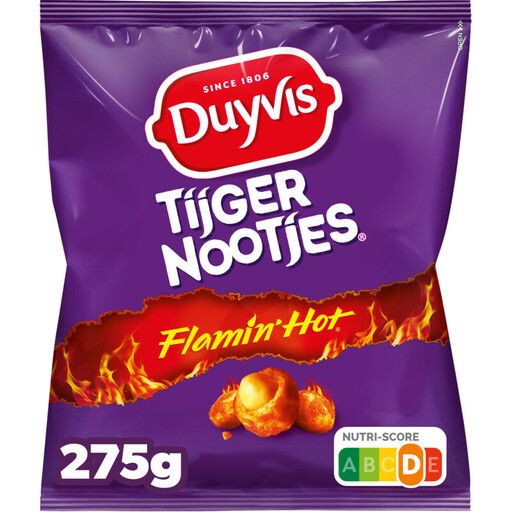
Duyvis Tiger Nuts Flaming Hot, 275 g
A good choice if you’re looking for a spicy peanut snack with a crunchy coating; the product name lists a 275 g pack.
The product information lists wheat and states that the snack may also contain milk, nuts, soya and mustard. Check the label if allergens are a concern for you.
View at Joybuy
 No image available
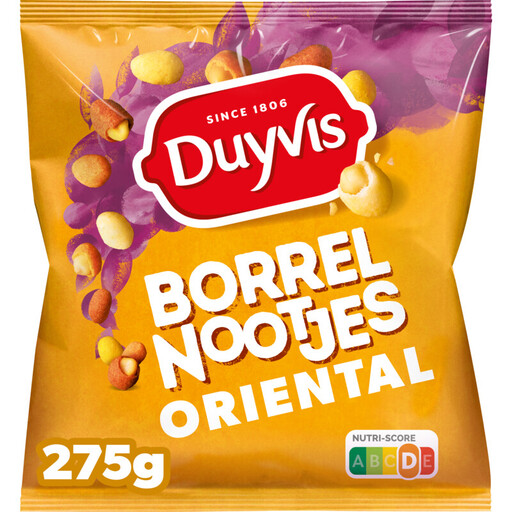
Duyvis Oriental Borrelnootjes, 275 g
A good choice if you’re looking for a savoury peanut snack with a crunchy coating and mild curry flavour; the product name lists a 275 g pack.
The product information lists wheat, barley and soya, and states that the snack may also contain milk, nuts and mustard. Check the label for allergens.
View at Joybuy
 No image available
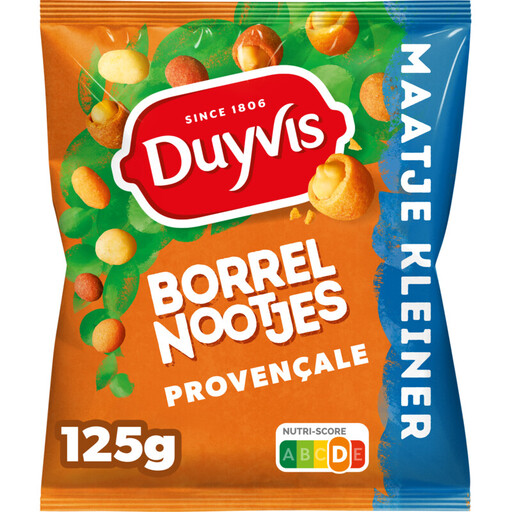
Duyvis Bran Nuts Provencale, 125 g
A good choice if you’re looking for a seasoned peanut snack with onion and garlic flavour; the product name lists a 125 g pack.
The product information lists wheat and states that the snack may also contain milk, nuts, soya and mustard. Check the label if you avoid allergens.
View at Joybuy
 No image available
Duyvis Coated Peanuts Provençal, 275 g
A good choice if you’re looking for a savoury peanut snack with a crunchy coating and Provençal onion and garlic flavour; the product name lists a 275 g pack.
The product information lists wheat and states that the snack may also contain milk, nuts, soya and mustard. Check the allergen information on the pack.
View at Joybuy
 No image available
g’woon unsalted peanuts, 250 g
A good choice if you’re looking for an unsalted peanut snack to enjoy with your coffee; the product name lists a 250 g pack.
Unsalted doesn’t automatically mean lower in fat. The product information states that the peanuts may contain cashew nuts; check the label for allergens.
View at Joybuy
Frequently asked questions
Can peanuts with less fat also be called low fat?
Not automatically: ‘less fat’ compares a product with a reference, while ‘low fat’ is a separate claim. According to the European Commission, solid foods carrying a ‘low fat’ claim must contain no more than 3 g of fat per 100 g. So compare the claim and the nutritional values for the exact variety.
How do you work out the nutritional values for your own portion?
Multiply the value per 100 g by your portion weight divided by 100. For a 25 g portion of AH Ongezouten pinda’s, this works out at 155 kcal and 12.75 g of fat, based on the 620 kcal and 51 g of fat per 100 g listed by Albert Heijn. This is a calculation example, not a recommended portion size.
Which allergens should you check in flavoured peanuts?
As well as peanuts, check the other ingredients and allergen warnings that are relevant to you. According to the product information, Duyvis Honey Salt also contains wheat. The NVWA states that allergens must be shown on the label of prepacked foods and clearly identifiable in the ingredients list.
How should you store an opened pack for your next coffee break?
Follow the storage instructions on the specific pack. Albert Heijn recommends storing AH Ongezouten pinda’s in a cool, dark, dry place and closing the pack securely. For Duyvis Honey Salt, the product information recommends transferring the contents to a light- and airtight tin after opening.
Does the recall warning apply to all AH peanuts?
No. Albert Heijn’s warning of 20 May 2026 applies only to AH Pinda’s extra groot gezouten in a tub with a best-before date of 04-11-2026, due to possible metal particles. Check whether you have that exact pack and date; the warning does not apply to all AH peanuts.


