
Evening snackers who want to limit their portion
You want to keep eating peanuts, but know in advance how much energy is in your bowl. Weighing them gives you a more precise portion than grabbing an arbitrary handful or eating straight from the bag.


If you want to eat peanuts in the evening without accidentally having too many, weigh your portion first and work out the calories using the kcal per 100 g shown on the pack. Unsalted peanuts are an option if you want to avoid added salt, but that doesn’t make them low in calories. ‘No added oil’ doesn’t prove they have fewer calories either.
You want to keep eating peanuts, but know in advance how much energy is in your bowl. Weighing them gives you a more precise portion than grabbing an arbitrary handful or eating straight from the bag.
You’re looking for an unsalted option and want to distinguish salt as an ingredient from the number of calories. Check both the ingredients list and the nutritional information.
You want to know whether the peanuts are roasted with oil or roasted without added oil. As well as the preparation method, check the seasoning and salt content on the pack.
Start with how much you want to eat, then check whether the ingredients, preparation method and packaging suit your preferences.
| What to consider | What to look for | Who might find this important? |
|---|---|---|
| Calories per portion | Compare kcal per 100 g and calculate your portion using: kcal per 100 g × weight in grams ÷ 100. | If I want to know how much energy is in my bowl in the evening, I weigh my portion rather than guessing with a handful. Around 42% of consumers say the calories in their own portion are their top purchasing priority. |
| Added salt | Read the ingredients list and also check the amount of salt per 100 g. | If I want to avoid added salt, I check the ingredients rather than relying on the product name alone. Around 25% of consumers don’t prioritise avoiding added salt. |
| Preparation method | Check the recipe and nutritional information; ‘oven baked’ doesn’t in itself mean fewer calories. | If I’m choosing between peanuts roasted with oil and those roasted without added oil, I also want to know which seasonings have been used. Around 17% of consumers prioritise the preparation method. |
| Packaging and storage | Check the weight in grams, the number of stated portions and the storage advice after opening. | If I use a bag over several snacking occasions, I want to know how many portions it contains and how to store the rest. Around 16% of consumers prioritise their choice of packaging and portion sizes. |
Unsalted and low in calories describe different properties. For the unsalted varieties examined, Jumbo, Duyvis, Albert Heijn and PLUS list 602 to 625 kcal per 100 g.
Check both the nutritional information and the ingredients list, then weigh the portion you want to eat.
According to Albert Heijn, the 300 g bag of AH Unsalted Peanuts examined contains twelve stated portions of 25 g.
Weigh out a portion into a bowl beforehand and seal the rest of the pack.
Duyvis describes Oven Baked Peanuts Original as roasted without added oil or fat, but the variety does contain salt in its seasoning.
Check the preparation method, salt content and nutritional information separately on the pack of the variety you choose.
The Jumbo product page examined lists a 30 g portion, while the AH page lists a 25 g portion. Any difference in kcal per portion may therefore be due to the amount.
Compare products per 100 g first, then calculate the figures for the same portion weight.
Among the varieties examined, you’ll find both unsalted peanuts and Oven Baked Peanuts Original.
AH Unsalted Peanuts are an own-brand option with a stated portion size.
Jumbo Unsalted Peanuts have nutritional information per 100 g and a stated portion size of 30 g.
Lidl lists a 285 g pack of unsalted peanuts as an in-store product.
The Dutch product listing is for a 250 g pack of roasted, unsalted Trader Joe's peanuts.
The PLUS variety examined is a 250 g bag of unsalted roasted peanuts, with nutritional information per 100 g.
This selection includes unsalted, seasoned and coated peanut snacks. If you want to limit your calorie intake, check the kcal per 100 g on the pack and weigh out a portion yourself; not every variety is unsalted.
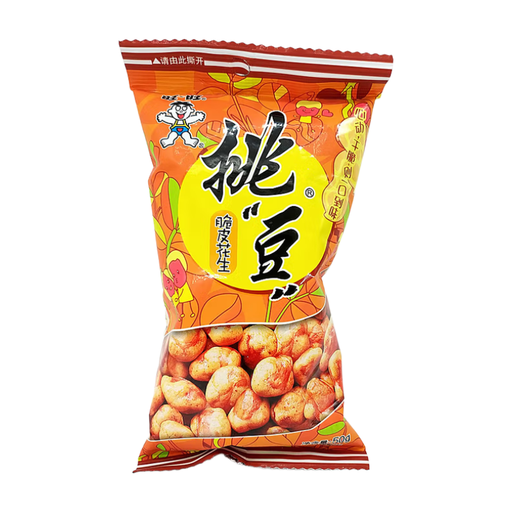 Image unavailable
A coated peanut snack whose energy content you can calculate for a weighed portion.
569 kcal per 100 g; made up of 70% peanuts. The coating includes wheat, sugar, palm oil and salt. Contains peanuts, wheat and soya.
 Image unavailable
An unsalted option to consider if you want to avoid added salt and weigh your own portion.
The product description lists 99% peanuts and sunflower oil. May contain cashews. Check the kcal per 100 g on the pack before calculating the energy in your portion.
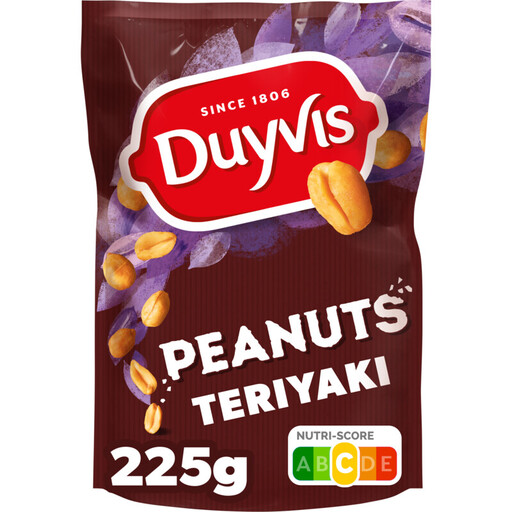 Image unavailable
A seasoned peanut snack with a stated portion size to help you weigh out a consistent amount.
The product description lists 643 kcal per 100 g and a 30 g portion. The flavour variety includes sunflower oil, sugar and salt. Contains peanuts, soya, wheat and celery; may contain milk and other nuts.
 Image unavailable
A ready-to-eat coated peanut snack; weigh out a portion if you want to limit how much you eat.
The product description mentions a BBQ coating that includes sugar, palm oil, salt and wheat. Contains peanuts, wheat and soya. Check the nutritional information on the pack to calculate the energy per portion.
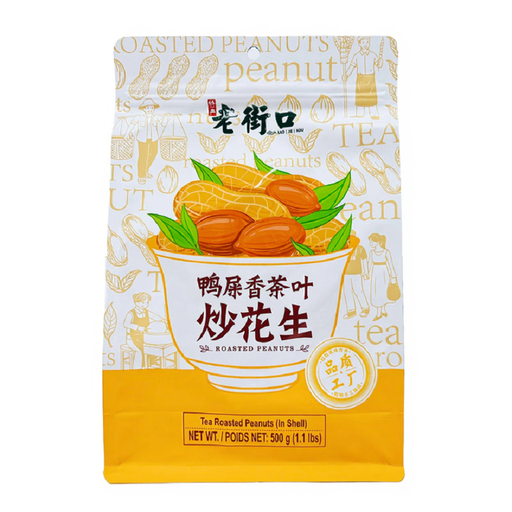 Image unavailable
A roasted peanut snack with a tea aroma; weigh out the amount you want and check the nutritional information on the pack.
The ingredients list includes salt, tea, flavourings, sweetener and flavour enhancers. Contains peanuts. Store in a cool, dry place as directed in the product information.
According to the European Commission, the ‘low energy’ claim for solid foods is limited to a maximum of 40 kcal (170 kJ) per 100 g. The unsalted varieties examined from Jumbo, Duyvis, Albert Heijn and PLUS list 602 to 625 kcal per 100 g. So describe a smaller portion as a way to eat fewer calories, not as proof that the product is low in calories.
No. A smaller amount reduces the energy in the portion you eat, not the energy per 100 g of the product. According to the European Commission, a ‘reduced energy’ claim requires a reduction of at least 30%, and the property responsible for reducing the energy must be stated.
Compare the kcal per 100 g first, then calculate the figures for the same portion weight. The Netherlands Nutrition Centre lists 157 kcal for 25 g of unsalted peanuts as a general reference; use the nutritional information on the exact pack for your calculation.
The Netherlands Nutrition Centre says it’s unclear whether eating after 8 pm makes you gain weight faster than eating earlier in the day. Include your evening snack in your total energy intake and weigh the amount if you want to limit it.
No. Unsalted or roasted doesn’t mean a product is free from peanut proteins. Stichting Voedselallergie warns that even small amounts can cause serious reactions in some people. If you have other allergies, also check the ingredients and allergen information on the exact pack.