Start by weighing out a portion, then compare the energy per 100 g: the standard plain, unsalted varieties checked contain 602–625 kcal per 100 g, according to product information from Jumbo, Duyvis, Albert Heijn and PLUS. That doesn’t make them a low-energy choice: the European Commission sets a limit of no more than 40 kcal per 100 g for solid foods to carry this nutrition claim. Also check the salt content, how they’re prepared and the portion you actually eat.
Who is this choice relevant to?
Evening snackers who watch their portions
You want to know how much energy your weighed portion provides. Compare like-for-like weights and remember that the contents of the bag aren’t the same as the portion you eat. The Netherlands Nutrition Centre lists 157 kcal for 25 g of unsalted peanuts.
People looking for unsalted peanuts
You’re looking for peanuts with no added salt and want to assess that choice separately from their energy content. The Netherlands Nutrition Centre includes unsalted nuts as part of the Wheel of Five; that doesn’t mean they’re low in calories.
Fans of roasted flavours
You might prefer a roasted or savoury-seasoned variety. Check the preparation method, ingredients and salt content separately: a roasted flavour doesn’t, in itself, tell you anything about energy or salt.
What should you look for when choosing?
First decide what matters most to you in a late-night snack. Then compare the labels per 100 g and work out the values for the portion you weigh out.
| What to consider |
What to look for |
Who is this most important to? |
| Energy in your portion |
Compare kcal per 100 g and calculate the value for the same weighed amount. |
When I have peanuts in the evening, I want to know how much energy my portion provides. Around 36% of consumers prioritise the energy in their weighed portion. |
| Salt and ingredients |
Read the ingredients list and compare the salt per 100 g; unsalted doesn’t automatically mean oil-free. |
I’m looking for peanuts with no added salt and want to check what’s in them. For around 29% of consumers, an unsalted product is the priority. |
| Preparation and flavour |
Check whether the variety is roasted or seasoned, and look at the ingredients and nutrition information. |
If roasted or savoury flavours matter to me, I also check the salt and flavourings. For around 21% of consumers, flavour preference is the main factor in their choice. |
| Packaging and storage |
Check the net weight, number of portions and storage instructions after opening. |
I want a bag that’s practical for several snack occasions and easy to store properly. Convenient packaging is the top priority for around 14% of consumers. |
Common mistakes
-
Confusing a small portion with a low-energy product
A smaller portion contains less energy than a larger portion of the same product, but that doesn’t make the product itself low in energy. For solid foods, the European Commission sets a limit of no more than 40 kcal per 100 g for the ‘low energy’ claim.
Use the nutrition information per 100 g to compare products, then calculate the energy in your weighed portion.
-
Comparing portions of different weights directly
Albert Heijn lists a 25 g portion for AH Unsalted Peanuts; Jumbo uses a 30 g portion for its unsalted variety. That means the kcal per labelled portion aren’t directly comparable.
Work out the values for the same weight before comparing the portions.
-
Assuming oven-baked means unsalted or low in energy
Duyvis describes its oven-baked variety as made without added oil, but product information from Duyvis and PLUS gives different energy and salt values for the Oven Baked/Oven roasted Original variety.
Check the preparation method, energy and salt on the packaging of the exact variety you’re buying.
-
Treating the whole bag as one late-night snack
A pack may contain several portions. The 300 g AH bag lists twelve 25 g portions, so the contents of the bag aren’t the same as a single portion.
Weigh out the amount you want to eat and follow the storage instructions on the packaging after opening.
Brands and varieties to consider
Assess the specific variety and pack, rather than the brand as a whole. Nutritional values and preparation methods can vary from product to product.
Duyvis
The range includes standard plain, unsalted peanuts and an oven-baked Original variety.
- For its standard unsalted variety, Duyvis lists 614 kcal per 100 g and ingredients including peanuts and sunflower oil.
- Published energy and salt values for the oven-baked variety differ between Duyvis and PLUS. Check the current packaging for the exact variety.
Albert Heijn
AH Unsalted Peanuts 300 g is a supermarket own-brand variety with a listed portion size of 25 g.
- Albert Heijn lists twelve portions per bag.
- The product information lists 620 kcal per 100 g; the 25 g portion doesn’t change the energy per 100 g.
Jumbo
Jumbo Unsalted Peanuts 250 g is a roasted own-brand variety with a nutrition table.
- Jumbo lists 602 kcal per 100 g.
- The labelled portion is 30 g. Convert it to the same weight if you’re comparing it with a 25 g portion.
Lidl
The Dutch Lidl product page describes a 285 g pack of unsalted peanuts, item 154219.
- The product page confirms that the variety is unsalted and gives the pack weight.
- The page states that the product is sold in store; check the nutrition information on the pack of the variety you find.
ALDI
The Dutch ALDI page describes a 250 g pack of Trader Joe’s roasted, unsalted peanuts.
- The preparation method and pack weight are listed for this variety.
- ALDI lists Nutri-Score A; this product rating isn’t a measure of its calorie content.
PLUS
PLUS sells a 250 g own-brand pack of unsalted peanuts and also lists nutrition information for Duyvis varieties.
- For PLUS Unsalted Peanuts, PLUS lists 625 kcal per 100 g and peanuts at 99% of the ingredients.
- These details apply to the pack mentioned; other PLUS packs and product varieties should be assessed separately.
Peanuts on Joybuy
This selection of Joybuy products includes unsalted, in-shell and roasted peanuts. Compare the nutrition information for the variety you choose and weigh out your portion; the product name alone doesn’t make peanuts low in energy.
 Image unavailable
g’woon unsalted peanuts, 250 g
An unsalted variety for anyone who wants to weigh out their own portion for a late-night snack.
The product name gives the pack size as 250 g.
Joybuy
 Image unavailable
g’woon peanuts in shell, 500 g
This in-shell variety is ideal if you prefer to shell your own peanuts; remember to keep an eye on your portion size, too.
The product name gives the pack size as 500 g. The product information provided warns that it contains peanuts and may contain traces of nuts.
Joybuy
 Image unavailable
Verse Extra Large roasted peanuts, 210 g
A roasted variety for anyone who pays particular attention to how their late-night snack is prepared.
The product name gives the size as Extra Large and the pack size as 210 g. The product information provided lists peanuts.
Joybuy
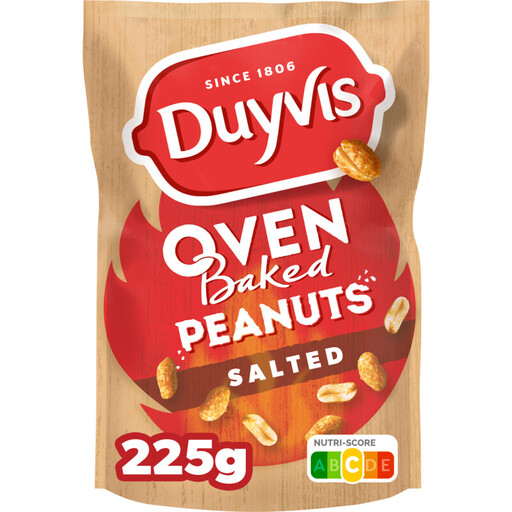 Image unavailable
Duyvis roasted peanuts, 225 g
This roasted variety is ideal if you enjoy savoury flavours and want to take the salt content into account separately.
The product information lists 1,4 g of salt per 100 g and savoury flavourings. Contains peanuts and may contain other nuts.
Joybuy
 Image unavailable
Duyvis Honey & Lightly Salted Oven-Roasted Peanuts
A sweet-and-savoury roasted variety for anyone who enjoys honey and salt; compare the nutrition information with your intended portion size.
The product information lists honey, sugar and 1,4 g of salt per 100 g. Check the allergen information: this variety is listed as containing peanuts, wheat and gluten.
Joybuy
Frequently asked questions
Can ordinary peanuts be called low in energy in the Netherlands?
For solid foods, the European Commission sets a maximum of 40 kcal (170 kJ) per 100 g for the ‘low energy’ claim. The standard unsalted varieties checked, with values of 602–625 kcal per 100 g, don’t meet this limit. A smaller portion doesn’t change the nutrition claim for the product.
How do you calculate the energy in a portion of peanuts?
Multiply the kcal per 100 g shown on the specific pack by the number of grams you’ve weighed out, then divide the result by 100. Use the same portion weight when comparing products, as labelled portion sizes can differ.
How should you store an opened bag of peanuts?
Follow the instructions on the packaging. Albert Heijn recommends storing AH Unsalted Peanuts in a cool, dark and dry place and sealing the pack tightly; for the Duyvis peanuts mentioned, PLUS recommends transferring them to a light- and airtight container after opening.
What allergen information should you check on packaged peanuts?
Check the label of the exact variety for peanuts and any other allergens. The NVWA states that allergen information must appear on the label of pre-packed products; also read any warnings about possible traces.
Are whole peanuts suitable for young children?
The Albert Heijn, Jumbo and PLUS product pages checked warn that young children may choke on peanuts. Choosing an unsalted variety doesn’t remove this choking risk, so follow the warning on the pack you choose.


