
Snackers looking for genuinely lower-fat peanuts
If you want peanuts with a reduced fat content, check the claim for the exact variant and what it is compared with. A preparation method that uses no added oil is not, in itself, proof of reduced fat.


If you specifically want peanuts with less fat, check the claim for the exact variant and what it is compared with: unsalted or made without added oil does not automatically mean reduced fat. If you mainly want to measure out your late-night snack, compare the nutritional values per 100 g and calculate them for the amount you actually eat.
If you want peanuts with a reduced fat content, check the claim for the exact variant and what it is compared with. A preparation method that uses no added oil is not, in itself, proof of reduced fat.
If you want to eat regular peanuts in the evening and work out the energy content of your portion, use the declared nutritional values per 100 g and the weight of your own portion.
If reducing salt matters more to you than a reduced-fat claim, compare the ingredients and salt content of the exact variant. The Netherlands Nutrition Centre includes unsalted nuts in its Wheel of Five guidelines; this does not mean they contain less fat.
First decide whether you want genuinely reduced fat or mainly want to keep track of the amount, salt or packaging. Compare nutritional values on the same basis, then work them out for your own portion.
| What to consider | What to look for | Who it is for |
|---|---|---|
| Is the lower fat content proven? | Check the claim for the exact variant and the comparable product it is based on. | I want the peanuts themselves to demonstrably contain less fat, not just to be prepared differently. Around 31% of consumers make substantiated fat reduction their top priority. |
| Energy in my portion | Use the kcal per 100 g and the weight of your own portion. | I want to know how much energy is in my measured late-night snack, without assuming it has a reduced-fat claim. Around 31% of consumers prioritise energy and portion control. |
| Salt and ingredients | Check the salt content, ingredients list and allergen information for the exact variant. | I’m looking for an unsalted snack or want to make an informed choice between plain peanuts and a savoury flavour mix. Around 23% of consumers put salt and ingredients first. |
| Packaging and storage | Compare the net weight and follow the storage instructions after opening. | I want the quantity and storage method to suit how often I snack in the evening. Around 15% of consumers prioritise packaging and convenience. |
According to the European Commission, a ‘reduced’ claim for a nutrient generally means a reduction of at least 30% compared with a similar product. ‘Low fat’ is a different claim: for solid foods, it means no more than 3 g of fat per 100 g. So a relative reduction in fat does not automatically mean a product is low in fat or energy.
As a worked example, Jumbo lists 602 kcal and 48 g of fat per 100 g for its Unsalted Peanuts 250 g. Based on those declared values, 25 g contains 150.5 kcal and 12 g of fat. This is a calculation based on the label, not a recommended portion size.
A description of how a product is prepared does not prove a relative reduction in fat. Duyvis describes Oven Baked Peanuts Original as oven-roasted without added oil or fat; this is not a reduced-fat claim.
Assess the preparation method and nutritional claim separately, and check the claim and what it is compared with on the packaging of the variant you buy.
Unsalted tells you about the salt, not the energy content of the peanuts. Jumbo Unsalted Peanuts 250 g lists 602 kcal per 100 g.
Check energy and fat separately from salt, and calculate the values for the amount you eat.
Comparisons are only valid if the values apply to the exact variant and packaging you have. Retailer pages for Duyvis Oven Roasted Peanuts Original and the manufacturer’s website list different nutritional values.
Use the information on the packaging you buy and don’t combine values from different versions.
Worth considering if you’re comparing regular, marinated and oven-baked peanuts.
AH Unsalted Peanuts 300 g are a regular unsalted option to use as a comparison and for calculating portions.
Jumbo Unsalted Peanuts 250 g are an unsalted option for comparison in this guide.
The listed 285 g bag of unsalted peanuts is an option for anyone looking for an unsalted variety.
Trader Joe’s Peanuts 250 g are a reference option for the combination of roasted and unsalted.
PLUS Unsalted Peanuts 250 g are a regular unsalted bag option for comparison.
This Joybuy selection includes regular, unsalted, roasted and seasoned snack peanuts for anyone mainly looking to compare portion size, salt or flavour. These products are not confirmed reduced-fat options; check the nutritional values and ingredients for the exact variant.
 No image available
An unsalted snack option whose nutritional values per 100 g you can use to calculate your own portion.
The product information lists 50 g of fat and 2690 kJ per 100 g, and 99% peanuts with sunflower oil. Contains peanuts and may contain cashew nuts.
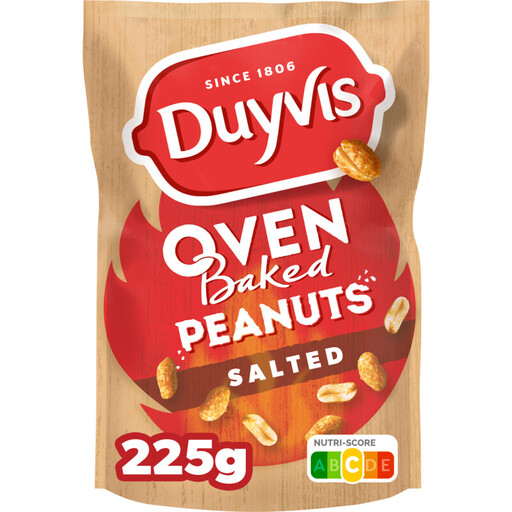 No image available
A roasted snack option for anyone who also wants to take nutritional values and salt content into account.
The product information lists 606 kcal, 50 g of fat and 1.4 g of salt per 100 g. The product description mentions a savoury flavour; contains peanuts and may contain other nuts.
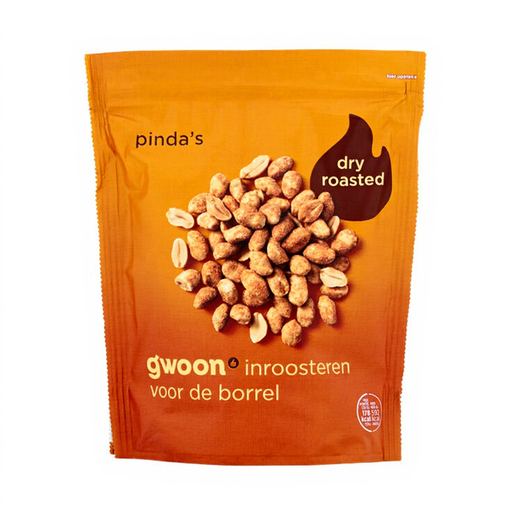 No image available
A dry-roasted snack option with herbs and spices, for anyone who also wants to compare salt content.
The product information lists 590 kcal, 49 g of fat and 1.5 g of salt per 100 g. The bag is resealable. Contains peanuts and may contain traces of other nuts.
 No image available
A snack option in the shell; the nutritional information gives you a basis for comparing values per 100 g.
The product information lists 49 g of fat, 2515 kJ and 0.12 g of salt per 100 g. May contain traces of nuts.
 No image available
The product description lists roasted, unsalted peanuts as a snack.
According to the product information, the ingredients are 100% peanuts; the nutritional values list 626 kcal and 50 g of fat per 100 g.
No. According to the European Commission, a ‘reduced’ claim for a nutrient generally means at least 30% less than in a similar product. ‘Low fat’ is a separate claim: for solid foods, it means no more than 3 g of fat per 100 g.
Multiply the kcal per 100 g by the weight of your portion, then divide by 100. For example, 25 g of Jumbo Unsalted Peanuts 250 g works out as 602 × 25 ÷ 100 = 150.5 kcal. This calculation is not a personal portion-size recommendation.
Follow the instructions for the exact packaging. Albert Heijn recommends storing AH Unsalted Peanuts in a cool, dark, dry place and sealing the pack securely after use. For Duyvis Oven Roasted Peanuts Original, Albert Heijn recommends storing them in a light-proof, airtight container after opening.
The Netherlands Food and Consumer Product Safety Authority says peanuts must be listed on the label of pre-packed products as an allergen. If you have a relevant allergy, also check the other ingredients and any warnings about the possible presence of other allergens on the packaging of the exact variant.
No. Albert Heijn’s warning of 20 May 2026 applies specifically to AH Extra Large Salted Peanuts in a tub with a best-before date of 04-11-2026. Albert Heijn asks customers not to eat this product because it may contain metal fragments. This is not the same variant as AH Unsalted Peanuts.