If someone has a peanut allergy, don’t choose a peanut product: being gluten-free, lactose-free or unsalted doesn’t change that. If you’re looking for another dietary feature, check the exact variant. For example, Albert Heijn’s product page describes AH Unsalted Peanuts as gluten-free and lactose-free, but the product contains peanuts. Also check warnings for children and ask the school or childcare provider about its current rules.
Who is this choice relevant to?
Lunch-makers who need to avoid peanuts
If the person you’re making lunch for has a peanut allergy, a peanut product is out. A claim about gluten or lactose, for example, doesn’t make a product peanut-free. The Netherlands Food and Consumer Product Safety Authority (NVWA) explains that allergen information must appear on the label of pre-packed products.
Lunch-makers following a specific free-from diet
If you’re looking for a gluten-free or lactose-free option, for example, and peanuts themselves aren’t excluded, check the claim on the exact variant. Albert Heijn lists these features for AH Unsalted Peanuts; the product page also says that the product contains peanuts.
Parents looking for a practical snack for children
With whole peanuts, both the product’s form and the specific warnings matter. The Netherlands Nutrition Centre warns about choking on whole peanuts; a serving suggestion on the packaging isn’t automatically advice for children.
What do consumers look for?
When planning a holiday lunch, the main priority can vary. The decision also includes consumers for whom peanuts are ultimately not an option.
| What to consider |
What to look for |
Who does this matter most to? |
| Excluding the right allergen |
Check the ingredients, allergen information and any warnings about possible presence. |
If the person eating the lunch needs to avoid peanuts, I wouldn’t choose a peanut product, even if it carries another dietary claim. Around 36% of consumers put avoiding peanuts first. |
| A specific free-from diet |
Check the claim on the exact variant, and read the ingredients and allergen warnings too. |
If you’re looking for a gluten-free or lactose-free option, for example, and peanuts themselves are suitable, you’ll want to know what that particular pack says. Around 29% of consumers give another specific free-from diet top priority. |
| Product form for children |
Consider whether whole peanuts are suitable for the child and the eating situation; don’t treat a general age indication as a substitute for a specific warning. |
For a child’s lunch, I’d consider whether whole peanuts are suitable for the child and the time they’ll be eating them. Around 21% of consumers put this suitability first. |
| Unsalted options and practical use |
Compare salt levels on the same basis, such as per 100 g, and check the pack size and storage instructions. |
If a free-from requirement isn’t the main priority, I might focus on an unsalted option and how to store it after opening. Around 14% of consumers give this practical choice top priority. |
Common mistakes when choosing peanuts
-
Reading a free-from claim as ‘allergy-free’
A product can be labelled gluten-free or lactose-free and still contain peanuts. These claims alone don’t mean that peanuts have been excluded.
First, work out which ingredient needs to be avoided, then check the ingredients and allergen information for the exact variant. If someone has a peanut allergy, don’t choose a peanut product.
-
Assuming a flavoured variety contains only peanuts
According to the manufacturer, Duyvis Borrelnootjes Provencale also contains wheat-based starch and declares gluten. The manufacturer also says that the product may contain milk, among other things.
Read the ingredients and allergen information for the specific flavour, even if you’re familiar with a plain variety from the same brand.
-
Putting a general age indication ahead of a warning
PLUS’s product page says ‘All ages’ and also warns that young children may choke on peanuts.
Take the specific warning into account when deciding whether the snack is suitable for the child and the eating situation.
Relevant brands for reference
Duyvis
The range includes plain unsalted peanuts and Borrelnootjes Provencale.
- For its unsalted variety, Duyvis lists peanuts and sunflower oil as ingredients.
- The unsalted variety may contain different types of nuts. According to the manufacturer, Provencale contains peanuts and gluten, and may contain milk, among other things.
Albert Heijn
AH Unsalted Peanuts is a variety whose product page lists specific dietary features.
- Albert Heijn describes this variety as gluten-free, lactose-free and vegan, as well as listing its ingredients.
- The variety contains peanuts, and the product page lists the possible presence of various other nuts. These claims don’t automatically apply to other varieties.
Jumbo
Jumbo Unsalted Peanuts is a 250 g plain variety.
- Jumbo lists 99.5% peanuts, sunflower oil and 0.01 g of salt per 100 g.
- The product information says that the product contains peanuts and may contain nuts; the ingredients list isn’t a general free-from claim.
PLUS
PLUS Unsalted Peanuts is a 250 g variety.
- PLUS lists 99% peanuts and sunflower oil as ingredients, and describes the product as vegan.
- The product page warns that it may contain cashew nuts and that young children may choke on the peanuts.
Lidl
The Dutch product listing describes 285 g of unsalted peanuts.
- The listing makes the product type and pack size clear.
- Don’t treat the product description as a free-from claim; check the information on the exact pack for your dietary needs.
ALDI
The Dutch product listing describes 250 g of Trader Joe’s roasted, unsalted peanuts.
- The product listing specifies how the peanuts are prepared and the pack size.
- The Nutri-Score A shown isn’t a free-from claim. Check the ingredients and allergen information for your dietary needs.
Peanuts on Joybuy
The Joybuy products below are peanut snacks, including plain and unsalted varieties. They aren’t an alternative when peanuts themselves need to be avoided.
 No image available
g'woon unsalted peanuts, 250 g
A plain, unsalted option if those are the features you’re looking for; not suitable when peanuts need to be avoided.
The product description lists 99% peanuts and sunflower oil. The product may contain cashew nuts.
Follow the storage instructions on the product packaging.
View on Joybuy
 No image available
g'woon peanuts in shells, 500 g
This variety is for anyone looking for peanuts in their shells; remove the shells before eating.
The product contains peanuts. The Netherlands Nutrition Centre warns about choking on whole peanuts.
View on Joybuy
 No image available
Verse Extra Large roasted peanuts, 210 g
A roasted, unsalted option if those are the features you’re looking for.
The product description lists 100% peanuts as the ingredient. The product contains peanuts, so it isn’t suitable when peanuts need to be avoided.
View on Joybuy
 No image available
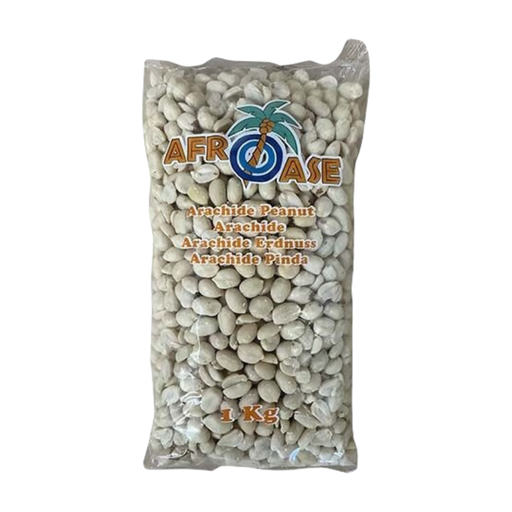
White peanuts, 1 kg
For anyone looking for peanuts as a snack and considering a 1 kg pack.
The product title lists peanuts and the pack size. Peanuts themselves are an ingredient that needs to be avoided if you have a peanut allergy.
View on Joybuy
Frequently asked questions
Can a peanut product be gluten-free or lactose-free and still be unsuitable for someone with a peanut allergy?
Yes. A claim about gluten or lactose doesn’t mean the product is peanut-free. Albert Heijn describes AH Unsalted Peanuts as gluten-free and lactose-free, while the product page also lists peanuts as an ingredient. Always check the exact packaging.
Does lactose-free also mean that a product is suitable for someone with a milk protein allergy?
No. Don’t assume that lactose-free means a product is suitable for someone with a milk protein allergy. If you have a milk-related allergy, check the ingredients and warnings for milk itself.
What does a warning about the possible presence of an allergen mean?
Since 1 January 2026, Dutch rules have applied to warnings about allergens that may be present unintentionally. According to the NVWA, businesses carry out a risk assessment when cross-contamination may still occur despite precautionary measures. The permitted warnings are ‘May contain X’ and ‘Not suitable for people with an X allergy’; these are labelling rules, not personal advice about whether to eat the product.
What should I look out for when giving whole peanuts to a child?
Bear in mind the warning about choking on whole peanuts. The Netherlands Nutrition Centre specifically mentions whole peanuts; also check the packaging and consider the child’s eating situation. Don’t treat a general age indication as a substitute for a specific warning.
Can I pack peanuts for any school or holiday childcare provider?
Check the current rules at the specific school or childcare provider. Policies can vary by location; one school’s policy isn’t a nationwide rule and doesn’t automatically tell you what your holiday childcare provider allows.


