What should you look for when choosing?
First compare the nutritional values per 100 g, then work out what they mean for the portion you actually plan to eat. Next, check the ingredients, salt and packaging.
| What to consider |
What should you look for? |
Who is this important for? |
| Calories per portion |
Compare kcal per 100 g and work out the amount for your weighed portion. |
If I want to keep my snack within a conscious calorie budget, I weigh my portion. Around 34% of consumers prioritise the calories in a portion. |
| Protein compared with energy |
Compare grams of protein per 100 kcal and also consider the amount in your portion. |
If I want to weigh up the protein contribution against the energy, I compare both values for the same quantity. Around 33% of consumers prioritise protein per calorie. |
| Salt and ingredients |
Read the salt content, ingredients and allergen information for the exact product. |
If I want to avoid added salt or a particular ingredient, I check the label of the variety I’m choosing. Around 20% of consumers give these points top priority. |
| Packaging and storage |
Check the pack size and follow the storage instructions on the packaging. |
If I’m looking for a pack that suits how often I eat peanuts, I also consider the pack size and how to store it after opening. Around 13% of consumers prioritise packaging and purchase costs. |
Peanuts at Joybuy
This selection includes unsalted, roasted and flavoured peanuts. Where nutritional values are available, compare the same quantity and check the ingredients and salt for the exact variety.
 No image available
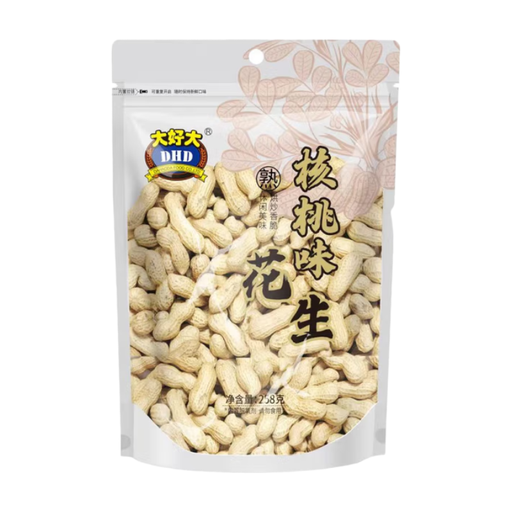
Dahaoda walnut-flavoured peanuts 258 g
The product title describes a walnut-flavoured variety. If calories and protein are key to your choice, check the nutritional values and ingredients on the pack.
Not suitable for anyone with a peanut allergy.
View at Joybuy
 No image available
g’woon unsalted peanuts 250 g
An unsalted variety to compare if you want to weigh out your own portion.
Joybuy Netherlands lists 27 g of protein, 2690 kJ and 0.02 g of salt per 100 g. The ingredients include peanuts and sunflower oil; the product may contain cashews. Not suitable for anyone with a peanut allergy.
View at Joybuy
 No image available
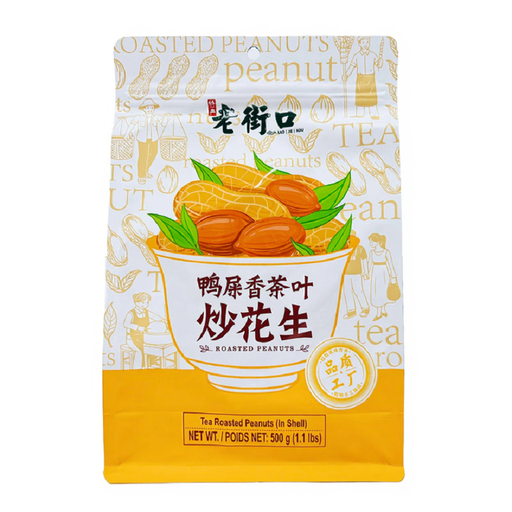
Lao Jie Kou Yashi Xiang roasted tea-flavoured peanuts 500 g
This flavoured roasted variety could be a good fit if you’re looking for this kind of taste. Compare the label with your preferences for salt and ingredients.
Joybuy Netherlands lists 25.2 g of protein, 544 kcal and 1.37 g of salt per 100 g. The product information mentions tea, flavourings and sweetener. Not suitable for anyone with a peanut allergy.
View at Joybuy
 No image available
g’woon peanuts in shells 500 g
A variety in the shell to consider if you like eating peanuts this way; bear in mind you’ll need to shell them first.
Joybuy Netherlands lists 29 g of protein, 2515 kJ and 0.12 g of salt per 100 g. Not suitable for anyone with a peanut allergy.
View at Joybuy
 No image available
Verse Extra Large roasted peanuts 210 g
A roasted variety to compare on the label when choosing a measured portion.
Joybuy Netherlands lists 26 g of protein, 626 kcal and 0.02 g of salt per 100 g, and names peanuts as an ingredient. Not suitable for anyone with a peanut allergy.
View at Joybuy
Frequently asked questions
Can you call regular peanuts ‘low in calories’?
Not just because a small portion contains fewer calories. For a ‘low energy’ claim on solid foods, the European Commission sets a limit of no more than 40 kcal per 100 g; the product examples discussed above are well above this. A smaller portion contains fewer calories, but that doesn’t change the claim for the product itself.
How do I compare labels with different portion sizes?
First compare the values per 100 g, then work them out for the same portion. For 25 g, multiply the value per 100 g by 0.25; for 30 g, multiply it by 0.30. Under EU rules, nutritional values are given per 100 g or 100 ml.
Are unsalted or roasted peanuts suitable for someone with a peanut allergy?
No. Being unsalted or roasted doesn’t remove the peanut allergen. Check the allergen information for the exact product too; Jumbo Dry Roasted, for example, also lists wheat and gluten. The Netherlands Food and Consumer Product Safety Authority lists peanuts as an allergen that must be declared on prepacked products.
How should I store an opened pack?
Follow the storage instructions on the pack you’ve chosen. Albert Heijn recommends storing its unsalted peanuts in a cool, dark and dry place and closing the pack securely after use. For Duyvis Oven roasted Original, Albert Heijn recommends a light- and airtight tin.


