
For your gym bag, with no prep
If you want to take an individual bag with you, check how much it contains. Duyvis lists a 60 g salted pack; Bol’s product listing shows a multipack of 20 × 60 g.


A multipack is a good choice if you want to take individual bags with you or hand them out; with a larger bag, you can portion them at home. For a multipack, check both the number of bags and the weight of each one: the stated 60 g is not a recommended personal portion. Also consider the ingredients, storage and when you eat them in relation to your training; the Netherlands Nutrition Centre advises against eating a large portion just before exercise.
If you want to take an individual bag with you, check how much it contains. Duyvis lists a 60 g salted pack; Bol’s product listing shows a multipack of 20 × 60 g.
You can divide a larger bag up at home, choosing how much to put in each lunchbox or take for each workout. Retailer listings include unsalted bags ranging from 200 g to 500 g. Store opened nuts in a sealed container in a dry place; the Netherlands Nutrition Centre recommends keeping them somewhere cool if possible.
If you’re sharing, individual packs, ingredients and allergen information all matter. The Dutch Food and Consumer Product Safety Authority (NVWA) classifies peanuts as an allergen that must be listed on the label. PLUS and Jumbo also warn that the products reviewed pose a choking risk for young children.
Choose based on how you’ll take, portion or share the peanuts; pack size alone doesn’t tell you what’s right for a particular snack occasion.
A good fit if: you want to take a bag with you without weighing it out first, or hand out individual bags. Bol lists Duyvis salted peanuts in 20 bags of 60 g; Duyvis confirms that its salted variety is also available in 60 g bags.
Bear in mind: 60 g is the contents of one bag, not a recommended portion for you; this multipack is salted.
A good fit if: you want to prepare portions at home for different snack occasions or lunchboxes. Listings from AH, ALDI, PLUS and Lidl include unsalted packs ranging from 200 g to 500 g.
Bear in mind: a larger bag isn’t a multipack of individually sealed portions; you’ll need to portion it yourself and store the opened contents properly.
A good fit if: you deliberately want to share a salted snack and don’t need a separate bag for each person. Jumbo lists a 500 g bag of salted peanuts.
Bear in mind: the whole bag is for stocking up or sharing, not an individual portion; store the opened contents as directed on the label.
| What to consider | What should you check? | Who is this important to? |
|---|---|---|
| Taking them with you and portion size | The number of bags and the weight of each one. | If I want to put something in my gym bag without weighing it out, I check both details; around 36% of consumers prioritise convenience on the go and a suitable amount. |
| Ingredients and when you eat them | Whether they’re salted or unsalted, the ingredients and when you’ll eat them. | I pay attention to the ingredients and how much I eat, especially just before training; around 29% of consumers put food choices and portion awareness first. |
| Matching your supply to how you use it | The total contents and how to store an opened bag. | If I’m planning supplies for several occasions, I want to choose an amount that suits how I’ll use it; around 21% of consumers prioritise planning their supplies. |
| Sharing and lunchbox safety | Ingredients and allergen information, and who you’re packing the peanuts for. | When I’m taking peanuts for other people, I want to know what’s in them and whether they’re suitable for the recipients; around 14% of consumers prioritise sharing with care. |
The weight on an individual pack tells you how much it contains, not how much you should eat at one snack occasion. The Duyvis multipack lists bags of 60 g.
Compare the weight of each bag with the amount you want to take. Don’t automatically treat an amount from a nutrition table as personal or daily advice.
A 250 g or 500 g bag doesn’t automatically contain individually wrapped portions. Once opened, it’s still important to follow the storage advice.
Check the number of packs and the weight of each one. If you’re portioning the contents yourself, plan how you’ll keep them sealed and dry once the bag is open.
Making your own portions takes preparation and suitable resealable containers or bags.
When you portion peanuts yourself, information about ingredients or allergens can become separated from the packaging. Whole peanuts also pose a choking risk for young children.
Keep the ingredients and allergen information with the portions, and consider who will be eating them, especially when preparing a lunchbox for a young child.
Dutch product listings show both a genuine multipack and individual pack sizes.
The official AH listing gives examples of unsalted bags that you can portion yourself.
The product listing reviewed is for a 500 g bag of salted peanuts.
The Lidl product listing is for 200 g of roasted, unsalted peanuts.
A Dutch ALDI product listing features unsalted Trader Joe’s peanuts.
The PLUS listing reviewed is for a 250 g bag of unsalted peanuts.
These Joybuy products are a good fit if you want to portion roasted peanuts at home for your gym bag or lunchbox.
 Image unavailable
A good fit if you want to portion unsalted peanuts at home for your gym bag or lunchbox.
The product description lists 210 g, roasted peanuts, 100% peanuts as the ingredient and no added salt. Contains peanuts.
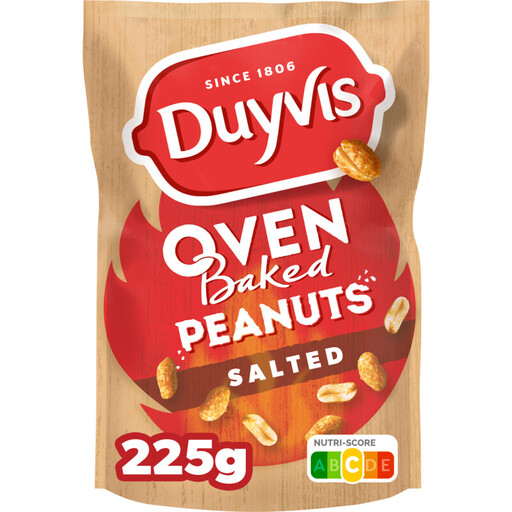 Image unavailable
A good fit if you want to spread one pack across several snack occasions.
The product description lists 225 g and 7–8 portions. The ingredients include 97% peanuts, flavourings and salt. May contain other nuts.
It’s best not to use your gym bag as a regular storage place. The Netherlands Nutrition Centre advises storing nuts in a sealed container in a dry place, preferably somewhere cool. Also follow the instructions on the packaging.
Pay particular attention to how much you eat and when. The Netherlands Nutrition Centre advises against eating a large portion or foods high in fat, protein or dietary fibre just before exercise, as they stay in your stomach for a long time. This doesn’t mean peanuts are unsuitable at other times.
No. Bear in mind the choking risk for young children. The PLUS and Jumbo product pages reviewed include warnings about this; they don’t set a general legal age limit. Also take the recipient’s allergies into account.
Check the ingredients list and any warnings on the packaging. The NVWA requires allergens to be listed in the ingredients list. Since 1 January 2026, Dutch rules also apply to precautionary warnings about cross-contamination; these are separate from peanuts deliberately used as an ingredient.
Not necessarily. The Netherlands Nutrition Centre uses 25 g as a reference amount for calculating average nutritional values for unsalted peanuts. This figure isn’t personal portion advice and doesn’t represent the nutritional value of every brand.