
Portion-conscious snackers
You want to keep serving peanuts, but you’re mindful of how much fat and energy you eat. Compare labels on the same basis and decide in advance how much to put out.


For a lighter neighbourhood get-together, compare the fat content per 100g and decide in advance how much you want to serve. Unsalted peanuts aren’t automatically low in fat, and ‘no added oil’ tells you nothing about the total fat content on its own. A smaller portion does, however, reduce the amount of fat and energy you get from the same product.
You want to keep serving peanuts, but you’re mindful of how much fat and energy you eat. Compare labels on the same basis and decide in advance how much to put out.
You want to avoid added salt. So compare the ingredients and salt content separately from the fat content: unsalted doesn’t automatically mean low in fat.
You’re thinking about allergens, children, storage and different snack preferences. Check the label for the exact variety of seasoned or coated peanuts you’re considering.
Choose this if: your main aim is to limit the amount of peanuts you eat.
Bear in mind: the fat content per 100g stays the same. The Voedingscentrum uses 25g as a reference portion for calculations; this isn’t a universal portion recommendation.
Choose this if: a preparation method without added oil or fat is important to you.
Bear in mind: Duyvis describes Original as prepared without added oil or fat; Albert Heijn lists 50g of fat per 100g for the Dutch Original variety. So this preparation method doesn’t make the variety low in fat.
Choose this if: you’re looking for a crunchy coating and want to assess the product claim against the comparison group it names.
Bear in mind: the Duyvis Herbs&Onion claim reviewed compares the product with plain peanuts in a crunchy coating. Albert Heijn lists this variety as no longer part of its range; that doesn’t mean it’s available everywhere or has disappeared completely.
| What to consider | What should you look for? | Who might this matter to? |
|---|---|---|
| Fat content and claims | Compare total fat per 100g and, for a comparative claim, check which product group is used as the reference. | I want to know how much fat is actually in the peanuts I choose and exactly what the claim compares. Around 31% of consumers put fat content and claims first. |
| Portion size | Decide in advance how much to serve and compare nutritional values for the same portion size. | If I want to eat less fat and energy, I focus on how much I actually have. Around 25% of consumers want to limit how much they snack on. |
| Added salt | Check both the ingredients and the salt content; assess fat reduction separately. | I want to avoid added salt, even if that doesn’t mean choosing the variety with the lowest fat content. Around 19% of consumers prioritise choosing unsalted snacks. |
| Guests and allergens | Check the ingredients for the exact variety and, if anyone has allergies, keep snacks and serving utensils separate. | When I’m hosting guests with different needs, I want to consider allergens and whether the snacks are suitable for children. Around 13% of consumers put guest safety first when choosing. |
| Packaging and storage | Choose a pack size that suits your serving plan and follow the storage instructions on the pack. | I’m looking for a pack that suits my get-together and lets me store leftovers properly. Around 12% of consumers prioritise practical shopping and packaging. |
These terms describe salt content or preparation, not the total fat content. According to the European Commission, a solid food can only be labelled ‘low fat’ if it contains no more than 3g of fat per 100g.
Check the total fat per 100g separately from the ingredients, salt content and preparation method.
The Duyvis Herbs&Onion claim reviewed names plain peanuts in a crunchy coating as its comparison group. A coating may also contain other ingredients and allergens.
Check the comparison group and the ingredients for the exact variety before taking the claim into account.
The nutritional value per portion depends on how much you actually eat; the pack size isn’t the same as a portion.
Decide in advance how much to serve, then seal the rest of the pack properly.
Worth comparing if you’re looking at unsalted, seasoned, oven-roasted or coated peanuts.
A supermarket own-brand option for unsalted peanuts, alongside product information for individual Duyvis varieties.
A supermarket option for unsalted peanuts, with product information for a 250g pack.
A supermarket option for the 200g pack of roasted, unsalted peanuts reviewed.
A supermarket option for Trader Joe’s 250g pack of roasted, unsalted peanuts.
A supermarket own-brand option with nutritional information for PLUS Unsalted Peanuts, 300g.
These Joybuy products suit different get-together preferences, including unsalted, roasted and flavoured options, as well as peanuts in their shells.
 No image available
An option if you’re specifically looking for unsalted peanuts to serve at a get-together.
The product information says that the product may contain cashew nuts.
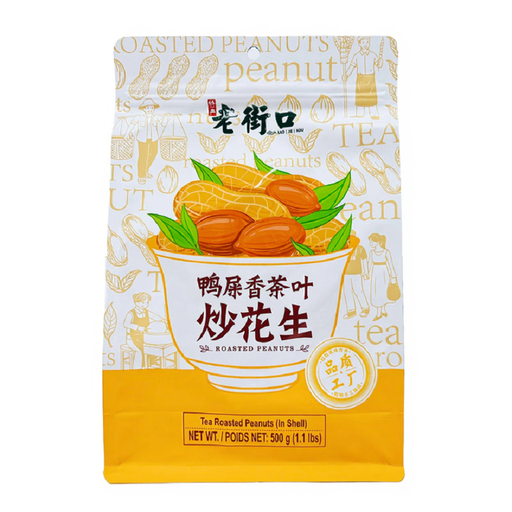 No image available
A flavoured option to serve alongside plain peanuts at a gathering.
Contains peanuts, so it isn’t suitable for anyone who needs to avoid them.
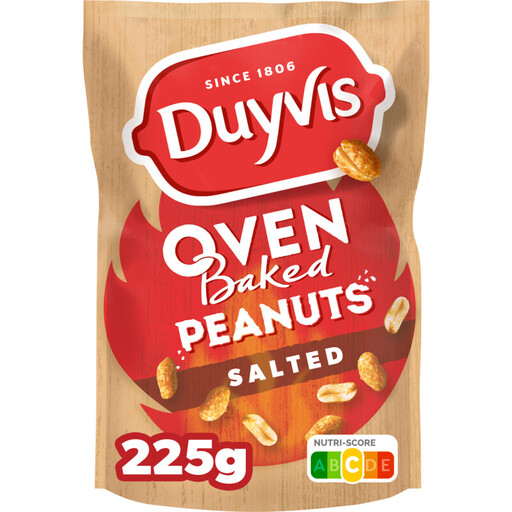 No image available
A good fit if you want a ready-to-serve savoury peanut snack to share.
Joybuy Netherlands lists 50g of fat per 100g, so this isn’t a low-fat choice. Salt is listed in the ingredients.
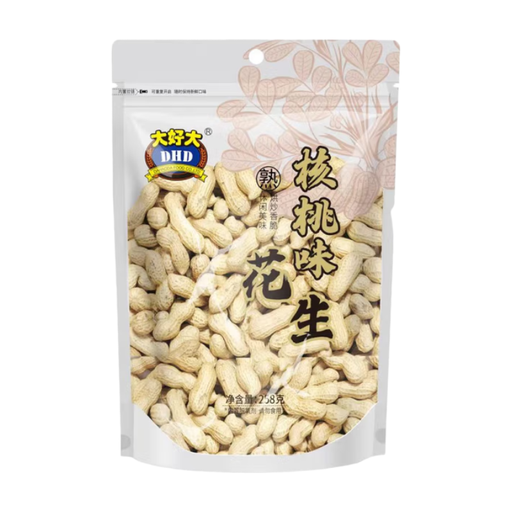 No image available
A flavoured option if you’d like to offer something different alongside plain peanuts.
The product information lists peanuts and soya; bear this in mind if any guests need to avoid these allergens.
 No image available
An option if you’d like to serve peanuts in their shells at your get-together.
Contains peanuts, so it isn’t suitable for anyone who needs to avoid them.
According to the European Commission, a solid food can only carry the ‘low fat’ claim if it contains no more than 3g of fat per 100g. A smaller portion doesn’t change this threshold for the product claim.
No. Duyvis describes Original as prepared without added oil or fat, while the Dutch label lists salt. Check the ingredients and salt content for the exact variety.
No. The Voedingscentrum uses 25g as a reference portion when calculating the nutritional values for unsalted peanuts; it isn’t a universal portion limit or necessarily current daily guidance.
Check the ingredients on the exact pack, as a coating may add other ingredients and allergens. The Duyvis Herbs&Onion variety reviewed lists wheat.
On 20 May 2026, Albert Heijn announced a recall of AH Extra Large Salted Peanuts in a tub with a best-before date of 04-11-2026, due to possible metal fragments. The notice applies to that specific variety and date, not automatically to other AH peanuts.