
Comparing fat content
If you want to snack on less fat while gaming, check the nutrition table and the product used as the comparison for any comparative claim about the peanuts.


If you want to eat less fat, don’t choose peanuts based on words such as ‘oven-baked’ or ‘unsalted’: compare the fat content per 100 g and check what a claim such as ‘less fat’ is based on. If your main aim is to eat less during a gaming session, measure out a portion beforehand. Unsalted peanuts are a choice based on salt, not automatically on fat.
If you want to snack on less fat while gaming, check the nutrition table and the product used as the comparison for any comparative claim about the peanuts.
If you want to choose how much you eat during a gaming session, look for portion information and set out the amount you want beforehand. This doesn’t change the product’s composition per 100 g.
If reducing salt is your main priority, look for unsalted options and assess the fat content separately.
First decide whether you mainly want to manage fat content, portion size, salt or convenience. Each requires different checks on the packaging.
| What to consider | What should you check? | Who is this important to? |
|---|---|---|
| Verifiably less fat | Compare fat per 100 g and check which reference product is named in any claim. A preparation name alone doesn’t tell you how much fat the product contains. | If I want to snack on less fat, I want to be able to compare the fat content and understand what a claim is based on. Around 36% of consumers make verifiable fat reduction their top priority. |
| A suitable portion | Check the portion size and number of portions. Albert Heijn lists a 25 g portion for AH Unsalted Peanuts; Jumbo also gives nutrition information per 25 g for Dry Roasted. | During a gaming session, I want to decide in advance how much to set out, rather than treating the whole pack as one portion. Around 29% of consumers prioritise portion control. |
| Less salt | Check salt per 100 g and read the ingredients. Albert Heijn and PLUS list 0 g salt per 100 g for the unsalted peanuts mentioned; this is not a comparison of fat content. | If my main aim is to reduce salt, I look for an unsalted option and assess the fat separately. Around 21% of consumers make reducing salt their top priority. |
| Buying and storing | Check the pack size, where it is sold and the storage advice on the packaging. Lidl’s product page for 200 g of unsalted peanuts says the product is sold in-store. | I want to be able to buy the peanuts easily, seal them and store them for another gaming session. Around 14% of consumers prioritise convenience when buying and storing. |
Preparing peanuts without added fat doesn’t mean the fat naturally present in the peanuts is removed. Albert Heijn’s Dutch product page for Duyvis Oven roasted peanuts Original lists 50 g of fat per 100 g.
Check the nutrition table and don’t treat the preparation method as proof that the product is low in fat.
A claim applies to the comparison stated alongside it. Albert Heijn listed a comparison for a Duyvis Herbs&Onion variant with peanuts in a crunchy coating sold on average in the Netherlands. This isn’t automatically a comparison with all peanuts.
Read the full claim and compare only with the reference product named.
According to Albert Heijn, AH Unsalted Peanuts contain 0 g of salt and 51 g of fat per 100 g. So choosing based on salt doesn’t automatically answer the question of fat content.
Choose unsalted peanuts if that suits your preference for salt, and check the fat content separately.
A pack may contain several portions. Albert Heijn lists 12 portions of 25 g for the unsalted peanuts mentioned.
Measure out the amount you want to set aside in advance.
After measuring out your portion, seal and store the rest properly. The Netherlands Nutrition Centre recommends storing peanuts somewhere cool, dark and dry.
Useful for understanding the differences between regular peanuts, whole oven-baked peanuts and peanuts in a crunchy coating.
The product information for AH Unsalted Peanuts is an example for anyone looking to assess salt and portion size.
Jumbo Dry Roasted is a seasoned and salted example, with nutrition information per 100 g and per 25 g.
Lidl describes its 200 g pack of unsalted roasted peanuts as a snack product.
ALDI lists Trader Joe’s 250 g pack of roasted unsalted peanuts as a product example.
PLUS offers examples of unsalted and dry-roasted products with different salt and fat content.
The products below include coated peanut snacks and a variant with ‘unsalted’ in its name. Choose them based on the stated flavour, coating or portion information; these characteristics alone don’t indicate that they contain less fat.
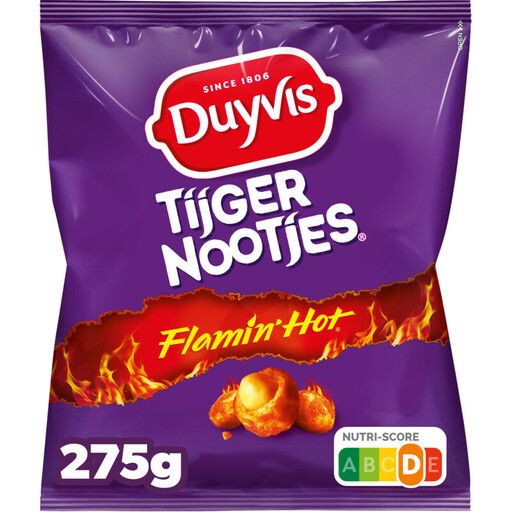 No image available
Suitable if you’re looking for a spicy peanut snack with a crunchy coating to enjoy during a gaming session.
The product information lists 39% peanuts and wheat. It may contain milk, nuts, soya and mustard; check the label for full allergen information.
 No image available
Suitable if you’re looking for a product with ‘unsalted peanuts’ in its name.
The product information lists 99% peanuts and sunflower oil, and says it may contain cashew nuts. Check the label if you need to avoid allergens.
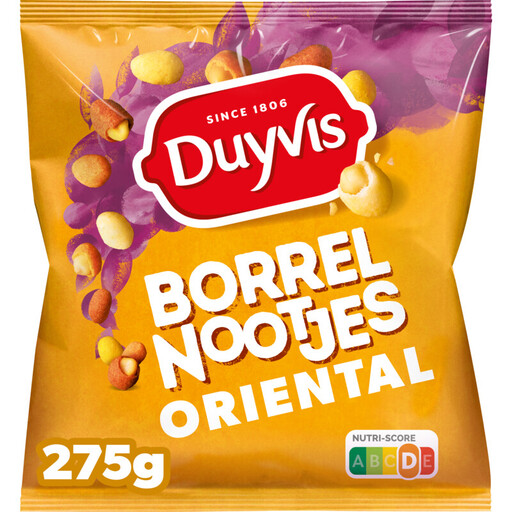 No image available
Suitable if you’re looking for a peanut snack with a crunchy coating and a mild curry flavour.
The product information lists 49% peanuts and names wheat, barley and soya as allergens.
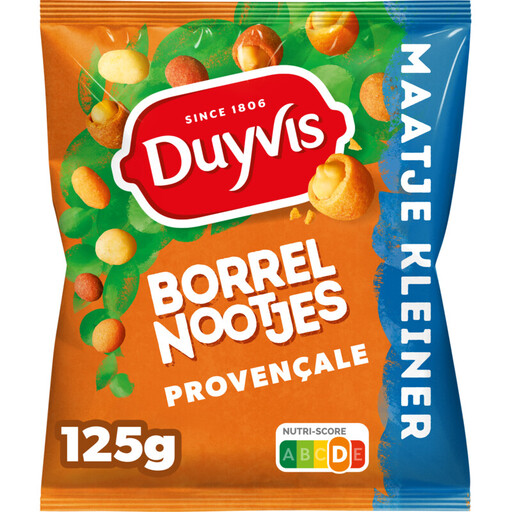 No image available
Suitable if you want to measure out an amount for a gaming session in advance.
The product information lists 50% peanuts and 30 g portions, with 4–5 portions per pack. Wheat is listed as an allergen.
 No image available
Suitable if you’re looking for a savoury peanut snack with onion and garlic flavours and a crunchy coating.
The product information lists 50% peanuts and wheat. It may also contain milk, nuts, soya and mustard; check the label for full allergen information.
No. ‘Less fat’ describes a comparison with a reference product, while ‘low-fat’ means meeting a limit for a given amount of product. The European Commission sets a maximum of 3 g of fat per 100 g for the ‘low-fat’ claim on solid foods. If you see a comparative claim, check which product is used as the reference.
Read the ingredients list and allergen information on the packaging of the exact variant. The NVWA says that allergens that must be declared should be clearly distinguished from the other ingredients. A seasoned or coated peanut snack may also contain other ingredients.
Store roasted peanuts somewhere cool, dark and dry, and seal the pack or a suitable container tightly. The Netherlands Nutrition Centre recommends these storage conditions; also follow the best-before date and the instructions on the packaging.
On 20 May 2026, Albert Heijn issued a warning about AH Extra Large Salted Peanuts in a tub with a best-before date of 4 November 2026, due to possible metal fragments. Don’t eat that specific pack and follow Albert Heijn’s instructions for returning it and receiving a refund. The warning doesn’t automatically apply to other AH peanuts.
Don’t treat whole peanuts as a general snack recommendation for young children: the product pages checked warn of a choking hazard. Follow the warning on the packaging and don’t choose based on flavour or size alone.