
Gamers who want to weigh their portions
You want to eat peanuts while gaming and know in advance how much energy your weighed portion contains.


‘Low-calorie’ is not an appropriate product claim for the varieties reviewed: the European Commission sets a maximum of 40 kcal (170 kJ) per 100 g for the ‘low energy’ claim on solid foods. If you want to snack more mindfully while gaming, weigh your portion first and calculate its energy using the per-100 g value on the label. Then choose according to taste, salt and ingredients.
You want to eat peanuts while gaming and know in advance how much energy your weighed portion contains.
You’re looking for seasoning or a crunchy coating, and want to take salt and other ingredients into account when choosing.
You buy a pack for several snack breaks and want to portion out the contents and store them properly.
| What to consider | What should you look for? | Who might find this more important? |
|---|---|---|
| Portion size | Compare the energy per 100 g and weigh the portion you plan to eat. The Netherlands Nutrition Centre lists 157 kcal for a 25 g handful of unsalted peanuts. | If I want to know how much I’m eating during a gaming session, I weigh my portion beforehand. Around 42% of consumers say portion control is their main priority. |
| Energy per variety | Check the nutritional information per 100 g for the exact variety. For solid foods, the European Commission sets a maximum of 40 kcal (170 kJ) per 100 g for the ‘low energy’ claim. | If I want to compare varieties on an equal-weight basis, I check the energy per 100 g rather than looking only at the portion size shown on the pack. Around 25% of consumers prioritise energy density. |
| Taste and ingredients | Check the salt, full ingredients list and allergen information on the pack of the variety you’re buying. | If I’m choosing plain peanuts, seasoned peanuts or a crunchy coating, I want to know what else is in my snack. Around 17% of consumers prioritise taste and salt. |
| Packaging and storage | Check the pack weight in grams, work out how many portions you’ll get from it and follow the storage instructions on the pack. | If I buy a bag for several gaming sessions, I want to be able to portion out the contents and store the rest properly. Around 16% of consumers consider packaging and cost per use the most important factors. |
The claim threshold for solid foods is assessed per 100 g, not per small bowl. A smaller portion doesn’t change that threshold.
You can describe the energy in a weighed portion, but don’t use ‘low-calorie’ as a product claim for the varieties reviewed.
AH lists a 25 g portion for the peanuts reviewed, while Jumbo lists 30 g. So a lower figure on the label may simply relate to a smaller portion.
First convert the products to the same weight in grams before comparing portion values.
For the specific Duyvis Tijgernootjes recipe described by AH and Jumbo, the stated figure is 533 kcal per 100 g. This doesn’t make the snack low-calorie, and it doesn’t automatically tell you anything about other recipes sold under the same product name.
Check the nutrition table and ingredients list on the exact pack. A difference in energy for the same weight doesn’t make a product the right choice for everyone.
A 250 or 300 g bag may contain several portions. The amount in the pack isn’t the same as the amount you eat during one gaming session.
Weigh out the amount you’ve chosen beforehand, then seal the pack as directed in the storage instructions.
The product lines mentioned include unsalted peanuts, Oven roasted original and Tijgernootjes.
AH Unsalted Peanuts, 300 g, is a supermarket own-brand option with a stated portion size of 25 g.
Jumbo Unsalted Peanuts, 250 g, is a plain peanut variety with nutritional values listed per 100 g and per 30 g.
PLUS Unsalted Peanuts, 250 g, is an own-brand option made with plain roasted peanuts.
The Dutch range includes 200 g packs of roasted unsalted peanuts for cooking or snacking.
The product page lists Trader Joe’s roasted unsalted peanuts, 250 g.
These Joybuy peanut snacks have nutritional information that may help you calculate the energy in a weighed portion. Check the pack for details of the variety you receive.
 No image available
An option to compare if you’re looking for plain unsalted peanuts and want to weigh your own portion.
The description lists 99% peanuts, sunflower oil and 2690 kJ per 100 g.
Contains peanuts and may contain traces of cashew nuts.
 No image available
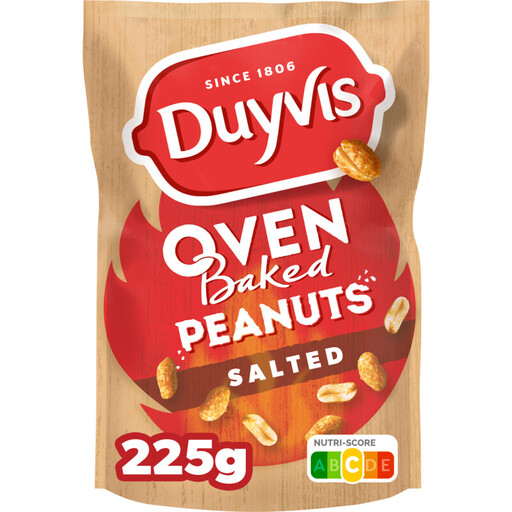
A roasted option to consider if you’re looking for a savoury peanut snack.
The description lists 97% peanuts, 606 kcal and 1.4 g of salt per 100 g.
Contains peanuts and may contain other nuts.
 No image available
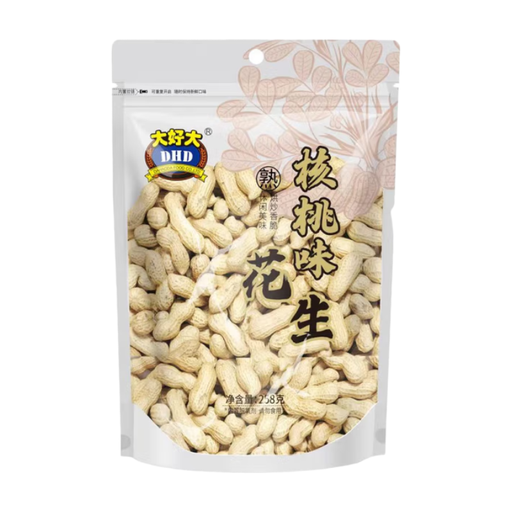
An option to consider if you’re looking for a peanut snack with a walnut flavour.
The description lists 2420 kJ per 100 g and individual packs. Ingredients mentioned include peanuts, sugar, salt and walnut flavouring.
Contains peanuts and soya.
 No image available
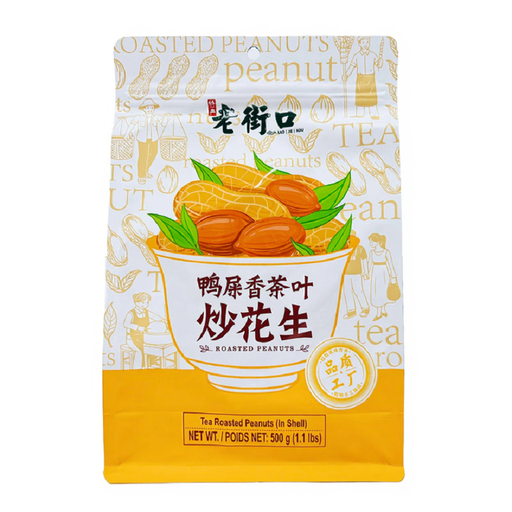
A roasted option to consider if you’re looking for peanuts with a tea aroma.
The description lists 544 kcal and 1.37 g of salt per 100 g, and a pack size of 500 g.
Contains peanuts.
 No image available
An option to compare if you’re looking for roasted peanuts with no added salt.
The description lists 100% peanuts and 626 kcal per 100 g. The pack contains 210 g.
Contains peanuts.
The varieties reviewed are not low-calorie products. According to the European Commission, the ‘low energy’ claim can only be used for solid foods containing no more than 40 kcal (170 kJ) per 100 g; a smaller portion doesn’t change that threshold.
No. The Netherlands Nutrition Centre uses 25 g as a portion for its calorie checker; product labels may state a different portion size. Decide how much you want to eat and calculate the energy using the nutritional information for your variety.
Follow the instructions on the pack. For the AH peanuts mentioned, the advice is to store them in a cool, dark, dry place in a tightly sealed container; for Duyvis Oven roasted, an airtight, light-proof tin is recommended. Also check the best-before information on your pack.
Roasting doesn’t remove peanut allergens. Stichting Voedselallergie states that the allergen remains stable when heated. If you have a diagnosed allergy, follow personalised medical dietary advice.
According to the NVWA, any relevant allergens from the mandatory list of 14 allergens must be stated in the ingredients list. Also check the information about possible allergen presence on the exact pack.