When preparing lunch for children under four, don’t choose based on the lowest calorie count. Amsterdam UMC’s dietary advice for energy- and protein-enriched diets recommends nut butter with no added sugar or salt instead of whole nuts. The unsalted varieties checked from Duyvis, Albert Heijn, Jumbo and PLUS list 602–625 kcal per 100 g, well above the EU threshold for a low-calorie claim. Also check the allergen information and the nursery’s policies.
Who is this relevant to?
People buying lunch for toddlers
You buy lunch products for young children and want to check which textures are suitable. Amsterdam UMC’s dietary advice for energy- and protein-enriched diets recommends nut butter with no added sugar or salt instead of whole nuts for children under four.
Parents checking calorie claims
You want to distinguish between unsalted, 100% peanuts and low-calorie. Compare nutritional values per 100 g, and don’t assume a stated serving size is automatically a recommendation for a child.
Shoppers following allergen policies
You need to take account of peanut allergies, possible traces of nuts or the nursery’s policies. Check the label on the pack you buy and make sure your choice follows the specific arrangements in place.
What should you look for when buying?
Whole unsalted peanuts
When: Consider this form only for older children, if their eating skills and the nursery’s policies allow it.
Consider: Unsalted tells you about the salt content, not the energy content or whether whole nuts are suitable for young children.
Peanut butter or nut butter
When: Consider this as a bread topping if peanuts are allowed under the individual arrangements and the nursery’s policy.
Consider: Ground peanuts are still a peanut product, and are not automatically low-calorie or suitable where allergen restrictions apply.
No peanut product
When: Avoid peanuts if an individual recommendation to avoid them or the nursery’s policies require it.
Consider: Assess any alternative separately for its ingredients, allergens and texture.
| What to consider |
What to look for |
Who is this most relevant to? |
| Texture for young children |
Amsterdam UMC recommends nut butter with no added sugar or salt instead of whole nuts for children under four. Also make sure children eat calmly and are supervised. |
When I’m putting together lunch for a child under four, I look at the form first, not the salt or calorie count. Around 31% of consumers prioritise texture when shopping. |
| Energy content |
Compare kcal per 100 g with the EU threshold for a low-calorie claim: no more than 40 kcal (170 kJ) per 100 g for solid foods. The unsalted varieties checked from Duyvis, Albert Heijn, Jumbo and PLUS list 602–625 kcal per 100 g. |
I want to know whether a calorie claim is accurate, so I compare products on the same weight basis. This is the priority for consumers who put energy content first; they make up around 31%. |
| Allergens and nursery policies |
Check whether peanuts are listed in the ingredients, read any warnings about other nuts, and follow the individual arrangements and the nursery’s policies. |
If a child has been advised to avoid certain foods or the nursery has policies in place, your choice needs to follow them. Around 25% of consumers put allergen policies first. |
| Packaging and storage |
Compare the net weight and current unit price, and follow the storage instructions on the pack. A larger pack is not necessarily better value. |
I want to choose a pack that suits how much I expect to use and the storage space available. Around 13% of consumers put practical shopping and storage first. |
Common pitfalls
-
Choosing whole unsalted peanuts because no salt has been added
The salt information tells you nothing about the texture. Amsterdam UMC’s dietary advice for energy- and protein-enriched diets recommends nut butter with no added sugar or salt instead of whole nuts for children under four.
First consider the child’s age and the product’s form, then check the nursery’s policies. Make sure children sit calmly while eating and are supervised.
-
Assuming unsalted or 100% peanuts means low-calorie
The unsalted varieties checked from Duyvis, Albert Heijn, Jumbo and PLUS list 602–625 kcal per 100 g. For solid foods, the European Commission sets the threshold for a low-calorie claim at no more than 40 kcal (170 kJ) per 100 g.
Compare the nutritional value per 100 g and keep it separate from the amount actually used. A smaller serving doesn’t change the product’s claim.
-
Putting a general age label ahead of a safety warning
The PLUS product page lists both “All ages” and a warning that young children may choke on peanuts.
Consider the specific use and texture in line with age-related advice, rather than relying only on a general label on a shopping page.
-
Applying a recall notice to every product from a brand
Albert Heijn’s warning dated 20 May 2026 applies to AH Extra Large Salted Peanuts in a tub with a best-before date of 04-11-2026. It doesn’t automatically apply to other AH peanut products.
Check the product name, packaging and best-before date together. Don’t use the specific product named, and follow Albert Heijn’s returns instructions.
Brands to consider
Duyvis
The unsalted variety gives you a specific label value to compare.
- Duyvis lists 614 kcal per 100 g for its Unsalted Peanuts.
- The brand’s description “responsible snack” doesn’t prove that the product is low-calorie or suitable for young children.
Albert Heijn
The information checked covers both unsalted peanuts and 100% Natural Peanut Butter.
- Albert Heijn lists 620 kcal per 100 g for AH Unsalted Peanuts and 615 kcal per 100 g for AH 100% Natural Peanut Butter.
- The peanut butter checked contains no added sugar or salt, but it is still a peanut product. Check the current packaging and any allergen policies.
Jumbo
Jumbo Unsalted Peanuts 250 g provides specific nutritional values for comparison.
- Jumbo lists 602 kcal and 0,01 g salt per 100 g.
- The stated 30 g serving and reference intake for adults are not serving recommendations for toddlers.
Lidl
The Dutch product page describes unsalted peanuts in a 285 g pack.
- The page says the product is available in store.
- Pack size tells you nothing about energy content, value for money or current stock.
ALDI
The product page lists Trader Joe’s Roasted Unsalted Peanuts, 250 g; ALDI is the retailer.
- ALDI lists a Nutri-Score A for this product.
- Nutri-Score A doesn’t mean the product is low-calorie, and doesn’t tell you whether whole peanuts are suitable for young children.
PLUS
PLUS Unsalted Peanuts 250 g includes label information and a warning for young children.
- PLUS lists 625 kcal per 100 g and warns that young children may choke on peanuts.
- The page also says “All ages”. Read this alongside the warning about the texture.
Joybuy products
These products include peanut butter and whole peanuts. Assess the form, allergens and nutritional value for each specific pack. “Unsalted” or “100% natural” doesn’t automatically mean low-calorie.
 No image available
PCD Peanut Butter 350 g
Consider this peanut butter as a bread topping if peanuts are allowed under the individual arrangements and the nursery’s policies.
Contains peanuts; not suitable if an individual arrangement or the nursery’s policies exclude peanuts. For a calorie comparison, check the nutritional value per 100 g on the pack.
View at Joybuy
 No image available
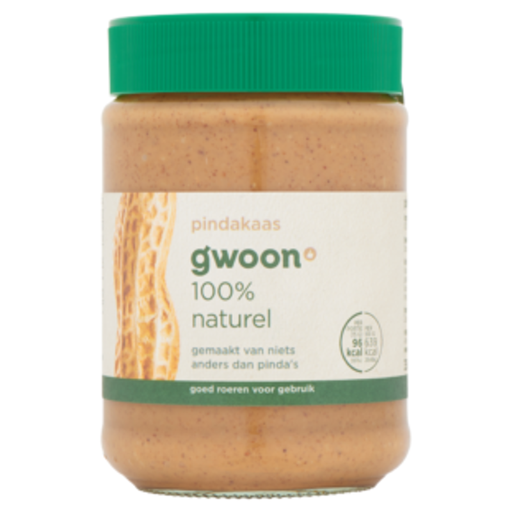
g’woon 100% Natural Peanut Butter 350 g
The product name says 100% Natural. Consider this peanut butter as a bread topping if peanuts are allowed.
Contains peanuts. Check the ingredients and allergen information on the pack, and compare the nutritional value per 100 g if calorie content is a consideration.
View at Joybuy
 No image available
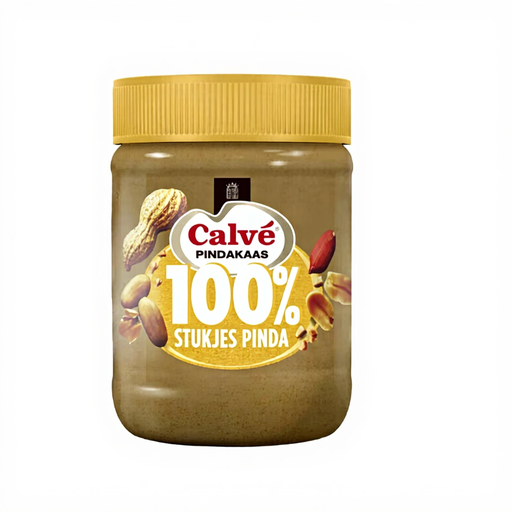
Calve Peanut Butter Nut 100% 350 g
The product name says 100% peanut butter. Consider this as a bread topping if peanuts are allowed under the nursery’s policies.
Contains peanuts. Check the full ingredients and allergen information, as well as the nutritional value per 100 g on the pack.
View at Joybuy
 No image available
g’woon Unsalted Peanuts 250 g
These whole peanuts are only an option if the child’s age and eating skills, as well as the nursery’s policies, allow this form.
The product information lists peanuts and sunflower oil, and possible traces of cashew nuts. Amsterdam UMC’s dietary advice for energy- and protein-enriched diets recommends nut butter instead of whole nuts for children under four.
View at Joybuy
 No image available
G’woon Peanuts in Shell 500 g
Consider peanuts in their shells only where this whole form is suitable for the child’s age and allowed under the nursery’s policies.
The product information lists peanuts and possible traces of nuts. For children under four, Amsterdam UMC’s dietary advice for energy- and protein-enriched diets recommends nut butter instead of whole nuts.
View at Joybuy
Frequently asked questions
Does unsalted also mean low-calorie?
No. The unsalted varieties checked from Duyvis, Albert Heijn, Jumbo and PLUS list 602–625 kcal per 100 g. For solid foods, the European Commission sets the threshold for a low-calorie claim at no more than 40 kcal (170 kJ) per 100 g.
Which form of peanuts is suitable for a child under four?
Amsterdam UMC’s dietary advice for energy- and protein-enriched diets recommends nut butter with no added sugar or salt instead of whole nuts. This is age-related safety advice, not a legal age limit. You should also take account of the child’s individual circumstances and the nursery’s policies.
Are peanuts allowed under a nut-free policy?
Don’t assume they are. Peanuts are legumes and are treated as a separate allergen; their botanical classification doesn’t determine what a nursery’s policy allows. Ask which products are excluded by the specific policy.
Are 25 or 30 g automatically suitable lunch portions for a toddler?
No. The Netherlands Nutrition Centre lists 25 g as a nutritional reference for unsalted peanuts, and Jumbo gives a 30 g serving alongside a reference intake for adults. These amounts aren’t individual serving recommendations for a child; consider the texture first, too.


