What should you look for when choosing?
First decide how many grams you want to serve, then compare the energy and ingredients for that amount. The pack size is not a recommended portion.
| What to consider |
What should you look for? |
Who should pay particular attention? |
| Energy per portion |
Compare kcal per 100 g and calculate the amount for the number of grams you’ll serve. |
If you want to manage your energy intake with a weighed portion, the label value per 100 g is a useful starting point. Around 31% of consumers prioritise keeping track of calories per portion. |
| Unsalted ingredients |
Check the salt, ingredients and, where listed, protein and fibre per 100 g. |
If you want an unsalted snack and also want to consider its ingredients, look beyond the kcal alone. Around 25% of consumers prioritise unsalted ingredients. |
| Flavour and texture |
Check whether you’re looking at plain peanuts or a seasoned or coated snack mix. |
For a drinks gathering, a savoury flavour or crunchy coating may matter more than a simple ingredients list. Around 19% of consumers start with flavour and texture. |
| Allergens |
Read the ingredients and check the packaging for allergen warnings and possible traces. |
If any of your guests have allergies, check what each variety contains and which warnings apply. Around 13% of consumers put suitability for their guests first when choosing. |
| Packaging and leftovers |
Choose a pack size that suits the portions you’re planning, and store any leftovers in a dry, tightly sealed container. |
If you want enough for your gathering without opening more than you need, choose a pack size that suits the amount you’ll serve and store afterwards. Around 12% of consumers start with packaging and leftovers. |
The nutritional values assessed vary: Duyvis cocktail peanuts list 541 kcal per 100 g, while the unsalted varieties from Jumbo, Duyvis, Albert Heijn and PLUS list 602–625 kcal per 100 g. These are label values for different products, not a complete assessment of their nutritional qualities. According to the European Commission, the ‘low energy’ claim for solid foods is limited to a maximum of 40 kcal per 100 g.
Peanuts at Joybuy
These Joybuy products suit a range of Father’s Day gatherings, with unsalted, salted, seasoned and in-shell options.
 No image available
g’woon unsalted peanuts, 250 g
A good fit if you’re looking for an unsalted option and want to weigh out your own portion.
The product description lists 99% peanuts and sunflower oil; the product may contain cashew nuts.
View product
 No image available
G’woon peanuts in shells, 500 g
In-shell peanuts are a good choice if you’re after a snack that guests can shell at the table.
The pack contains 500 g; the product description mentions possible traces of nuts.
View product
 No image available
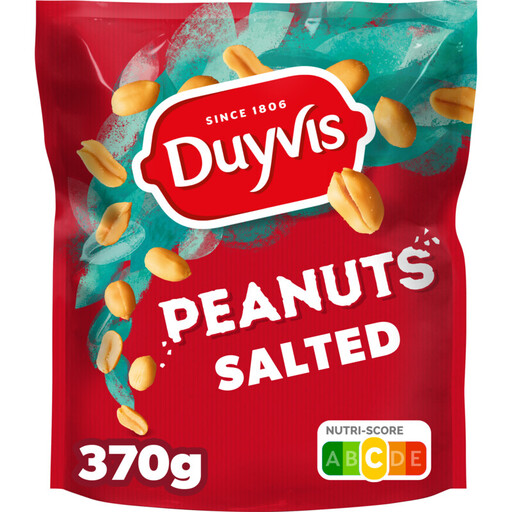
Duyvis salted peanuts, 370 g
A good fit if you’re specifically looking for a salted peanut snack; compare the salt content with unsalted varieties.
Per 100 g: 613 kcal, 0.73 g of salt and 26 g of protein. The product information warns of a choking hazard for children under 5.
View product
 No image available
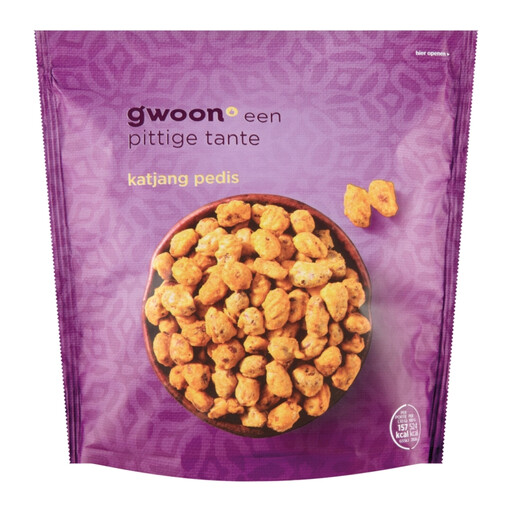
g’woon Katjang Pedis, 250 g
A good fit if you’re looking for a seasoned peanut snack rather than plain peanuts.
The product information lists 62% peanuts, 524 kcal and 1.65 g of salt per 100 g. Listed ingredients include cayenne pepper, ginger and garlic; the product contains peanuts, wheat, egg and soya.
View product
 No image available
Verse Extra Large roasted unsalted peanuts, 210 g
A good fit if you’re looking for a roasted, unsalted peanut snack.
The product information lists 100% peanuts, 626 kcal and 26 g of protein per 100 g. The pack contains 210 g.
View product
Frequently asked questions
Can a small portion of peanuts be called low in calories?
No. A smaller portion does not make the product low in energy per 100 g. According to the European Commission, the ‘low energy’ claim may only be used for solid foods containing no more than 40 kcal (170 kJ) per 100 g. To claim a reduced energy value, the reduction must be at least 30%, and the feature responsible for the reduction must be stated.
How do you calculate the energy in your own portion?
Multiply the kcal per 100 g on the label by the number of grams you’re serving, then divide by 100. For AH unsalted peanuts, which contain 620 kcal per 100 g, 15 g works out at 93 kcal and 25 g at 155 kcal. These figures are calculated from the label value.
Which allergen information should you check for peanuts at a drinks gathering?
Check the ingredients and allergen warnings on the packaging of each variety. The NVWA says that allergen information for prepacked products must appear on the label; peanuts are one of the allergens that must be listed. The Duyvis cocktail variety assessed also contains wheat and milk.
How should you store leftover peanuts?
Store nuts in a dry, tightly sealed container, and follow the instructions on the packaging too. For the Duyvis variety assessed, the product information recommends transferring an opened bag to a light-proof, airtight container.
What should you do with AH Extra Large Salted Peanuts in a tub with a best-before date of 04-11-2026?
Do not eat this specific product with that best-before date. On 20 May 2026, Albert Heijn issued a recall warning because of possible metal fragments. The same warning states that other best-before dates for this product are not affected.


