Brands and product ranges compared
These product examples help you compare preparation methods, salt levels and ingredients. A brand name alone doesn’t tell you whether a product is currently available.
Duyvis
Worth considering for oven-baked peanuts and mixed snacks.
- Duyvis describes Oven Baked Original as made without added oil or fat.
- That isn’t proof of a ‘low fat’ claim. Albert Heijn lists the older Duyvis lower-fat Herbs&Onion and Japanse borrelmix products as discontinued.
Albert Heijn
AH Unsalted Peanuts 300 g is an example for anyone keeping an eye on salt and portion sizes.
- Albert Heijn lists 12 portions of 25 g and 0 g of salt per 100 g.
- According to the product information, it contains 51 g of fat per 100 g, so it isn’t a low-fat option.
Jumbo
Jumbo Unsalted In-Shell Peanuts 500 g is an option if you don’t mind shelling them as you serve.
- Jumbo lists peanuts as the only ingredient.
- The nutritional information lists 48 g of fat per 100 g of edible product, so this isn’t a low-fat option.
Lidl
The Dutch product page describes unsalted peanuts in a 285 g pack.
- Lidl Netherlands says this product is available in store only.
- Being unsalted doesn’t support a fat-reduction claim; check the current information on the pack.
ALDI
The Dutch ALDI product page describes Trader Joe’s Peanuts 250 g as roasted and unsalted.
- The product description clearly identifies this as a roasted, unsalted variety.
- The ‘unsalted’ description doesn’t support a fat-reduction claim.
PLUS
PLUS Unsalted Peanuts 250 g is an example of a shelled, unsalted snack to enjoy with drinks.
- PLUS lists 0.02 g of salt per 100 g and ingredients including 99% peanuts and sunflower oil.
- The product contains 50 g of fat per 100 g and, according to PLUS, may contain cashew nuts.
Peanuts at Joybuy
These products offer a range of options, including unsalted peanuts, seasoned roasted peanuts and peanuts in their shells. The fat values shown make clear that none of these examples is low in fat: for solid foods, the European Commission sets a maximum of 3 g of fat per 100 g for this claim.
 No image available
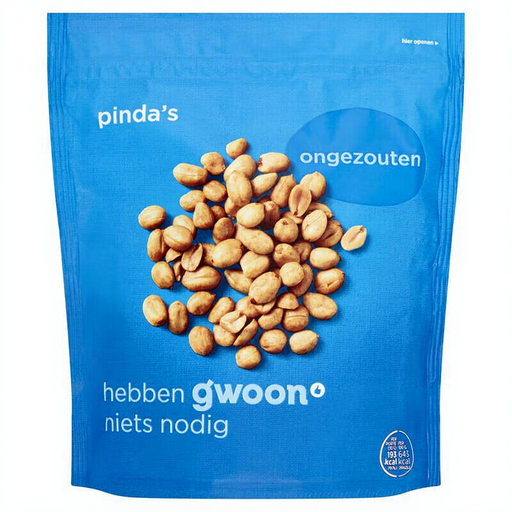
g’woon unsalted peanuts, 250 g
A good fit if you want an unsalted snack to enjoy with drinks and are more concerned about salt than reducing fat.
Lists 99% peanuts, sunflower oil, 0.02 g of salt and 50 g of fat per 100 g. With 50 g of fat per 100 g, this isn’t a low-fat option; for solid foods, the European Commission sets a maximum of 3 g per 100 g for this claim.
Contains peanuts and may contain cashew nuts.
View at Joybuy
 No image available
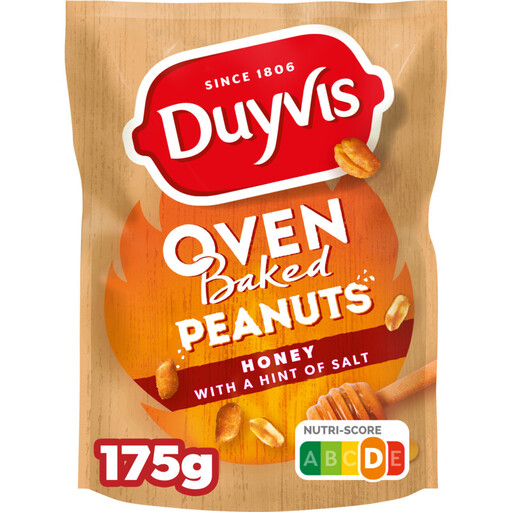
Duyvis Honey & Lightly Salted Oven-Roasted Peanuts
A good choice if you’re looking for honey-flavoured peanuts roasted with a little salt, but not if you need a low-fat option.
The product information lists 69% peanuts and 40 g of fat per 100 g. This isn’t a low-fat option: for solid foods, the European Commission sets a maximum of 3 g of fat per 100 g for a ‘low fat’ claim.
Contains peanuts and wheat/gluten; may contain other nuts.
View at Joybuy
 No image available
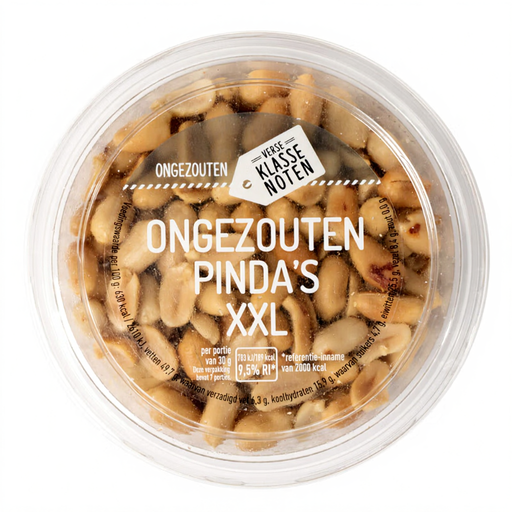
Verse Extra Large Roasted Peanuts, 210 g
An option if you’re looking for unsalted roasted peanuts and the listed 210 g pack suits your get-together.
The product information lists 100% peanuts, 0.02 g of salt and 50 g of fat per 100 g. With 50 g of fat per 100 g, this isn’t a low-fat option; for solid foods, the European Commission sets a maximum of 3 g per 100 g for this claim.
Contains peanuts.
View at Joybuy
 No image available
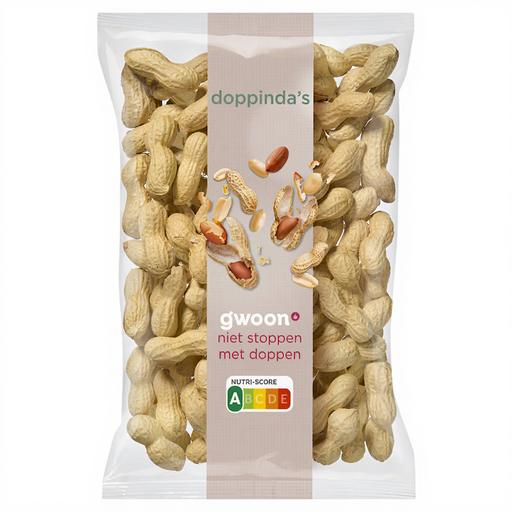
G’woon peanuts in their shells, 500 g
A good fit if you want to serve peanuts in their shells and don’t mind shelling them at the table.
The product information lists 49 g of fat per 100 g. This isn’t a low-fat option: for solid foods, the European Commission sets a maximum of 3 g of fat per 100 g for this claim.
You’ll need to shell the peanuts yourself. Contains peanuts.
View at Joybuy
Frequently asked questions
Do ‘low fat’ and ‘no added fat’ mean the same thing?
No. ‘No added fat’ describes how a product is made; it may still contain fat from the peanuts themselves. For solid foods, the European Commission sets a maximum of 3 g of fat per 100 g for a ‘low fat’ claim.
Does a smaller portion of peanuts make them lower in fat?
No. A smaller portion doesn’t change the product’s composition, but it does change how much you eat. The stated portion on the label for AH Unsalted Peanuts is 25 g; don’t treat this as general dietary advice.
How should I store any peanuts left over after a get-together?
Follow the instructions on the pack. Albert Heijn advises storing AH Unsalted Peanuts in a cool, dark, dry place and closing the pack securely.
Can you serve lower-fat peanuts to someone with a peanut allergy?
A lower-fat label doesn’t mean that the peanut allergen has been removed. Check the ingredients and allergen information; according to the Netherlands Food and Consumer Product Safety Authority, peanuts must be declared as an allergen on pre-packed products. A coating may also contain other allergens.
Are whole peanuts suitable for young children?
Whole peanuts can pose a choking risk for young children. The AH and PLUS product information warns about this; being unsalted or lower in fat doesn’t change the risk.
Which peanuts were covered by the AH recall warning?
On 20 May 2026, Albert Heijn issued a warning about AH Extra Large Salted Peanuts in a tub with a best-before date of 4 November 2026 because of possible metal fragments. The warning applied to that specific pack; follow Albert Heijn’s instructions for the product and best-before date shown on your pack.


