
Less fat when snacking
You’re looking for a peanut snack with less fat and want to know whether a claim compares plain peanuts or coated savoury snack nuts. Albert Heijn listed the specific Duyvis Herbs&Onion claim with the latter as its reference.


Choose based on the nutritional values for your portion, and always check what a ‘less fat’ claim refers to. According to Albert Heijn, the 30% claim for Duyvis Herbs&Onion refers to plain peanuts in a crispy coating; the product listing in question is marked as discontinued. Duyvis describes Oven Baked Original as made without added oil or fat, but that alone doesn’t tell you how much fat the finished product contains.
You’re looking for a peanut snack with less fat and want to know whether a claim compares plain peanuts or coated savoury snack nuts. Albert Heijn listed the specific Duyvis Herbs&Onion claim with the latter as its reference.
You want to include peanuts in a high-protein diet and consider the protein alongside the energy in your portion. The labels from Jumbo, Albert Heijn and Duyvis provide values you can use to compare different options on the same basis.
You’re looking for an unsalted option and a suitable portion, without confusing unsalted with lower fat. The Netherlands Nutrition Centre recommends unsalted nuts and variety.
First check what a claim is being compared against. Then compare protein, energy, fat and salt per 100 g, and work out the values for the portion you actually eat.
| What to consider | What to look for | Who is this important for? |
|---|---|---|
| Fat claim and reference | Check the stated comparison category, as well as the total fat and energy per 100 g. | If I see a ‘less fat’ claim, I want to know what it’s being compared with and how much fat and energy it contains per 100 g. Around 34% of consumers prioritise the basis of the claim and the fat content. |
| Protein per calorie | Compare protein and energy on the same label basis, then work out the values for your own portion. | If I want to assess protein in a defined snack portion, I look at more than just protein per 100 g. Around 33% of consumers prioritise protein in relation to energy. |
| Portion size | Check the portion weight and convert the values for different products to the same quantity. | If I mainly want to limit how much I eat, I want to know how much I actually serve myself and how much protein that portion provides. Around 20% of consumers prioritise portion control. |
| Choosing unsalted | Check the salt per 100 g and whether the option is plain, seasoned or coated. | If I want to eat unsalted peanuts regularly, I check the salt separately from the fat content. Unsalted options are the top priority for around 13% of consumers. |
The way a product is made is no substitute for its nutrition table. For example, Jumbo lists 50 g of fat and 606 kcal per 100 g for Duyvis Oven Baked Peanuts Original; Duyvis describes the option as made without added oil or fat. These two pieces of information answer different questions.
For solid foods, the European Commission defines a ‘low fat’ claim as no more than 3 g of fat per 100 g. A comparative claim such as ‘less fat’ needs a reference: the Albert Heijn listing for Duyvis Herbs&Onion named plain peanuts in a crispy coating. That doesn’t automatically mean it’s being compared with all peanuts.
You can use the label values per 100 g to compare protein per calorie. In the three nutrition tables compared, Jumbo Unsalted Peanuts provided 4.39 g of protein per 100 kcal, AH Unsalted Peanuts 4.03 g, and Duyvis Oven Baked Original 3.96 g. This calculation is based on these specific options; it isn’t a definitive ranking of peanuts.
The description of how a product is made doesn’t tell you how much fat it contains in the end. Jumbo lists 50 g of fat per 100 g for Duyvis Oven Baked Peanuts Original.
Check the total fat per 100 g alongside the ingredients and the description of how it’s made.
The Albert Heijn listing for Duyvis Herbs&Onion compared it with plain peanuts in a crispy coating, not every type of peanut.
Stick to the stated reference category, then compare the nutritional values of the options you’re considering.
Portion values aren’t directly comparable if one label uses a different quantity from another.
Compare per 100 g first, then work out the values for both products using the same portion weight.
For this comparison, Oven Baked Peanuts Original and Herbs&Onion savoury snack nuts are relevant.
AH Unsalted Peanuts 300 g provides a specific reference for comparing label values.
Jumbo Unsalted Peanuts 250 g is a specific unsalted reference for nutritional values.
Lidl lists a range of unsalted peanuts as a supermarket option.
ALDI lists roasted, unsalted peanuts as a supermarket option.
PLUS Unsalted Peanuts 250 grams is a standard unsalted option to include in your comparison.
This selection includes standard unsalted peanuts, roasted peanuts and raw peanuts in their shells. Compare the nutritional values, preparation and any allergen information for each option.
 No image available
This unsalted option is suitable if you’re looking for peanuts with no added salt.
The product information mentions possible traces of cashew nuts; check the allergen information on the packaging.
 No image available
These peanuts in their shells are an option if you’d like to shell them yourself.
Remove the shells before eating. The product information mentions possible traces of other nuts.
 No image available
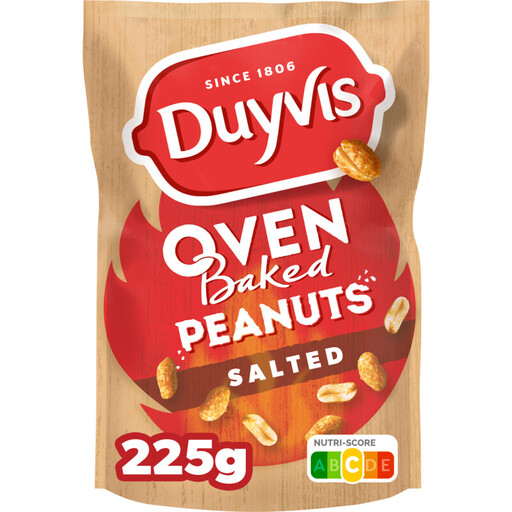
A roasted peanut snack to compare if you’re looking at protein and energy together.
This isn’t an unsalted option; check the salt content on the label. The product information mentions possible traces of other nuts.
 No image available
The title describes these as roasted peanuts; check the product information for the nutritional values of this option.
Please note: the allergen declaration doesn’t list any of the 14 main EU allergens, even though the title and ingredients mention peanuts. If you have a peanut allergy, don’t rely on that declaration.
 No image available
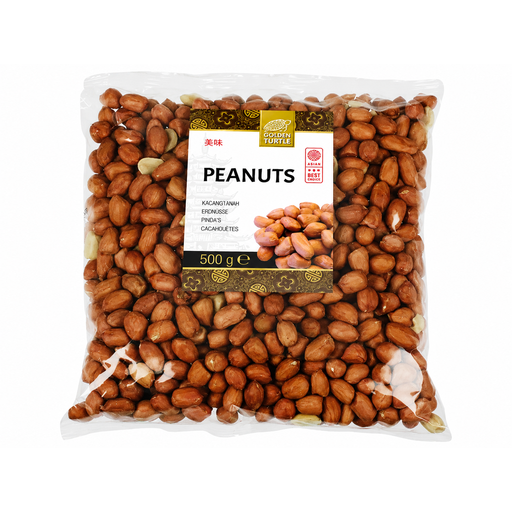
Raw peanuts with their skins, for anyone who wants to prepare them or use them in a dish.
These peanuts are unroasted; roast them if you’d like a crunchy snack.
No. For solid foods, the European Commission defines a ‘low fat’ claim as no more than 3 g of fat per 100 g. A ‘less fat’ claim is comparative, so check what reference it gives.
Store peanuts in a dry place in a tightly sealed container. Follow the instructions on the packaging too; for the AH option, the advice is to store it in a cool, dark, dry place and reseal it after use. The Netherlands Nutrition Centre recommends storing nuts in a dry place in a tightly sealed container.
Check the allergen information for the exact option, both online and on the packaging. The NVWA says that prepacked products must show allergen information on the label; Dutch government information also states that label information must be available online. Check for any other allergens listed for that option too.
Albert Heijn’s warning of 20 May 2026 applies only to AH Extra Large Salted Peanuts (tub) with a best-before date of 04-11-2026, due to possible metal fragments. Do not eat this batch. Albert Heijn says you can return the product for a full refund; the warning doesn’t apply to other best-before dates.