
Snackers keeping an eye on fat
You want to distinguish between less fat per 100 g and less fat because you eat a smaller portion. So check the nutritional values and the reference used for any reduced-fat claim.


First decide what matters most to you: less fat per 100 g, a smaller portion or verifiable organic provenance. These are not the same thing. The product examples described do not demonstrably combine all these qualities in a single product: the organic AH peanuts and the Duyvis borrel nuts with a reduced-fat claim are different products, and Albert Heijn lists both as discontinued. Compare nutritional values on the same basis, and assess an organic label separately from a claim about fat.
You want to distinguish between less fat per 100 g and less fat because you eat a smaller portion. So check the nutritional values and the reference used for any reduced-fat claim.
You want to identify organic provenance without confusing it with low-fat or low-calorie. Check the organic label and ingredients separately from the nutritional values.
If you eat peanuts regularly, you take salt, portion size and storage into account. A prominent claim on the front of the pack doesn’t automatically tell you what the rest of the product contains.
First decide which need matters most to you, then compare the relevant information on the label.
| What to consider | What to look for | Who is this important to? |
|---|---|---|
| Fat content | Compare fat per 100 g and, for a reduced-fat claim, check which reference category is used. | If I’m looking for less fat per 100 g, I want to know what the claim is comparing the product with. Consumers who prioritise reducing fat make up around 31% of shoppers considering these peanuts. |
| Organic provenance | Check the organic label, the relevant EU organic logo and the ingredients. | If organic provenance is my priority, I want to be able to distinguish it from nutrition claims. Consumers who prioritise organic provenance make up around 25% of shoppers considering these peanuts. |
| Portion per snack occasion | Compare values per 100 g first, then calculate them for the same portion weighed out by you. | If I mainly want to manage my portion, I look at how much I actually eat. Consumers who prioritise portion control make up around 19% of shoppers considering these peanuts. |
| Salt and ingredients | Check salt per 100 g and look at the ingredients and any allergens in a coating. | If I’m looking for an unsalted snack, I want to check the salt content and any additional ingredients. Consumers who prioritise an unsalted product make up around 13% of shoppers considering these peanuts. |
| Packaging and storage | Check the pack weight, retailer and storage instructions for the product. | If I want to match my shopping to how much I use, I consider the packaging and how to store the product once opened. Consumers who prioritise practical shopping make up around 12% of shoppers considering these peanuts. |
For solid foods, the European Commission sets a maximum of 3 g of fat per 100 g for a ‘low fat’ claim. A reduced-fat claim is different: for Duyvis Oven Roasted Borrelnoten Herbs&Onion, the supplier’s claim refers to ordinary peanuts in a crispy coating on average in the Netherlands, not to all snack peanuts. A lower amount per portion does not change the fat content per 100 g.
Skal Biocontrole explains that the EU organic logo is mandatory for prepacked foods produced in the EU and sold as organic. Organic provenance, on its own, says nothing about fat content.
Duyvis describes Oven Baked Peanuts Original as made without added oil or fat. However, Albert Heijn’s Dutch product page lists 50 g of fat per 100 g for the Oven Roasted Peanuts Original product reviewed.
Check the total fat content in the nutrition table; don’t base your choice on the cooking method alone.
The organic AH peanuts described contain 52 g of fat and 623 kcal per 100 g. Organic certification and nutritional values answer different questions.
Check the organic label separately from the fat and energy content.
Albert Heijn lists a 25 g portion for the unsalted peanuts reviewed, while Jumbo also gives values per 30 g. These portions are not the same size.
Compare the values per 100 g first, then calculate them for the same weighed snack portion.
The Duyvis Herbs&Onion borrel nuts reviewed contain 37% peanuts, starch and wheat, and list 2 g of salt per 100 g. The claim compares them with peanuts in a crispy coating.
Alongside the claim, check the reference, peanut percentage, salt and allergens.
The products mentioned show why cooking method, coating and claim should be assessed separately.
The organic and regular unsalted products described illustrate the difference between organic provenance and nutritional values.
An unsalted option to use as a reference when checking the ingredients and nutritional values of the exact product.
The unsalted peanuts described are another option to use as a reference for ingredients and salt.
Lidl Netherlands describes roasted unsalted peanuts for cooking or snacking.
ALDI Netherlands describes Trader Joe’s peanuts as roasted and unsalted.
This selection includes snack peanuts and products with a flavouring or coating. Use the product information to assess the ingredients, portion and nutritional values of the exact product; the selection itself does not demonstrate organic certification or a reduced-fat claim.
 No image available
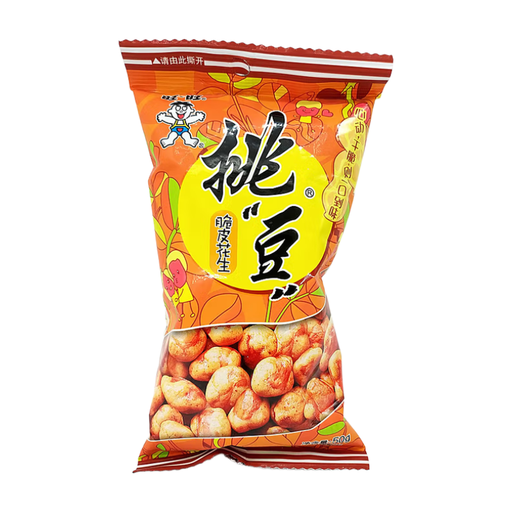
A ready-to-eat peanut snack with a crispy coating; the product information lists 70% peanuts.
The nutrition table lists 38.3 g of fat and 0.80 g of salt per 100 g.
Contains peanuts, wheat and soya.
 No image available
An unsalted peanut snack; the product information lists 99% peanuts and sunflower oil.
The listed salt content is 0.02 g.
Contains peanuts and may contain cashews.
 No image available
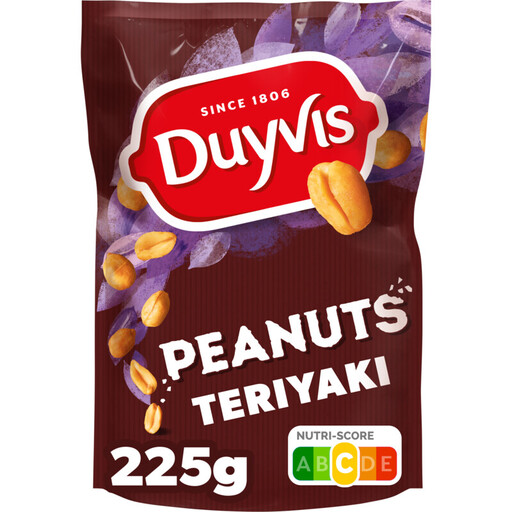
A seasoned peanut snack with teriyaki flavour; the product information lists a 30 g portion.
The nutrition table lists 54 g of fat and 1.4 g of salt.
Contains peanuts, wheat, soya and celery; may contain milk and nuts.
 No image available
A ready-to-eat peanut snack with a crispy BBQ coating, ideal for eating straight from the pack or sharing.
The ingredients list includes peanuts, wheat, palm oil and BBQ seasoning.
Contains peanuts, wheat and soya.
 No image available
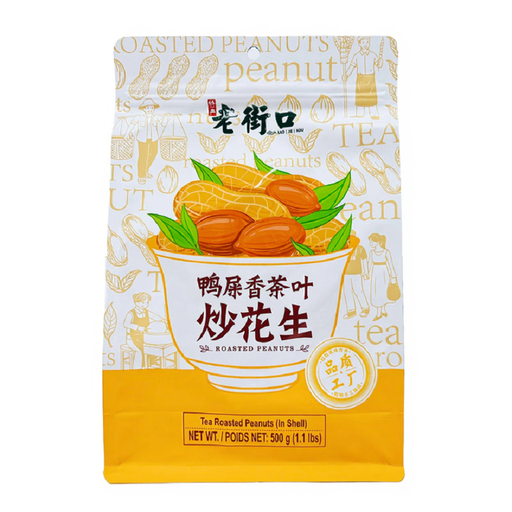
A roasted peanut snack with a tea aroma; the pack contains 500 g.
The ingredients list includes 96% peanuts, salt, tea, flavouring, sweetener and flavour enhancers.
The product information recommends storing in a cool, dry place.
No. According to the European Commission, a ‘low fat’ claim can only be used for a solid food with a maximum of 3 g of fat per 100 g. A reduced-fat claim compared with a reference product is not the same as ‘low fat’.
Check the organic label and certification information on the packaging. Skal Biocontrole states that the EU organic logo is mandatory for prepacked foods produced in the EU and sold as organic. Organic provenance does not mean that peanuts are low-fat.
Compare the nutritional values per 100 g first, then calculate them for the same weighed portion. A smaller portion reduces the amount you eat, but does not change the fat content per 100 g.
Store peanuts in a tightly sealed container in a dry place, preferably somewhere cool, and follow the instructions on the packaging. The Netherlands Nutrition Centre gives 10–15 °C as an example of a suitable cool storage temperature.
An organic label or reduced-fat claim does not mean that a product is peanut-free. Check the ingredients and allergens for the exact product; a coating may also contain other allergens. The Netherlands Food and Consumer Product Safety Authority explains that allergens must be clearly identifiable in the ingredients list.