
Less fat at lunchtime
You want to compare the fat content of the exact peanut variant, without assuming that oven-baked or unsalted means lower in fat. The European Commission defines ‘low fat’ for solid foods as no more than 3 g of fat per 100 g.


Don’t treat ‘unsalted’ or ‘no added oil’ as proof that a product is lower in fat. Compare the fat content per 100 g of the exact variant, and check what any comparative claim is based on. If your main aim is to have less energy with your sandwich, check the energy content too and weigh out the amount you actually eat.
You want to compare the fat content of the exact peanut variant, without assuming that oven-baked or unsalted means lower in fat. The European Commission defines ‘low fat’ for solid foods as no more than 3 g of fat per 100 g.
You want to know how much energy you’re adding alongside your sandwich, so you check the nutrition information as well as the amount you actually eat.
You’d rather choose an unsalted variety and assess salt separately from fat. The Netherlands Nutrition Centre discusses unsalted nuts in its dietary guidance; that doesn’t mean the nutrition values of different peanut variants are the same.
| What to look for | What should you check? | Which shoppers is it for? |
|---|---|---|
| Fat content | Compare per 100 g, and check the exact variant and the basis for any comparative claim. | If I want less fat, I look at the nutrition information, not just how the peanuts are prepared. Around 36% of shoppers put a proven reduction in total fat first. |
| Energy and portion size | Work out the value per 100 g for the amount you actually eat. | If I want to limit the extra energy alongside my sandwich, I weigh out my snack. For around 29% of shoppers, managing energy intake is the top priority. |
| Salt | Check the salt in the nutrition table; ‘unsalted’ alone says nothing about fat. | If I’d rather have an unsalted snack, I assess salt separately from the other values. Lower salt is the main consideration for around 21% of shoppers. |
| Packaging | Check the net weight, any portion information and storage advice once opened. | For lunch on the go, I want to take an amount that suits the occasion and store any leftovers. Convenience for taking it with you comes first for around 14% of shoppers. |
Duyvis describes Oven Baked Peanuts Original as made without added oil or fat, but lists 47 g of fat per 100 g on the same manufacturer’s page. The European Commission defines ‘low fat’ for solid foods as no more than 3 g of fat per 100 g.
Read the total fat and energy on the packaging alongside the description of how the product is made.
PLUS lists 0 g of salt and 51.3 g of fat per 100 g for its 300 g pack of unsalted peanuts. ‘Unsalted’ is a choice about salt, not an automatic indication of lower total fat.
Assess salt, fat and energy separately in the nutrition table.
Albert Heijn’s listing for Duyvis Japanese Party Mix refers to a mix with rice crackers and is marked as discontinued. A claim about that mix isn’t a comparison for plain peanuts.
When comparing labels, make sure you’re looking at the exact product category and the stated basis for comparison.
A Joybuy listing for a 235 g pack of Duyvis salted peanuts gives 7–8 servings, with an average serving of 30 g. That’s not the same as eating the whole bag.
Decide in advance how much you want with your sandwich, and follow the storage advice on the packaging for any leftovers.
The manufacturer lists both salted peanuts and its separate Oven Baked Peanuts Original range.
Albert Heijn lists its own unsalted peanut variant as well as separate Duyvis products.
Jumbo lists 250 g Unsalted Peanuts as one of its own products.
Lidl lists unsalted peanuts as an option if you want to assess salt separately.
The Dutch store listing features TRADER JOE’S Roasted Unsalted Peanuts, 250 g.
PLUS lists its own unsalted peanut variant with nutrition values per 100 g.
These product choices help you compare variants, nutrition values per 100 g and pack sizes. The product name or preparation method alone isn’t proof of a ‘reduced fat’ claim.
 Image unavailable
This unsalted variety suits you if you want to assess salt separately from fat.
Per 100 g: 50 g fat, 2690 kJ energy and 0.02 g salt. Pack contains 250 g.
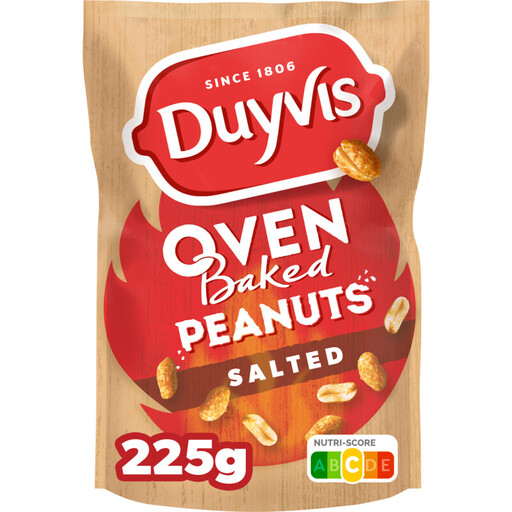 Image unavailable
A roasted peanut variety to assess using the information on the exact pack.
Per 100 g: 606 kcal, 50 g fat and 1.4 g salt. Pack contains 225 g.
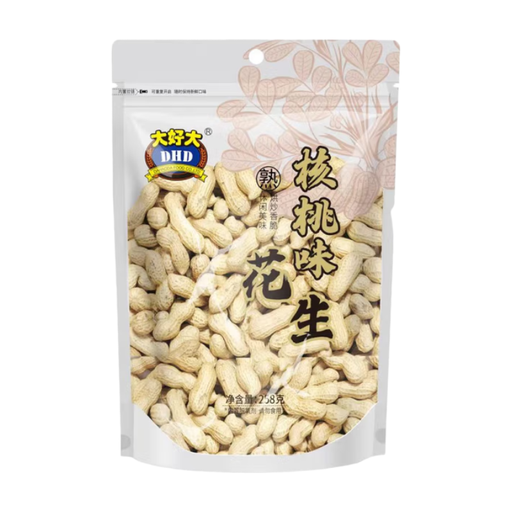 Image unavailable
This walnut-flavoured variety is an option if you’re looking for a flavoured peanut snack.
Per 100 g: 46.2 g fat and 2420 kJ energy. The ingredients list includes sugar, salt and soya. Pack contains 258 g.
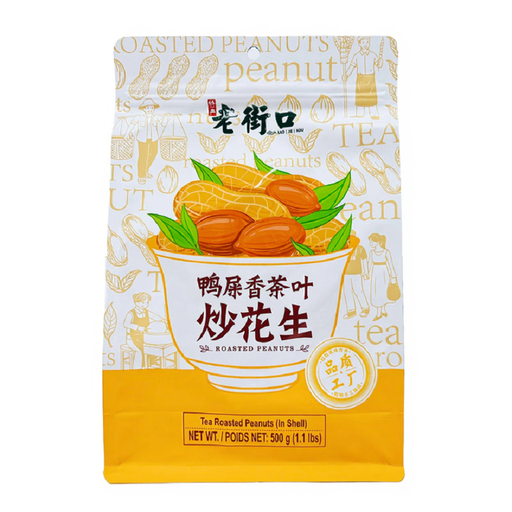 Image unavailable
These tea-infused roasted peanuts offer a flavoured option to compare with plain peanuts.
Per 100 g: 544 kcal, 35.6 g fat and 1.37 g salt. Pack contains 500 g.
Image unavailable
These peanuts are in their shells, so bear that in mind when working out how much to have with your lunch.
Per 100 g: 49 g fat and 2515 kJ energy. Pack contains 500 g.
No. The European Commission defines ‘low fat’ for solid foods as no more than 3 g of fat per 100 g; this is an absolute limit. A ‘reduced fat’ claim is based on a comparison, so check which product variant and reference it relates to.
No. That description of how the product is made doesn’t tell you how much total fat the finished product contains. Duyvis lists 47 g of fat per 100 g for Oven Baked Peanuts Original on its manufacturer page. A PLUS listing for a similarly named Oven roasted Original product gives 50 g of fat per 100 g; the information doesn’t prove that the listings refer to the same product version.
Multiply the value per 100 g by the number of grams you’re having, then divide by 100. PLUS lists 623 kcal and 51.3 g of fat per 100 g for its 300 g pack of unsalted peanuts. For example, a 25 g portion would contain around 156 kcal and 12.8 g of fat. This is a calculation based on the product listing, not personalised portion advice.
No. ‘Unsalted’ refers to salt, while total fat is listed separately in the nutrition table. PLUS lists 0 g of salt and 51.3 g of fat per 100 g for its 300 g pack of unsalted peanuts, so check both values separately.
The Netherlands Food and Consumer Product Safety Authority (NVWA) lists peanuts as one of the allergens that must be declared on prepacked products. Also check the packaging of the exact variant you’re buying for information about other allergens.