Who is this guide for?

Label-conscious lighter snackers

You’re looking for a lower fat content and want to know whether the nutritional information and the exact claim match your needs. Compare values on a like-for-like basis: the European Commission sets the conditions for a ‘low fat’ claim, while EU nutrition labelling uses values per 100 g or per 100 ml.

Parents with young children joining in

You’re planning snacks for children and thinking about product form, allergens and a calm mealtime. Jong JGZ advises serving nut butter rather than whole nuts to children under four because of the choking risk. Supervision is also important when older children eat whole nuts.

Those planning a shared snack stash

You want to choose packs and portions for several snack breaks, and store the product properly once opened. The options mentioned range from 200 g at Lidl to 500 g at Albert Heijn; follow the storage instructions on the packaging.

What should you look for when buying?

Plain unsalted peanuts

A good fit if: you’re looking for a simple snack for people aged four and over, and unsalted is more important to you than a specific fat reduction.

Bear in mind: unsalted doesn’t mean low in fat. Check the nutritional information and keep portion size in mind.

Oven-baked peanuts

A good fit if: you’re specifically looking for savoury, oven-baked peanuts. Duyvis describes its Oven Baked Peanuts Original as made without added oil or fat.

Bear in mind: that method of preparation doesn’t, by itself, prove a reduced fat content. Check the label of the product you’re buying too.

What to consider What should you check? Who should give this more thought?
Fat content and claims Compare fat and energy per 100 g. For solid foods, the European Commission sets a maximum of 3 g of fat per 100 g for a ‘low fat’ claim; AH lists 51 g of fat per 100 g for its unsalted peanuts. I want to know whether a product genuinely suits my preference for less fat, not just whether it’s unsalted or oven-baked. For around 31% of consumers, a proven reduction in fat is the top priority.
Age and allergens Check whether whole peanuts are suitable for the age group and read the allergen information on the packaging. Jong JGZ advises serving nut butter rather than whole nuts to children under four. If children or people with allergies are sharing the snack, I want to check the product form and ingredients in advance. For around 31% of consumers, suitability for those eating it is the top priority.
Portions and storage Check the portion weight and storage instructions. AH lists 25 g portions for its unsalted peanuts and recommends closing the pack securely after use. I want to divide the supply between several snack breaks and store it properly once opened. For around 25% of consumers, portion planning is the main concern.
Pack size Match the net weight to your planned snack breaks and how much you can store once the pack is open. I want to choose an amount that suits the people eating it and our holiday plans, without ending up with more than we need. For around 13% of consumers, finding a suitable pack size comes first.

Common buying mistakes

  • Assuming unsalted or made without added oil means low in fat

    A different preparation method or leaving out the salt doesn’t, by itself, tell you how much fat the finished product contains. For example, AH lists 51 g of fat per 100 g for its plain unsalted peanuts.

    Compare fat and energy per 100 g and check the exact claim on the packaging. Consider salt and preparation method as separate characteristics too.

  • Treating the portion size on the pack as fixed advice for every child

    A portion size shown on a product pack is product information, not personal advice for every child.

    Adjust the amount and snack time to suit the people eating it. Also consider age and the risk of choking on whole peanuts.

  • Assuming a larger bag is automatically the right choice

    A larger pack contains several portions, so you’ll need enough snack breaks planned and a suitable way to store it once opened.

    Compare the net weight with your plans and follow the storage instructions on the packaging.

Brands to consider

Duyvis

The product ranges mentioned include unsalted peanuts and Oven Baked Peanuts Original.

  • Duyvis lists pack sizes of 235 g for its unsalted variety and 225 g for Oven Baked Peanuts Original.
  • Duyvis describes its oven-baked variety as made without added oil or fat; this doesn’t prove that it qualifies for a reduced fat claim. According to Duyvis, the unsalted variety contains peanuts and sunflower oil.

Albert Heijn

The AH own-brand variety is an unsalted bulk pack with portion and storage information.

  • For its 500 g pack, AH lists 20 portions of 25 g, and per 100 g it lists 51 g of fat and 620 kcal.
  • Unsalted doesn’t mean lower in fat. Also read the allergen information on the specific pack.

Jumbo

The own-brand variety mentioned is a 350 g king-size pack of unsalted peanuts.

  • Jumbo lists 51.3 g of fat per 100 g for this variety.
  • The product name and unsalted recipe don’t prove a reduction in fat. Jumbo warns that this variety poses a choking risk for young children.

Lidl

The Lidl variety mentioned consists of roasted, unsalted peanuts in a 200 g pack.

  • Lidl says this variety is available in store only.
  • Roasted and unsalted don’t prove a lower fat content.

ALDI

The ALDI product page mentioned is for Trader Joe’s 250 g pack of roasted, unsalted peanuts.

  • The product page lists the product type and 250 g pack size.
  • The Nutri-Score shown doesn’t, by itself, prove a reduced fat content.

PLUS

The PLUS own-brand variety mentioned is a 250 g bag of unsalted peanuts.

  • PLUS lists 99% peanuts, sunflower oil and 50 g of fat per 100 g.
  • The product information warns that it may contain cashews and poses a choking risk for young children. This unsalted variety hasn’t been shown to have a reduced fat content.

Peanut products at Joybuy

These Joybuy peanut snacks suit a range of snack breaks. The product information lists different ingredients and preparation methods; check the fat content, ingredients and warnings on the label for each variety.

g’woon unsalted peanuts, 250 g

g’woon unsalted peanuts, 250 g

An unsalted snack option; unsalted doesn’t automatically mean low in fat.

The description lists 99% peanuts, sunflower oil and 50 g of fat per 100 g.

Whole peanuts aren’t suitable for children under four. Older children should eat them calmly at the table, with an adult supervising.

View at Joybuy
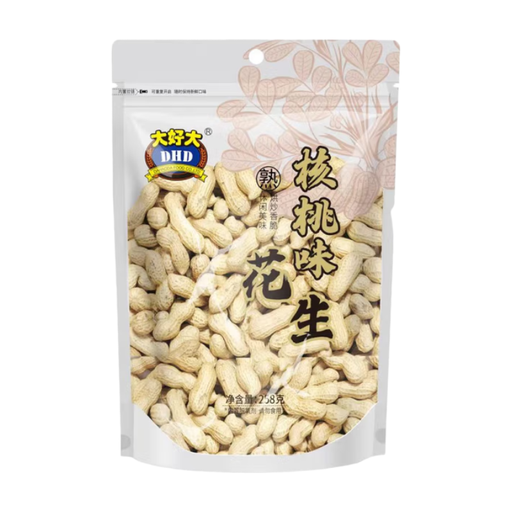
Dahaoda walnut-flavoured peanuts, 258 g

Dahaoda walnut-flavoured peanuts, 258 g

A flavoured snack option; check the ingredients and nutritional information if you’re looking for a specific fat content.

The description lists 46.2 g of fat per 100 g, plus added sugar, salt and walnut flavouring.

Whole peanuts aren’t suitable for children under four. Older children should eat them calmly at the table, with an adult supervising.

View at Joybuy
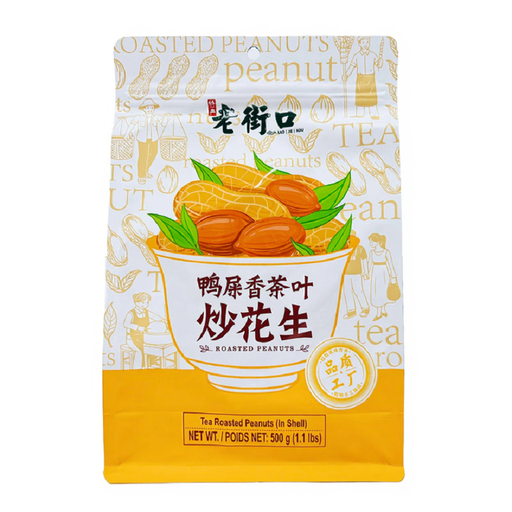
Lao Jie Kou roasted in-shell peanuts with tea flavour, 500 g

Lao Jie Kou roasted in-shell peanuts with tea flavour, 500 g

An option to share if you’re looking for in-shell peanuts; you’ll need to shell them before eating.

The description lists 35.6 g of fat per 100 g and tea flavouring.

Whole peanuts aren’t suitable for children under four. Older children should eat them calmly at the table, with an adult supervising.

View at Joybuy

g’woon in-shell peanuts, 500 g

g’woon in-shell peanuts, 500 g

A snack option in the shell; bear in mind that you’ll need to shell the peanuts before eating.

The description lists 49 g of fat and 0.12 g of salt per 100 g.

Whole peanuts aren’t suitable for children under four. Older children should eat them calmly at the table, with an adult supervising.

View at Joybuy

Verse Extra Large roasted peanuts, 210

Verse Extra Large roasted peanuts, 210

A roasted snack option; check the pack information to confirm the quantity and product details before choosing.

The description lists 100% peanuts and 50 g of fat per 100 g.

Whole peanuts aren’t suitable for children under four. Older children should eat them calmly at the table, with an adult supervising.

View at Joybuy

Frequently asked questions about peanuts for the school holidays

When can a solid snack be labelled ‘low fat’ under European Commission rules?

For solid foods, the European Commission sets a maximum of 3 g of fat per 100 g as a condition for using the ‘low fat’ claim. This is a condition for that claim, not a general maximum fat content for all snacks, nor a definition of a comparative claim for reduced fat content.

Can younger children eat whole peanuts?

For children under four, Jong JGZ advises serving nut butter rather than whole nuts because of the choking risk. Older children can choke too, so make sure they eat calmly at the table and stay with them.

How should I store an opened bag of peanuts?

Follow the instructions on the packaging of the variety you buy. AH advises storing its unsalted peanuts in a cool, dark, dry place and closing the pack securely after use. For Duyvis Oven Roasted Original, AH recommends transferring the peanuts to a light- and airtight container after opening.

What should I check for allergens in a snack that’s being shared?

Check the allergen information on the packaging and look for any warnings about other allergens too. The Netherlands Food and Consumer Product Safety Authority will start checking the new rules for precautionary allergen warnings on prepacked products from 2026.

What should I do with the recalled AH tub of peanuts?

Albert Heijn’s warning of 20 May 2026 applies specifically to AH Extra Large Salted Peanuts in a tub with a best-before date of 04-11-2026. Don’t eat them. Follow Albert Heijn’s instructions to return the pack for a refund; according to AH, packs with other best-before dates aren’t affected by this recall.
