Who is this buying guide for?

Consumers watching their fat intake

You want to keep eating peanuts and compare the fat content per 100 g with the amount you have yourself. These are different ways of looking at your choice: a smaller portion does not change the composition. The European Commission sets a limit of no more than 3 g of fat per 100 g for the ‘low fat’ claim on solid foods.

Consumers looking for unsalted peanuts

You prioritise low salt at lunchtime. ‘Unsalted’ tells you about the salt, not the fat content, so the label still matters if you’re watching your fat intake too. The Netherlands Nutrition Centre includes unsalted nuts, including peanuts, in its Wheel of Five healthy eating guidelines.

Consumers planning ahead at the office

You divide a pack across several working days and want to store the rest according to the instructions. Labels from brands including AH and Duyvis give instructions on closing or storing the pack; follow the guidance for the variety you buy.

What should you look for when choosing?

A smaller portion

A good fit if: you mainly want to eat fewer peanuts during your working day.

The trade-off: you choose the amount yourself, but the fat content per 100 g stays the same.

Comparing fat per 100 g

A good fit if: a lower fat figure for the same amount is important to you.

The trade-off: check the salt and ingredients too; a lower figure does not automatically qualify as a formal ‘low fat’ claim.

Choosing unsalted

A good fit if: less salt matters more to you than the lowest fat figure.

The trade-off: unsalted does not mean low fat; check both figures on the label.

A product labelled ‘low fat’

A good fit if: you’re specifically looking for a product that meets the requirements for this claim.

The trade-off: the European Commission sets a maximum of 3 g of fat per 100 g for solid foods; choosing a smaller portion does not replace this product requirement.

Consideration What should you check? Who is this important for?
Fat content and ‘low fat’ Compare the fat per 100 g for the exact variety. For the ‘low fat’ claim on solid foods, the European Commission sets a maximum of 3 g per 100 g. If I want less fat in the same amount, I compare the labels rather than just the product name. Around 36% of consumers say fat content is their main priority when choosing.
Portion size while working Base your calculation on the amount you have yourself. According to the label for Jumbo Unsalted, 25 g of peanuts contains 12 g of fat. If I want to avoid eating more than planned while working, I can weigh out my portion in advance. Around 29% of consumers prioritise portion control.
Salt and ingredients Jumbo lists 1,80 g of salt per 100 g for Dry Roasted and 0,01 g for Unsalted; the Dry Roasted variety also contains wheat. If eating unsalted or finding suitable ingredients matters more to me than the lowest fat figure, I check the label for that exact variety. Around 21% of consumers mainly consider salt and ingredients.
Portioning and storage Choose a pack that’s practical to divide up and follow the product’s storage and resealing instructions. If I want to take peanuts with me for several working days, I consider how to portion them and store the rest. Around 14% of consumers prioritise having a convenient supply.

Common pitfalls

  • Assuming unsalted, roasted or a small portion means low fat

    These terms do not mean the same thing. Unsalted refers to salt, while a smaller portion changes the amount you eat. According to the European Commission, the ‘low fat’ claim for solid foods is subject to a limit per 100 g.

    Check the fat figure per 100 g and consider it separately from your portion size.

  • Comparing only the lowest fat figure

    Jumbo Dry Roasted lists less fat per 100 g than Jumbo Unsalted, but it also contains more salt and wheat. Your choice therefore also depends on what else you want to avoid or limit in the ingredients.

    As well as fat, check the salt, ingredients and allergens for the exact variety.

  • Leaving an open bag of peanuts on your desk

    Storage instructions can vary by product.

    Set aside the portion you’ve planned and close the rest according to the instructions on the pack.

Brands to consider

Duyvis

According to Duyvis, its unsalted variety comes in a 235 g pack. The manufacturer lists peanuts and sunflower oil as ingredients.

  • A pack with a stated weight can help you plan portions.
  • ‘Unsalted’ does not mean low fat; check the nutritional information on the pack.

Albert Heijn

AH Unsalted Peanuts are described as a 300 g pack with a stated serving size of 25 g.

  • The stated serving size gives you a practical starting point if you want to weigh out your portion in advance.
  • The ‘unsalted’ label does not mean the product is low fat.

Jumbo

Jumbo’s product information describes unsalted and Dry Roasted peanuts. The labels for these specific varieties make it possible to compare fat and salt.

  • The stated varieties list values per 100 g.
  • According to the product information, Dry Roasted contains wheat and added salt; these details apply to that variety.

PLUS

The product page describes PLUS Unsalted Peanuts in a 250 g pack with sunflower oil.

  • The pack weight and ingredients help you assess this specific variety.
  • The product page mentions the possible presence of cashew nuts; check the label if this is relevant to you. Unsalted does not mean low fat.

Lidl

Lidl Netherlands’ range page describes unsalted peanuts in a 285 g pack.

  • The product page lists the pack weight and confirms that this is the unsalted variety.
  • The page says the product is sold in store; check the range at your local shop. The ‘unsalted’ label does not confirm that the product is low fat.

ALDI

ALDI’s range information lists Trader Joe’s roasted, unsalted peanuts in a 250 g pack and a 225 g dry-roasted variety.

  • The product names distinguish an unsalted variety from a seasoned dry-roasted variety.
  • The word ‘roasted’ does not in itself mean the product has a lower fat content.

Peanuts at Joybuy

These are whole peanuts that you can portion yourself, with options including unsalted, in-shell and dry roasted. The product names and available information do not provide a basis for describing them as low fat.

g'woon Unsalted Peanuts - 250g

g'woon Unsalted Peanuts - 250g

A good fit if you want to portion out unsalted peanuts yourself for lunch or later.

The description lists peanuts and sunflower oil and notes the possible presence of cashew nuts. Reseal the pack securely after opening and store in a dry place.

View at Joybuy

G'woon Peanuts in Shell - 500 g

G'woon Peanuts in Shell - 500 g

In-shell peanuts are a good fit if you want to decide for yourself how many to have with your lunch.

The pack contains 500 g. The product information lists peanuts and possible traces of other nuts; check the pack for allergen information.

View at Joybuy

Verse Extra Large Roasted Peanuts - 210 g

Verse Extra Large Roasted Peanuts - 210 g

These roasted peanuts may suit you if you want to portion out an unsalted variety.

The product information lists 100% peanuts and no added salt. Follow the storage instructions on the pack.

View at Joybuy
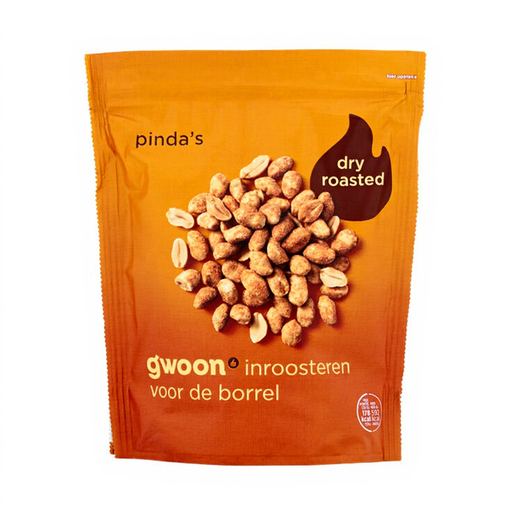
g'woon Dry Roasted Peanuts - 200g

g'woon Dry Roasted Peanuts - 200g

The resealable 200 g bag may suit you if you want to use a pack over several occasions.

The ingredients list includes salt and spices, so this is not an unsalted variety. The product information lists peanuts and possible traces of other nuts.

View at Joybuy

Frequently asked questions

Does low fat mean the same as less fat per portion?

No. According to the European Commission, the ‘low fat’ claim for solid foods is limited to a maximum of 3 g of fat per 100 g. Eating less of the same product reduces the amount you eat, but does not change its fat content per 100 g.

How do I compare portions when the serving sizes are different?

First compare the nutritional values per 100 g, then calculate them for the same portion size. Multiply the value per 100 g by the weight of your portion and divide by 100. European labelling rules use per 100 g or per 100 ml as the basis; nutritional values per portion may also be provided.

How should I store an opened bag for the next working days?

Follow the instructions on the pack for the variety you buy. For the Duyvis Unsalted Peanuts reviewed, an airtight, light-proof container is recommended; AH advises resealing the pack securely and storing it in a cool, dark and dry place.

What allergen information should I check for peanuts?

Always check the allergen information on the pack. The Netherlands Food and Consumer Product Safety Authority states that allergen information must be shown on the label of prepacked products. For example, the Jumbo Dry Roasted variety reviewed also contains wheat.

Does the AH safety warning apply to all AH peanuts?

No. Albert Heijn’s warning from May 2026 concerns AH Extra Large Salted Peanuts in a tub with a best-before date of 04-11-2026, due to possible metal fragments. The warning does not apply to the 300 g AH Unsalted Peanuts described here. Check the product name and best-before date on the pack; do not consume the product covered by the warning.
