What should you look for when buying?
| What to consider |
What to look for when buying |
Who should pay particular attention? |
| Genuinely low in fat |
Compare total fat per 100 g. According to the European Commission, solid foods must contain no more than 3 g of fat per 100 g to carry a ‘low-fat’ claim. |
If you want the snack itself to be low in fat, check total fat rather than salt or how it was prepared. Around 34% of consumers prioritise a low-fat composition. |
| Specific allergen |
Identify what you want to avoid and check both the ingredients and any warnings about possible cross-contamination. |
If you need to avoid peanuts or another specific allergen, it’s worth checking all the product information. Around 33% of consumers prioritise allergen avoidance. |
| Portion size |
Weigh the amount you eat and calculate it using the nutrition information per 100 g or the product’s portion table. |
If you want to keep eating peanuts while monitoring how much you have, the weight of your own portion matters. Around 20% of consumers prioritise portion control. |
| Preparation and added ingredients |
Read the ingredients and nutrition table separately; also check the salt, oil, seasonings and any coating. |
If you’re mainly concerned about a particular preparation method or added ingredients, you can assess that preference alongside the fat content and ingredients. Around 13% of consumers prioritise preparation method and added ingredients. |
‘Unsalted’ describes the salt content, while ‘no added oil’ describes how the product is prepared; neither term on its own means the peanuts are low in fat. A smaller portion can change how much you eat, but not the fat content per 100 g.
Peanut products at Joybuy
These are peanut options for anyone who wants to keep eating peanuts and choose a variety based on factors such as preparation method or intended use. This selection is not a recommendation for a low-fat or allergen-free product; check the current packaging for nutrition and allergen information.
 No image available
g’woon Unsalted Peanuts, 250 g
Suitable if you want to keep eating peanuts and are specifically looking for an unsalted variety.
The product name identifies unsalted peanuts in a 250 g pack. The product information notes the possible presence of cashew nuts.
View at Joybuy
 No image available
g’woon Peanuts in Shell, 500 g
An option if you’re looking for peanuts in their shells to snack on or use in a recipe.
The product name identifies peanuts in their shells in a 500 g pack. The product information suggests roasting as a preparation option and notes possible traces of nuts.
View at Joybuy
 No image available
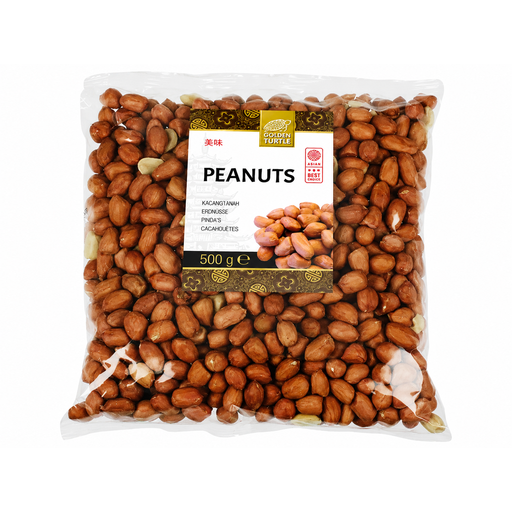
Golden Turtle Premium Raw Peanuts with Skin, 500 g
May suit you if you’re looking for raw peanuts with their skins on to prepare yourself.
The product name identifies raw peanuts with their skins on in a 500 g pack. The product information suggests roasting, boiling and frying as preparation options; the product contains peanuts.
View at Joybuy
 No image available
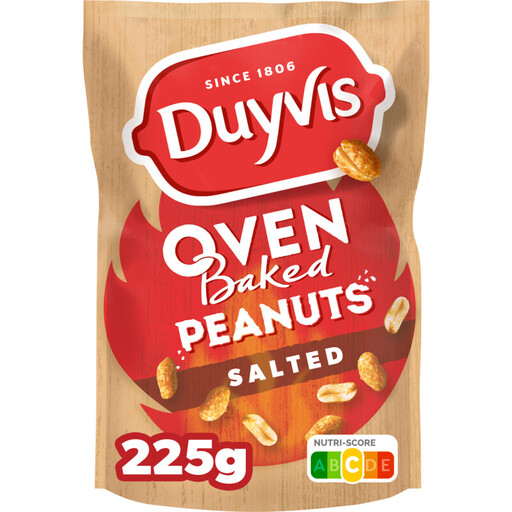
Duyvis Roasted Peanuts, 225 g
An option if you’re looking for roasted peanuts that are ready to eat straight from the pack.
The product name identifies roasted peanuts in a 225 g pack. The product information notes the possible presence of nuts; check the ingredients and warnings on the packaging.
View at Joybuy
Frequently asked questions
When can a peanut snack be described as low-fat in the Netherlands?
For solid foods, the ‘low-fat’ claim is permitted only if the product contains no more than 3 g of fat per 100 g. This is the European threshold for the product claim; a smaller portion does not change the assessment per 100 g. The European Commission explains this nutrition claim threshold.
Does gluten-free or lactose-free mean peanuts are suitable for someone with a peanut allergy?
No. Gluten-free and lactose-free refer to substances other than peanuts. AH Unsalted Peanuts is listed with these features, but it contains peanuts; if you have an allergy, also read the ingredients and warnings on the specific pack.
What allergen information is shown on a food label?
According to the Netherlands Food and Consumer Product Safety Authority (NVWA), information about 14 allergens must be provided, and allergens in the ingredients list must be clearly identifiable. Also check the product label for any warnings about possible cross-contamination.
What has changed about Dutch cross-contamination warnings?
New Dutch rules on warnings about possible cross-contamination have applied since 1 January 2026. The NVWA gives examples of warnings such as ‘May contain X’ and ‘Not suitable for people with an X allergy’; a warning must be based on a risk assessment. Such a statement is not a general guarantee that a product is suitable for everyone with an allergy.
How do you calculate the fat in a different portion size?
Multiply the fat per 100 g by the weight of your portion in grams, then divide by 100. Jumbo Unsalted Peanuts 250 g lists 48.0 g of fat per 100 g; mathematically, 25 g contains 12.0 g of fat. This calculation is based on the declared value for that variety.


