
Health-conscious adult snackers
Want to eat peanuts during the Easter egg hunt while keeping an eye on your calorie intake? Compare the kcal per 100 g, then weigh the amount you plan to eat. Unsalted doesn’t mean low in calories.


If you want to keep calories in check while taking part in an Easter egg hunt, weigh out a portion and compare the nutritional values per 100 g on the exact product packaging. Unsalted or roasted doesn’t mean low in calories. According to the European Commission, the ‘low energy’ claim for solid foods is limited to a maximum of 40 kcal per 100 g; the peanut varieties checked are well above this threshold. Whole peanuts are not suitable for children under 4, according to the Netherlands Nutrition Centre, and peanut snacks are not suitable for anyone with a peanut allergy.
Want to eat peanuts during the Easter egg hunt while keeping an eye on your calorie intake? Compare the kcal per 100 g, then weigh the amount you plan to eat. Unsalted doesn’t mean low in calories.
Whole peanuts are not suitable for children under 4, according to the Netherlands Nutrition Centre. Older children should sit still while eating and be supervised. Remember to consider anyone taking part who has a peanut allergy.
Want to split a bag over several snack times? Check the net weight and decide on the portion size yourself. Store any leftovers in a tightly sealed container in a dry place, as advised by the Netherlands Nutrition Centre.
| What to consider | What should you look for? | Who is this important for? |
|---|---|---|
| Calories per portion | Compare the kcal per 100 g, then calculate the amount based on the weight of your own portion. The Netherlands Nutrition Centre lists 157 kcal for a 25 g handful of unsalted peanuts. | If I want to choose my portion carefully, I weigh the amount rather than relying on a handful or the serving size on the packaging. Around 36% of consumers prioritise managing calories per portion. |
| Age and allergies | Check who the snack is intended for and read the ingredients and allergen information. The Netherlands Nutrition Centre advises against giving whole peanuts to children under 4; older children should sit still while eating and be supervised. | If children or anyone with a peanut allergy is taking part, I need to decide first whether peanuts are suitable for them. Around 29% of consumers prioritise safe participation. |
| Salt and ingredients | Check the salt, ingredients and energy content separately, and always compare the same variety. AH lists 0 g of salt per 100 g for its unsalted peanuts; Jumbo lists 0,01 g per 100 g and PLUS 0,02 g per 100 g. | If I’m mainly looking at salt or ingredients, I check the label on the specific bag rather than choosing based on the preparation method alone. Around 21% of consumers prioritise salt and ingredients. |
| Portions for a group | Work out how much you need based on the number of portions and the chosen weight per portion. The checked bags from AH, Jumbo and PLUS each contain 250 g; store peanuts in a tightly sealed container in a dry place, as advised by the Netherlands Nutrition Centre. | If I’m setting out peanuts for several snack times, I want to be able to divide them into portions in advance and store any leftovers properly. Around 14% of consumers prioritise portioning for a group. |
Whole peanuts are not suitable for children under 4. Older children may also choke if they eat while running around.
Decide in advance who will be taking part. Children should sit still while eating and be supervised; don’t give whole peanuts to children under 4.
The salt content and preparation method alone don’t tell you whether a product is low in energy. The labels checked are well above the European threshold for the ‘low energy’ claim for solid foods.
Compare the kcal per 100 g on the packaging and calculate the energy content for the amount you actually plan to serve.
Differences in kcal per manufacturer’s portion may be down to the portions weighing different amounts. AH lists a 25 g portion, while Jumbo lists 30 g.
Compare the figures per 100 g first, then calculate them for both products using the same portion weight.
The manufacturer and AH publish different nutritional values for their Duyvis Oven Baked Original and Oven roasted Original varieties. The names alone don’t confirm that they have the same recipe.
Match nutritional values to the exact variety and packaging; don’t use figures from a product with a similar name.
Duyvis offers unsalted peanuts, among other products, as well as an oven-roasted variety.
AH Unsalted Peanuts comes in a 250 g bag that you can portion yourself.
Jumbo Unsalted Peanuts comes in a 250 g bag, for anyone looking for unsalted peanuts and wanting to choose their own portion size.
The Dutch Lidl website lists unsalted peanuts under the Alesto brand.
ALDI lists Trader Joe’s peanuts as roasted and unsalted, in a 250 g pack.
PLUS Unsalted Peanuts comes in a 250 g bag that you can portion yourself.
This selection includes unsalted peanuts, peanuts in their shells, and seasoned or roasted varieties. Check the exact packaging and weigh your portion: the product name alone doesn’t mean a variety is low in calories.
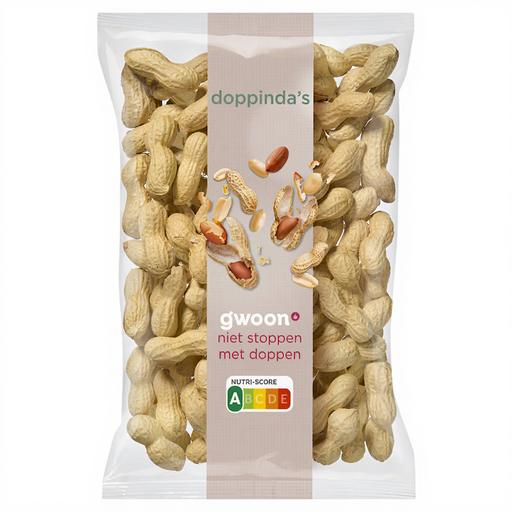 No image available
A good choice if you’re looking for peanuts in their shells as a snack; bear in mind that whole peanuts are not suitable for children under 4.
Pack size: 500 g.
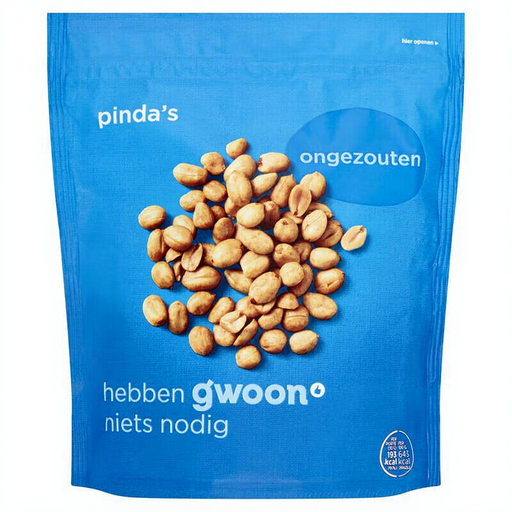 No image available
A good choice if you’re looking for unsalted peanuts and want to weigh out your own portion; unsalted doesn’t mean low in calories.
Pack size: 250 g. Check the nutritional and allergen information for this variety on the packaging.
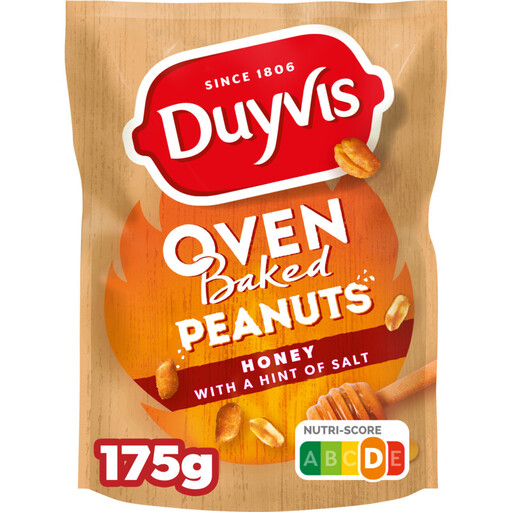 No image available
A good choice if you’re looking for a honey variety with a lightly salted flavour; roasted doesn’t mean low in calories.
Check the nutritional and allergen information for this specific variety on the packaging.
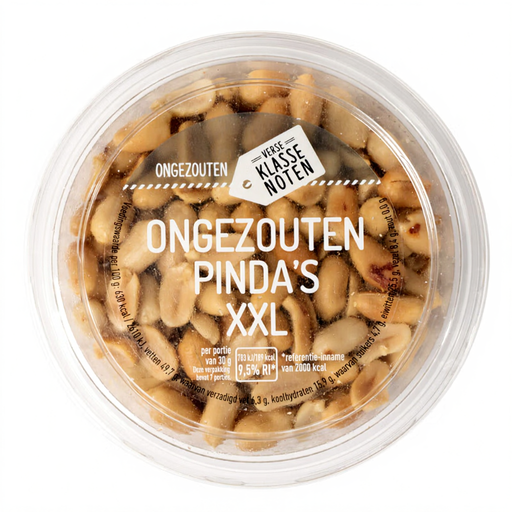 No image available
A good choice if you’re looking for roasted peanuts; check the energy and salt content against the information for this exact pack.
Pack size: 210 g. Check the allergen information on the packaging, especially if anyone taking part has allergies.
No, not just because the portion is small. According to the European Commission, the ‘low energy’ claim for solid foods is limited to a maximum of 40 kcal per 100 g; a smaller portion doesn’t change the nutritional value per 100 g. You can, however, calculate the energy content of a chosen portion using the information on the label.
No. Unsalted describes the salt content, not whether a product is low in calories. Compare the energy and salt content separately on the label, using the same portion weight.
The Netherlands Nutrition Centre advises against giving whole peanuts or nuts to children under 4. Older children should also sit still while eating and be supervised. This is safety advice, not a general legal age restriction on selling peanuts.
No. Peanut snacks, whether unsalted or roasted, are not suitable for anyone with a peanut allergy. Choose an alternative that takes any known allergies into account rather than opting for a different type of peanut preparation.
Store peanuts in a tightly sealed container in a dry place, and follow the storage instructions and use-by information on the packaging. The Netherlands Nutrition Centre advises storing nuts in a dry place in a tightly sealed container.