
Sporty types who count their protein
You want to know how much a portion of nibbles contributes to your daily protein intake. The Netherlands Nutrition Centre advises considering your overall diet; peanuts are not a guaranteed post-workout snack.


If you want to count protein as part of your drinks-and-nibbles spread, compare the nutritional values for the exact product per equal portion; unsalted peanuts may suit you if you prefer less salt. Based on the nutrition tables from Albert Heijn, Duyvis, Jumbo and PLUS, four unsalted varieties reviewed provide 6.25 to 6.75 g of protein per 25 g. This is a nutritional contribution, not proof of a legally permitted high-protein claim or a product-specific recovery benefit.
You want to know how much a portion of nibbles contributes to your daily protein intake. The Netherlands Nutrition Centre advises considering your overall diet; peanuts are not a guaranteed post-workout snack.
You want to compare protein and energy per portion, and perhaps choose unsalted peanuts. The values for the exact variety matter more than the brand name or the term ‘dry roast’ alone.
You consider pack size, storage and allergen information. If someone has a peanut allergy, it’s important to follow their individual dietary requirements and prevent cross-contact; professional food providers have information requirements set by the NVWA.
First decide how much you actually want to serve, then choose based on protein, energy, salt and your guests’ needs.
| What to consider | What should you check? | Who might care most? |
|---|---|---|
| Protein per portion | Check the protein per 100 g and calculate the amount for the portion you eat. | If I want to keep track of my protein intake while enjoying drinks and nibbles, I look at the amount in my own portion. Around 31% of consumers put protein content first. |
| Protein and energy | Compare the same portion size and take both protein and energy into account. | If I want to have a measured portion, I also want to know how much energy it contains. Around 25% of consumers give portion size and energy balance top priority. |
| Salt and flavour | Read the salt content and ingredients for the specific variety. | If I want a savoury, seasoned flavour, I weigh that against my preference for less salt. Around 19% of consumers put this flavour-and-salt trade-off first. |
| Pack size and quantity | Check the net weight and storage instructions after opening. | For a group, I want to choose a pack that suits the number of people who will actually eat peanuts. Around 13% of consumers put quantity and cost ahead of other purchasing priorities. |
| Allergens when sharing | Check the allergens and warnings on the packaging, and prevent cross-contact. | If I’m hosting guests with allergies, I want to know what’s in the pack and how to serve the food separately. Around 12% of consumers name allergen safety as their top priority. |
Peanuts are an allergen, and cross-contact with other foods can happen at a party table. A different variety of peanuts is not an alternative for someone with a peanut allergy.
Discuss dietary requirements, keep the original packaging and prevent cross-contact. For someone with a peanut allergy, choose an alternative that meets their dietary requirements.
The Netherlands Nutrition Centre lists 6.3 g of protein and 157 kcal for a generic 25 g handful of unsalted peanuts. That is a different quantity from 100 g.
Calculate the nutritional values for an equal portion and bear in mind how much you personally eat.
Jumbo lists 1.80 g of salt per 100 g for its Dry Roasted peanuts. Duyvis describes Oven Baked Original as roasted without added oil or fat, but also lists 47 g of fat per 100 g.
Compare the nutrition table and ingredients for the exact variety; assess the cooking method and ingredients separately.
The nutritional values for Duyvis Original differ between the product information from Duyvis and Albert Heijn. A similar product name does not prove that the packs have the same ingredients.
Use the label on the pack you’re buying, and don’t use values from a different variety.
The range includes unsalted peanuts and seasoned roasted varieties for drinks and nibbles.
The own-brand range includes unsalted peanuts and salted Dry Roast peanuts.
The product information covers an unsalted variety and seasoned Dry Roasted peanuts.
Lidl Netherlands has a product page for unsalted peanuts.
The product description is for Trader Joe’s roasted, unsalted peanuts in a 250 g pack.
The product information covers unsalted peanuts in a 250 g pack.
This selection includes unsalted and roasted peanuts, salted and seasoned varieties, and peanuts in their shells.
 No image available
An unsalted variety to consider if you prefer peanuts without added seasoning.
Contains peanuts and may contain cashews.
 No image available
A roasted variety for anyone looking for peanuts without added seasoning.
Contains peanuts.
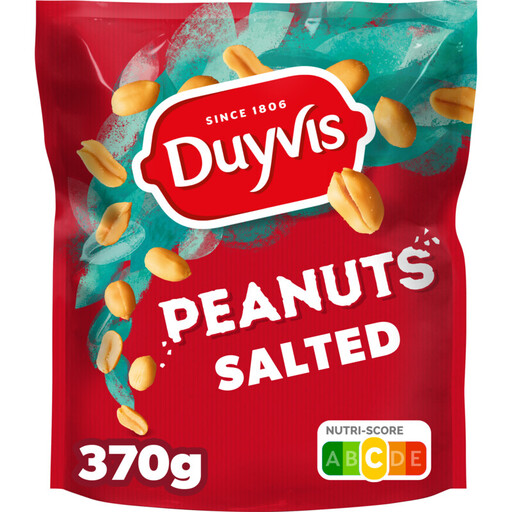 No image available
A salted variety for anyone looking for a savoury flavour to enjoy with drinks and nibbles.
Contains peanuts and may contain other nuts. Not recommended for children under 5 due to the risk of choking.
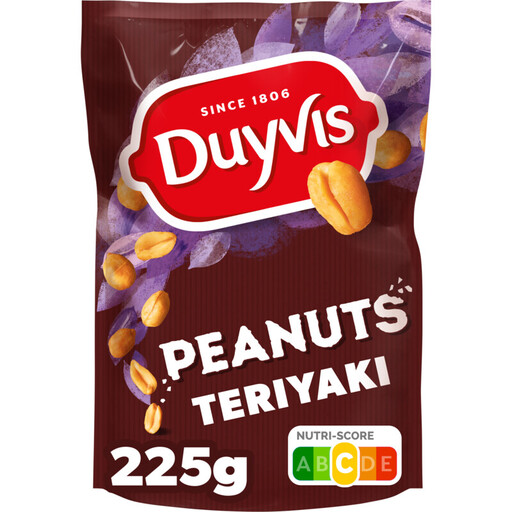 No image available
A seasoned teriyaki variety to consider if you’re looking for a different flavour to serve with drinks and nibbles.
Contains peanuts, cereals containing gluten, celery, wheat and soya; may contain milk and nuts.
 No image available
A variety in the shell for a gathering where you can take into account the extra step of shelling them when serving and eating.
Contains peanuts and may contain traces of nuts; the peanuts need to be shelled before eating.
Think of peanuts as part of your overall diet, not as a guaranteed recovery product. The Netherlands Nutrition Centre lists 6.3 g of protein for a generic 25 g handful of unsalted peanuts and advises people who exercise to consider their total protein intake. Most people who exercise don’t need special protein products.
Don’t use the brand name as a substitute for checking the label. Based on the nutrition tables from Albert Heijn, Duyvis, Jumbo and PLUS, the unsalted varieties reviewed provide a calculated 6.25 to 6.75 g of protein per 25 g. That comparison doesn’t show a product-specific recovery benefit; also compare the quantity and consider your own preference.
Peanuts are not a suitable snack for that person. Follow their dietary requirements and prevent cross-contact with other foods; Jeroen Bosch Hospital lists party tables with peanuts as a possible cross-contamination risk.
If you’re one of the professional providers of unpackaged food described by the NVWA, you must inform customers about any allergens present. Written information can be provided on cards, for example; verbal information is permitted under certain conditions, including that the information is readily available before purchase and that staff and inspectors can consult written or electronic information. This does not automatically apply to a private gathering.
Follow the instructions for the variety you buy. Albert Heijn advises storing its 300 g pack of unsalted peanuts in a cool, dark and dry place and closing the pack properly after use. For Duyvis Original, Albert Heijn recommends storing an opened bag in a light- and airtight container.
On 20 May 2026, Albert Heijn issued a recall for AH Extra Large Salted Peanuts in a tub with a best-before date of 04-11-2026, due to possible metal fragments. Do not eat that specific pack; return it to the shop. Albert Heijn says you’ll receive a full refund. According to the warning, packs with other best-before dates are not included in this recall. This is not a warning about all AH peanuts.
Don’t assume a bowl of whole peanuts is suitable for young children. Product pages from Albert Heijn, Jumbo and PLUS warn that young children may choke on peanuts; this is product information, not a legal age limit established here.