What should you look for when buying?
First, check whether peanuts themselves are suitable for the person eating them. Then assess the dietary claim, warnings and quantity for the specific variety.
| What to consider |
What to look for when buying |
Who is this most important for? |
| Identify the ingredient to avoid |
Ask which ingredient needs to be avoided, then read both the ingredients and the warnings. |
If I’m buying for someone else, I first want to know whether they need to avoid peanuts themselves and which warning is relevant. Around 36% of consumers prioritise checking for peanuts, nuts or another allergen when buying. |
| Check gluten-free status for each variety |
Check the gluten-free claim and also read the ingredients and any warnings on the packaging. |
If peanuts are suitable, I look for a variety labelled gluten-free, but still check the rest of the label. Around 29% of consumers give avoiding gluten the highest priority. |
| Distinguish between lactose and milk |
Find out whether it’s a case of lactose intolerance or a milk allergy; for coated peanuts, also check for milk ingredients and warnings. |
With lactose intolerance, I check for lactose; with a milk allergy, I assess milk ingredients separately. Around 21% of consumers prioritise avoiding or checking for milk or lactose. |
| Quantity and storage |
Choose a pack size that suits your top-up and follow the storage instructions once the bag has been opened. |
Once I’ve confirmed the product is suitable for the dietary requirements, I want a quantity that works for a small top-up and a way to store the opened bag properly. Around 14% of consumers give quantity and storage the highest priority. |
Peanuts at Joybuy
This selection includes unsalted peanuts, peanuts with added flavourings and peanuts in their shells. All products contain peanuts or are described as peanut products, so check that the person eating them can tolerate peanuts and read the information for the exact variety.
 No image available
g’woon unsalted peanuts, 250 g
An unsalted snack option if the person eating them can tolerate peanuts.
Product information lists 99% peanuts and sunflower oil. The product may contain cashew nuts.
View at Joybuy
 No image available
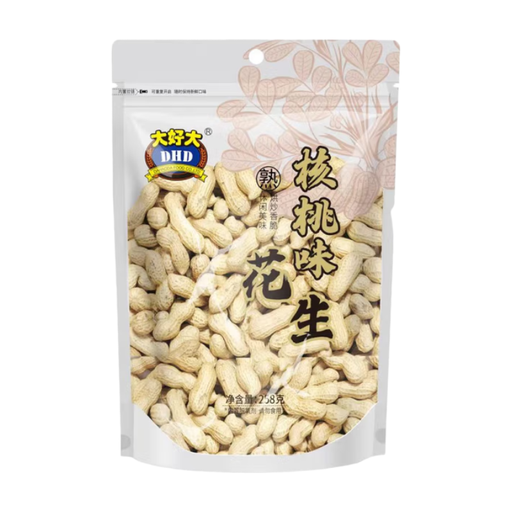
Dahaoda Walnut Flavour Peanuts, 258 g
A peanut snack with walnut flavour, if peanuts are suitable for the person eating them.
Product information lists peanuts, soya, sugar, salt and soya lecithin. The product contains peanuts and soya.
View at Joybuy
 No image available
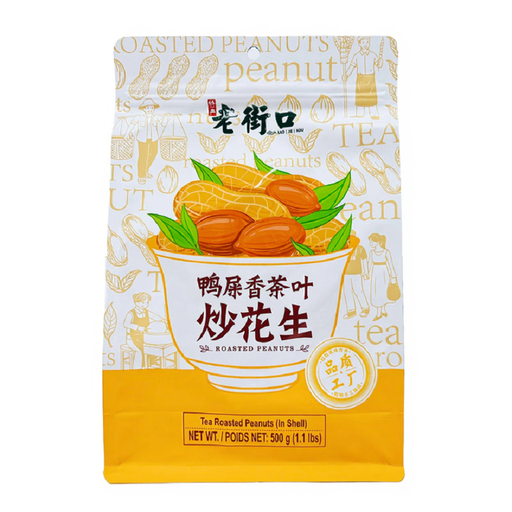
Lao Jie Kou Yashi Xiang Tea-Infused Roasted Peanuts, 500 g
A roasted peanut snack with tea flavouring, for people who can tolerate peanuts.
Product information lists peanuts, salt, tea, flavouring and sweetener.
View at Joybuy
 No image available
g’woon peanuts in shell, 500 g
An option for anyone looking for peanuts in their shells, if they can tolerate peanuts.
Product information lists peanuts and possible traces of nuts.
View at Joybuy
 No image available
Verse Extra Large Roasted Peanuts, 210 g
A roasted, unsalted variety for people who can tolerate peanuts.
Product information lists 100% peanuts.
View at Joybuy
Frequently asked questions
Are peanuts an allergen-free snack?
No. Peanuts are an allergen and must be listed on the label. A gluten-free or lactose-free claim doesn’t mean a product is peanut-free or free from all allergens.
Does lactose-free mean a product is suitable for someone with a cow’s milk allergy?
No, a lactose-free claim doesn’t mean that. According to Voedingscentrum, lactose intolerance concerns milk sugar, while a cow’s milk allergy is a reaction to milk proteins. If you have a milk allergy, check milk ingredients and warnings separately.
What allergen information must appear on a Dutch label?
Prepacked foods must include allergen information on the label, and allergens must be clearly identifiable in the ingredients list. The Netherlands Food and Consumer Product Safety Authority also describes the information requirements for unpackaged products. This isn’t a certification that makes a product suitable for everyone with an allergy.
Are cross-contamination warnings optional?
For prepacked products, the Netherlands Food and Consumer Product Safety Authority has been enforcing Dutch rules on cross-contamination warnings since 1 January 2026. According to Voedingscentrum, such a warning should be based on a risk assessment. Read the warning alongside the ingredients list: it concerns possible unintended presence, not an ingredient that has been deliberately added.
What should you do if you have a product included in a recall?
Follow the instructions for the exact product and best-before date covered by the warning. Albert Heijn’s warning of 20 May 2026 names AH Extra Large Salted Peanuts in a tub with a best-before date of 04-11-2026: don’t eat that pack and return it according to Albert Heijn’s instructions. The warning doesn’t concern AH Unsalted Peanuts 300 g.


