Who is this choice relevant to?

People avoiding peanuts or tree nuts

You’re looking for a snack for someone with a relevant allergy. If they have a peanut allergy, peanuts are out; if they have a tree nut allergy, check the warnings on the exact peanut variant too. The Dutch Food Allergy Foundation points out that even a small amount can cause severe reactions in some people.

People limiting gluten or lactose

You can eat peanuts but are looking for a variant that meets a specific dietary need. Check the labelling and ingredients of the exact variant; the general word ‘peanuts’ alone won’t tell you whether a product is suitable.

People managing snack supplies

You can match the pack size to how quickly you’ll get through it and follow the storage instructions on the packaging. If you sell snacks as a business, also consider the applicable labelling rules and food business registration requirements; the NVWA explains the registration requirements for food businesses.

What should you look for when buying?

First, work out which substance you need to avoid. Then compare the recipe, variant and pack size.

What to consider What should you look for? Who is this important for?
Peanut and tree nut allergies Check the ingredients and allergen warnings for the exact variant; if you have a peanut allergy, don’t choose peanuts. If I need to avoid peanuts, this product category is not an option; if I have a tree nut allergy, I check the warnings too. Around 36% of consumers prioritise avoiding peanuts or tree nuts.
Gluten Look for an explicit gluten-free label and check the flavour variant and any coating. I want to avoid gluten, so I check the exact variant rather than just the product name. Around 29% of consumers prioritise avoiding gluten.
Lactose and milk Distinguish between lactose and milk proteins; check the ingredients and allergen information. I first check whether I need to avoid lactose or milk ingredients; these are not the same thing. Around 21% of consumers prioritise checking for lactose or milk.
Stock and packaging Compare the net weight with how quickly you’ll use the product and follow the storage instructions on the packaging. For my snack cupboard, I want a pack that suits how much I expect to use and the storage space available. Around 14% of consumers prioritise practical stock management.

Common buying pitfalls

  • Treating peanuts as a generally allergen-free snack

    Peanuts are an allergen in their own right. So, a product from the peanut category is not suitable for someone with a peanut allergy; the Dutch Food Allergy Foundation explains that even a small amount can cause severe reactions in some people.

    First, work out which substance needs to be avoided. If you have a peanut allergy, choose a different snack and check its ingredients and allergen information too.

  • Assuming one flavour’s dietary suitability applies to an entire brand

    Recipes can vary from one variant to another. For example, Duyvis lists wheat and lactose from milk in its Borrelnootjes Cocktail; the manufacturer’s information for its unsalted peanuts shows a different ingredients list.

    Check the product name, flavour and packaging separately before choosing a variant.

  • Taking a short ingredients list as proof that cross-contamination is ruled out

    A simple recipe doesn’t, by itself, tell you whether other allergens may be present. Several of the variants reviewed carry a warning that nuts may be present.

    As well as the ingredients, read the allergen information and warnings on the exact packaging.

  • Buying more stock than you can realistically use

    A larger pack may stay open for longer if you don’t get through it quickly.

    Match the net weight to how much you’ll use and follow the storage instructions on the packaging.

Brands and variants for reference

Duyvis

The manufacturer offers both unsalted peanuts and coated, flavoured variants; recipes differ by product.

  • For Pinda’s Ongezouten, Duyvis lists peanuts and sunflower oil as ingredients.
  • According to the manufacturer, the packaging may contain different types of nuts. Borrelnootjes Cocktail also contains wheat and lactose from milk.

Albert Heijn

AH Ongezouten pinda’s is a specific supermarket variant with published dietary and ingredients information.

  • For the 300 g variant, Albert Heijn states that it is gluten-free and lactose-free, and contains 96% peanuts and sunflower oil.
  • The retailer also lists peanuts and the possible presence of various tree nuts. The gluten-free and lactose-free labels are not a general allergen-free claim.

Jumbo

Jumbo Pinda’s Ongezouten 250 g is an uncoated variant with a published recipe.

  • Jumbo lists 99.5% peanuts and sunflower oil.
  • The retailer states that the product contains peanuts and may contain nuts. The nutrition table lists 0.01 g of salt per 100 g, so ‘unsalted’ does not mean literally no salt here.

PLUS

PLUS Pinda’s ongezouten 300 g is a larger-pack variant with a published recipe and allergen information.

  • PLUS lists 96% peanuts and sunflower oil.
  • The retailer notes that several tree nuts may be present. A vegan label is not a general allergen-free claim.

Lidl

Lidl Netherlands lists a 285 g unsalted peanut variant.

  • The product listing specifies that it is unsalted and gives the net weight.
  • The product name alone doesn’t confirm that the variant is free from gluten, milk or nuts.

ALDI

The Dutch product listing reviewed is for TRADER JOE’S Pinda’s geroosterd en ongezouten 250 g.

  • The official ALDI page confirms the product type and net weight.
  • TRADER JOE’S is the product brand; ‘roasted and unsalted’ doesn’t mean the product is free from allergens.

Peanuts at Joybuy

The selection below features peanut variants for people who can eat peanuts. The product names alone don’t confirm that they’re suitable if you need to avoid gluten or lactose; check the information for the exact variant.

g'woon unsalted peanuts 250 g

g'woon unsalted peanuts 250 g

Suits people who can eat peanuts and are looking for an unsalted variant.

Listed ingredients: 99% peanuts and sunflower oil; may contain cashew nuts.

View at Joybuy

Freshly roasted peanuts 210 g

Freshly roasted peanuts 210 g

A roasted peanut variant for people who can eat peanuts.

The product name specifies a 210 g pack.

View at Joybuy

g'woon peanuts in shell 500 g

g'woon peanuts in shell 500 g

An option for people looking for peanuts in their shells who can eat peanuts.

The product information notes that nuts may be present; the pack contains 500 g.

View at Joybuy
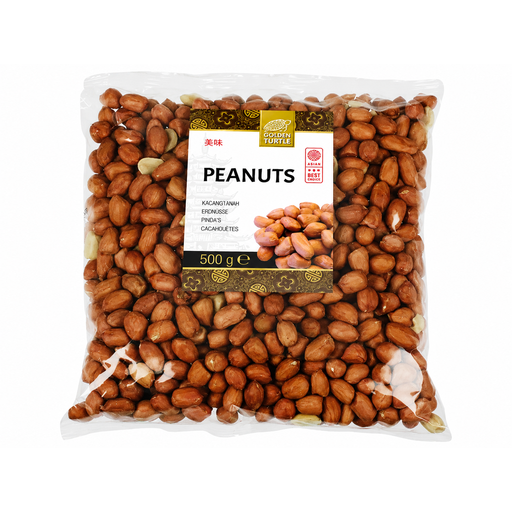
Golden Turtle raw peanuts with skin 500 g

Golden Turtle Premium raw peanuts with skin 500 g

This raw variant with skin is for people who want to prepare peanuts themselves; the product information suggests roasting, boiling and baking.

The pack contains 500 g.

View at Joybuy
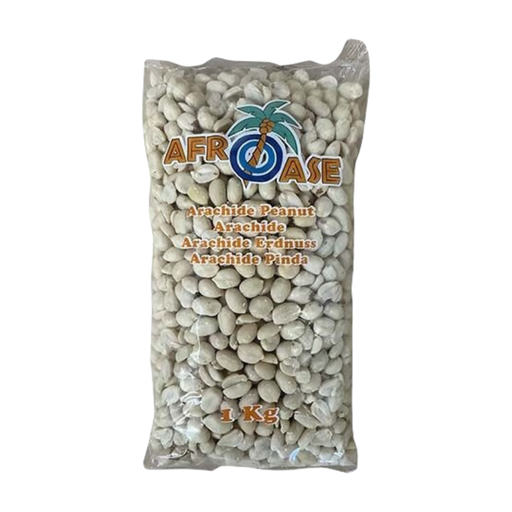
White Peanuts 1 kg

White Peanuts 1 kg

The 1 kg pack may suit a larger stock-up if you can eat peanuts.

The product information lists several versions with different ingredients; check the exact variant and packaging before use.

View at Joybuy

Frequently asked questions

Does lactose-free mean suitable for someone with a milk allergy?

No. Lactose intolerance concerns milk sugar; a milk allergy concerns milk proteins. The Netherlands Nutrition Centre makes this distinction. If you have a milk allergy, check for milk ingredients and relevant warnings separately.

How do I read allergen information on a Dutch label?

Check the ingredients list and allergen information on the exact packaging. The NVWA requires allergens that are present to be clearly identifiable in the ingredients list; where ingredients containing gluten are used, the type of grain must also be named.

What do cross-contamination warnings mean from 1 January 2026?

According to the NVWA, warnings about possible cross-contamination must be supported by a risk assessment. The NVWA gives examples of wording such as ‘May contain X’ and ‘Not suitable for people with an X allergy’. According to the NVWA, safely packaged stock produced before 1 January 2026 may still be sold until it runs out.

How should I store an opened bag of peanuts?

Follow the instructions on the exact packaging. Jumbo says to store the product in a cool, dry place; Albert Heijn also advises keeping it in a dark place and closing the packaging securely after use.

What should I do if the online dietary information differs from the packaging?

Use the packaging of the product you receive to check its ingredients and allergens. Albert Heijn notes that ingredients and dietary or allergy information can change; if you’re unsure, contact the seller.
