What should you look for when choosing?
Check carbohydrates, fat and the other ingredients separately on the label of the product you’re buying.
| What to consider |
What should you check? |
Who is this important for? |
| Carbohydrates in your portion |
Compare carbohydrates per 100 g and calculate the amount for the weight of your portion. According to the Network of Diabetes Dietitians, sugars are already included in the carbohydrate figure. |
If I’m planning my carbohydrate intake, I want to know how much is in my own portion. Around 33% of consumers prioritise carbohydrates per portion. |
| Total fat and energy |
Compare fat and energy for the same quantity. For the EU ‘low fat’ claim on solid foods, the European Commission sets a limit of no more than 3 g of fat per 100 g; ‘no added fat’ describes a preparation method. |
If you’re mainly looking to reduce fat or energy, you’ll want to assess the finished product, not just the description of how it was prepared. Around 33% of consumers prioritise reducing fat or energy. |
| Salt, sugar and coating |
Check whether the product is unsalted, and look at the ingredients for added sugar or a coating. diabetes.nl recommends unsalted nuts with no added sugar. |
If I’m looking for a simple snack, I want to be able to assess what’s in it without a sweet or crunchy coating. Around 20% of consumers prioritise an unsalted product with no added sugar. |
| Packaging and storage |
Check the net weight and choose packaging that you can seal securely. The Netherlands Nutrition Centre recommends storing peanuts in a cool, dark and dry place. |
If you want to divide the peanuts into portions and store the packaging conveniently, check the pack size and whether it can be resealed. Around 14% of consumers prioritise ease of use and storage. |
Peanuts at Joybuy
These Joybuy options are snack peanuts for anyone comparing unsalted, roasted or in-shell peanuts. Product descriptions don’t prove that fat has been reduced, so check the nutritional values for the exact product.
 No image available
g'woon unsalted peanuts, 250 g
A good fit if you’re looking for an unsalted peanut snack and want to compare the nutritional values of the exact product.
The product information lists 99% peanuts and sunflower oil; nutritional information includes energy, fat, carbohydrates and salt.
View at Joybuy
 No image available
Verse Extra Large roasted peanuts, 210 g
An option if you’re looking for roasted, unsalted peanuts to snack on.
The product information lists 100% peanuts and provides nutritional values for energy, fat and carbohydrates.
View at Joybuy
 No image available
g'woon peanuts in the shell, 500 g
A good fit if you’re looking for in-shell peanuts and want to shell them yourself before eating.
The product information lists peanuts as an ingredient and provides nutritional values, including carbohydrates and fat. The peanuts must be removed from their shells before eating.
View at Joybuy
 No image available
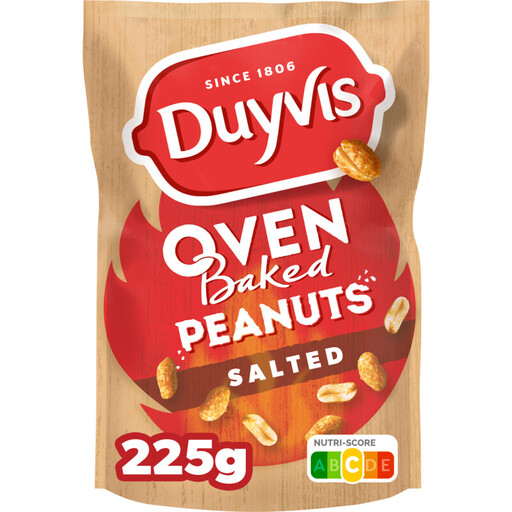
Duyvis roasted peanuts, 225 g
A ready-to-eat roasted snack if you want to take the nutritional values per portion into account when choosing.
The product information lists salt, caramelised sugar and dextrose as ingredients. Compare the carbohydrates and other nutritional values of this product with your own portion.
View at Joybuy
 No image available
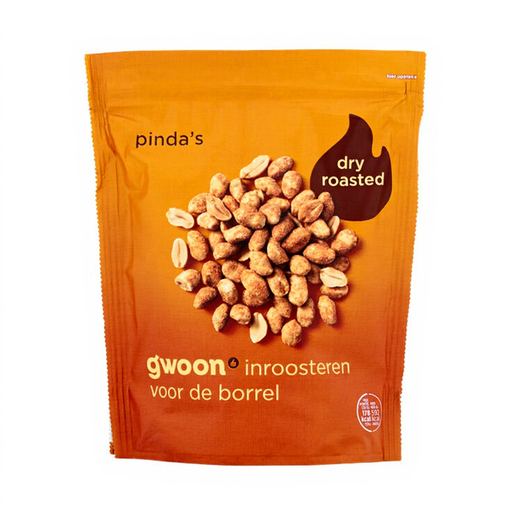
g'woon dry-roasted peanuts, 200 g
A good fit if you’re looking for a dry-roasted peanut snack and want to be able to reseal the pack after use.
The product information lists salt, caramelised sugar and dextrose as ingredients, and says the pack is resealable.
View at Joybuy
Frequently asked questions
Should you add ‘of which sugars’ to the carbohydrate figure?
No. The sugars listed are already included in the carbohydrate figure. Use the total carbohydrate content to work out the amount in your portion.
Does no added sugar mean that peanuts contain no sugar at all?
No. The 300 g PLUS product lists 5.4 g of sugars and 0 g of added sugars per 100 g. Check the ingredients and nutrition table as separate sources of information.
Does roasted without added fat mean the same as low fat?
No. Duyvis describes Oven Baked Peanuts Original as roasted without the addition of oil or fat; this doesn’t tell you how much fat the finished product contains. For the EU ‘low fat’ claim, solid foods must contain no more than 3 g of fat per 100 g, according to the European Commission.
How should you store an opened pack of peanuts?
Store peanuts in a cool, dark and dry place in an airtight container, as recommended by the Netherlands Nutrition Centre. For an unopened pack, also follow the storage instructions on the product.
Does Albert Heijn’s warning apply to all AH peanuts?
No. Albert Heijn’s warning concerns AH Extra Large Salted Peanuts in a tub with a best-before date of 04-11-2026, due to possible metal fragments. Do not eat this specific product and date combination; the warning doesn’t apply to all AH peanuts.


